“Completely unviable.” That’s what the OBGYN said to me after a long and excruciating day. I was sitting in the emergency room at Sibley Memorial Hospital in Washington, D.C., in a small glass room with my husband, anxious and waiting.
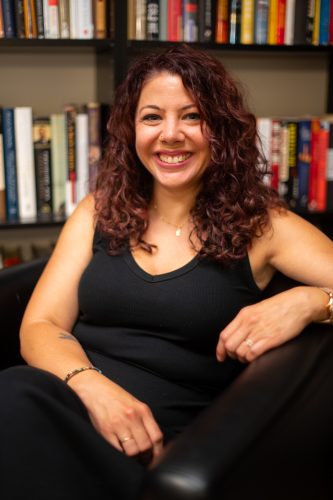
Juliet Vedral
Earlier, I had gone for a routine appointment to confirm my sixth pregnancy. The day was already fraught with fear as I’d had three pregnancy losses after my second son was born. I was two days away from turning 44, and while I was hoping in God for a third child, I was more than aware of the statistics for women like me. I couldn’t look at the ultrasound monitor until the technician confirmed that there was indeed a heartbeat and the embryo was measuring the right gestational size.
During all of my pregnancy losses, I’d had to practice the hard work of placing my hope not in outcomes, but in God’s love for me. I knew God loved me, even if this pregnancy also failed. But it felt good to have the tiny hope candle in my heart begin to spark.
And then we were told that the pregnancy was ectopic, implanted in my pregnancy scar. We were sent to the emergency room to verify it and given the news that we’d have to terminate to prevent my uterus from rupturing and hemorrhaging. We were sent to Johns Hopkins in Baltimore for more imaging. It was now my 44th birthday, and that little hope candle in my heart was sputtering. I really didn’t want to terminate this pregnancy.
The head of the Center for Fetal Therapy confirmed that it was implanted in my scar tissue, then, surprisingly, told us not to make any decisions out of fear. Yes, there was a risk of rupture, but since I didn’t have any bleeding or pain, it wasn’t imminent. If it continued, it would become a high-risk condition called placenta accreta (where the placenta grows into your uterus). A few days later, we met with the surgeon who handles accretas. Though he advised us that the safest thing was to terminate, the pregnancy could continue, but with great risk. At worst, rupturing and killing the baby and me, at best, I’d have to have a hysterectomy and reconstructive surgery on some of my organs. The baby would be delivered well before term, and that brought its own terrifying risks.
I knew I wanted to keep the baby. I trusted that God was able to keep the baby and me alive. But I also have two young sons, and I knew I couldn’t leave them. Darkness felt like it was closing in, squeezing the air out of our lives. But still, there was a tiny burning ember of hope that kept glowing.
I took that tiny bit of hope and chose to continue the pregnancy.
Every day I woke up thanking God that I had not ruptured in my sleep while the shadow of death hung over me like a cloud. At our 12-week appointment, I was advised to get my affairs in order. At 23 weeks, I moved into Johns Hopkins and doctors and surgeons came in regularly to tell me what I was facing: I’d likely have to have my ureter removed and then reattached, though I could also lose my bladder. I could lose my colon. I could bleed out and die. Surgery would likely be spread over two days, and I’d be left open, packed with ice, and sedated, in the surgical ICU (SICU). My son could be born too early to be kept alive. He might never walk, talk, see, or hear.
In those dark days, it often felt foolish to hope. After all, I knew people who also hoped in God and they still died. Why should my baby and I make it when others didn’t? The darkest moments were when I would think about my husband having to tell my two other young sons that I died. In those times, I was never more grateful to have a kind nurse come in to stab me with my regular, painful dose of blood thinner and pierce the darkness with a bit of light and grace.
And yet in the middle of that dark, shadowy valley, in that hopeless place, in the midst of actual and metaphoric scar tissue from so many years of losses, my son and I were somehow thriving. God had given me joy and peace that I couldn’t explain, and that became contagious (nurses would ask to be assigned to me because I was always smiling). I felt that I was overflowing with hope — I didn’t know how or what, but I had the hope that God was with me and loved me every day. And my son — well, despite growing inside a scar, he was measuring bigger than his gestational age and perfectly healthy.
My surgery was moved up by a week, due to what we found out later was my uterus starting to open. The night before I went under, I felt like I was a dead woman walking. I wondered if I’d wake up in the operating room or with Jesus. The last thing I remember before the anesthesia kicked in was my surgeon holding my hand and saying, “God is in control.”
I woke up several hours later, the surgery completely done. No ice packing. No reconstructive surgery for my bladder or colon necessary. Though they had prepared 16 blood products for me, they only needed two. Instead of recovering in the SICU, I was sent back to labor and delivery. Best of all, I was alive! And so was my son, born at 27 weeks and 2 days, weighing 3 pounds and measuring 15 inches long. We knew that there was a significant NICU stay ahead of us, but it was worth it to have our beautiful boy.
And after nine weeks in the NICU, on his two-month birthday/36th week, we brought him home, totally healthy and doubled in weight.
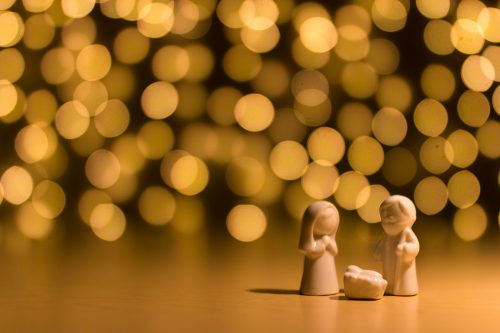
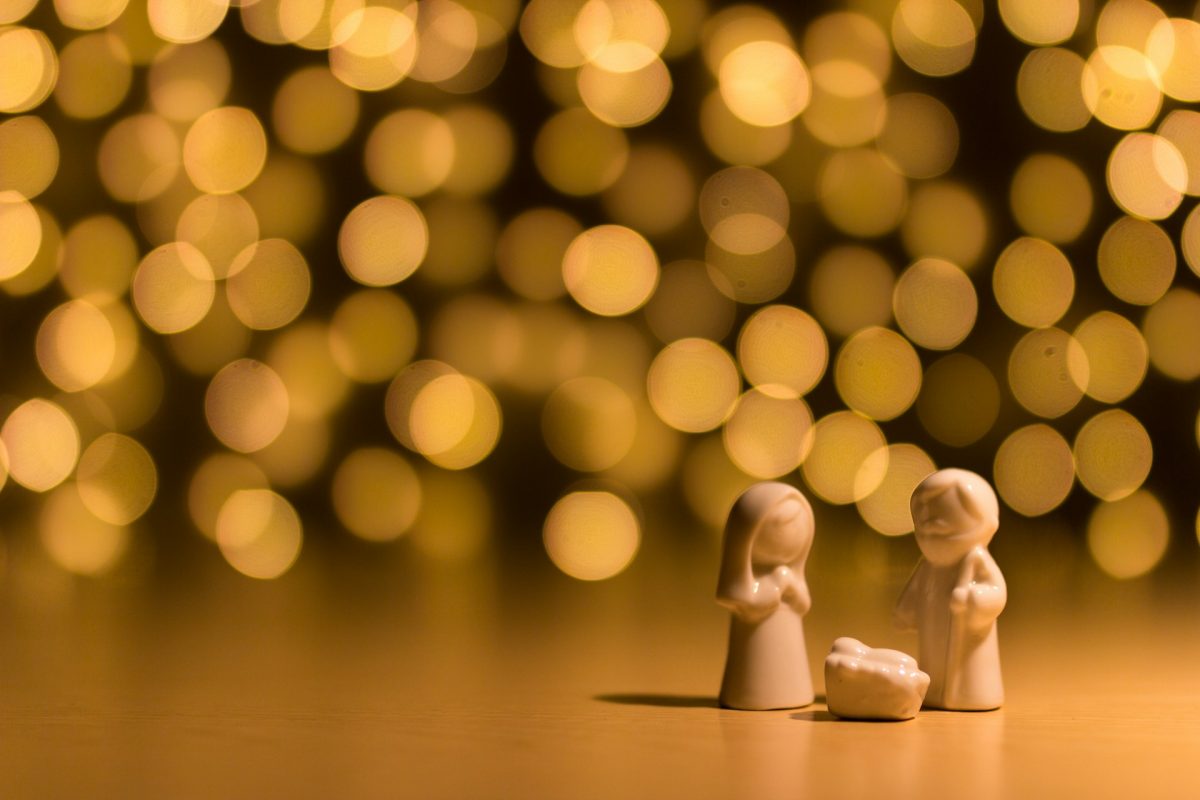
Photo by Gareth Harper on Unsplash
This Sunday marks the fourth week of Advent, and churches around the world will light the final candle in the Advent wreath. This candle represents Love, following the light of its sisters, Hope, Peace, and Joy. Together, these four virtues pierce the gathering darkness and point the way to Christ’s appearing.
This year is full of scar tissue from many wounds inflicted on our sense of security, trust in each other, trust in the government. Wounds inflicted through injustices and intentional “traumas.” Wounds that pierced us collectively and individually. It has felt so hopeless, chaotic, joyless, and hateful. How could the Light of light descend and burn bright here at all?
And yet, I humbly submit in these evermore darkening days, though it seems hopeless and unviable, like my miraculous son, life can be found in the middle of our deepest wounds. God can and will come down into them and scatter the darkness. He can make joy and peace flourish even in the middle of fear and death. God offers us his Love in the most hopeless of places this Advent. I pray that we all have the grace to let it come.
Juliet Vedral is a writer, child-wrangler, and amateur shoe collector, as well as a senior associate at The Clapham Group. Her writing has also appeared in Sojourners. A native New Yorker, Juliet currently resides in Arlington, VA, which is still a weird thing for her to say.