Through insightful reflections, practical exercises, and thought-provoking questions, Richard Voelz redefines how to do theology outside of a church context.
The ICE shooting in Minneapolis, like the Jan. 6 insurrection, brings into sharp relief two different visions in America. Many of us now filter what we see through a pair of political eyeglasses, blurring facts with ideology.
The Presbyterian Office of Public Witness, part of the Presbyterian Church (USA), says Good is part of ‘a sacred lineage of faithful witnesses who have risked and lost their lives in defense of human dignity.’
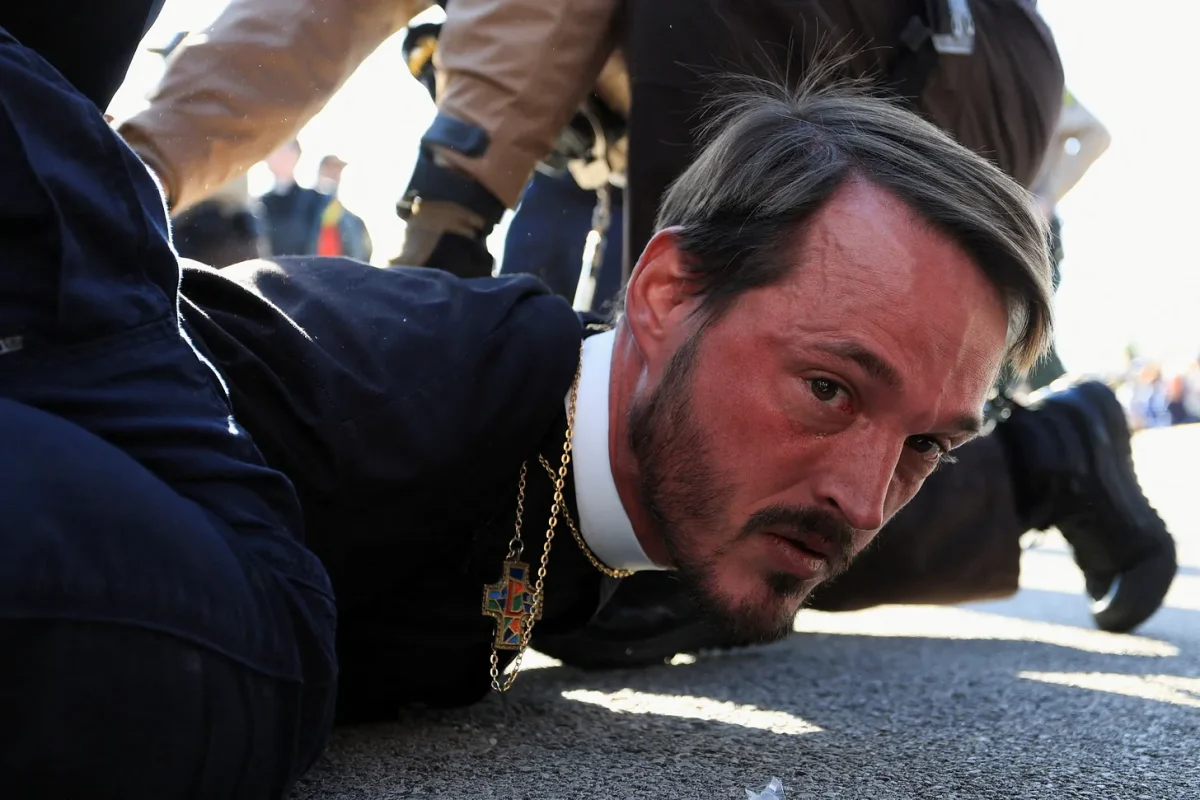
The question of offering pastoral care to immigrant detainees has become a theological and legal flashpoint since President Donald Trump launched his mass deportation effort last year.
C.W. Howell’s book documents what transpired, unpacks the broader meaning, and illuminates the effects of the “Intelligent Design” movement that sought to shake the foundations of the scientific establishment.
Worshippers took a moment to pause, mourn, and sing, even as they continued to organize resistance efforts against ICE's escalated presence in Minneapolis.
Editor-in-Chief Brian Kaylor reacts to a Calvinist pastor in Minnesota to offered a blessing for ICE after the killing of Renee Good. Each generation has preachers excited to stand up as chaplains for the empire.
The faith-based networks, which developed organizing infrastructure and relationships during the Floyd era, are joined by newcomers as resistance efforts have intensified since Good’s shooting.
From the beginning, the U.S. has prided itself on being a haven for persecuted believers. But it has also demanded those believers demonstrate their loyalty in ways that blur the line between conscience and citizenship.
In books such as ‘What's So Amazing About Grace?’ and ‘Where Is God When It Hurts?,’ Yancey spoke to evangelicals struggling with doubts and dealing with hardship.