(RNS) — The Rev. Jamal Bryant, senior pastor of an Atlanta-area megachurch, and his wife, the Rev. Karri Bryant, an executive pastor at their church, have learned to keep parts of their life private.
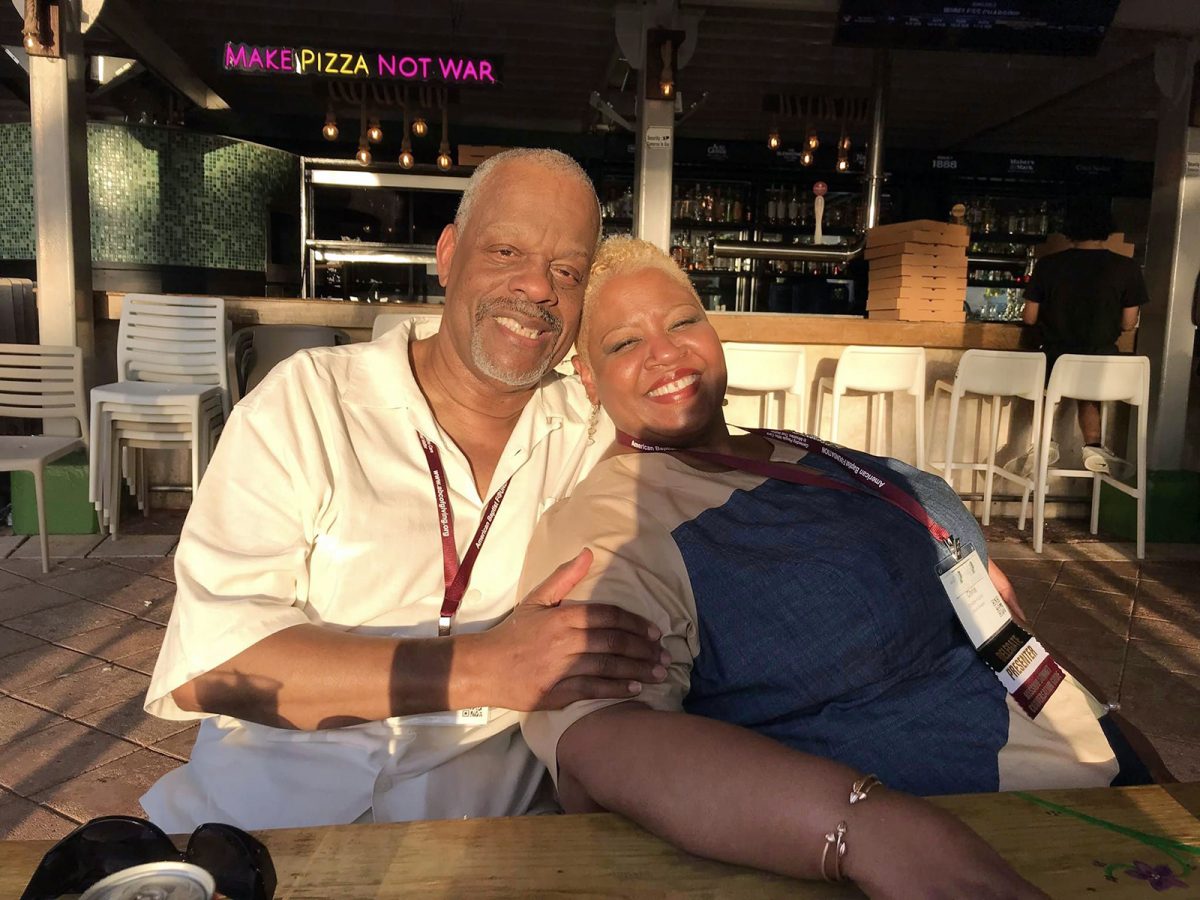
Aristide Smith Jr. and his wife, the Rev. Christine Smith. (Courtesy photo)
For example, they make a practice of not having staff parties or meetings at their home, and they realize that friendships can and should exist outside the church.
“If you honor the fact that God has allowed both of you to be in that space together to serve together, it can be a gift rather than a curse, depending on how you navigate it,” said Karri Bryant.
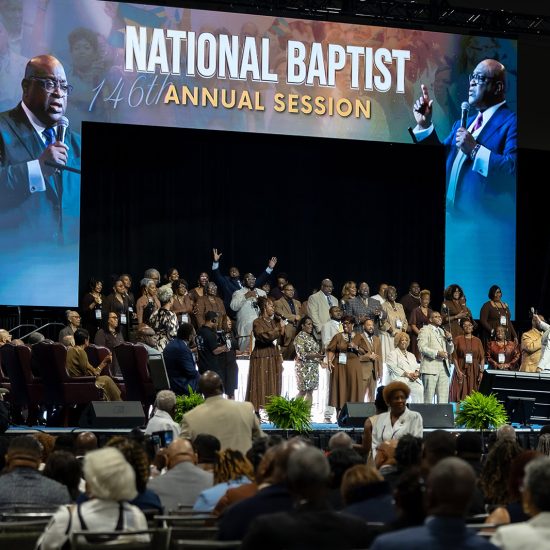
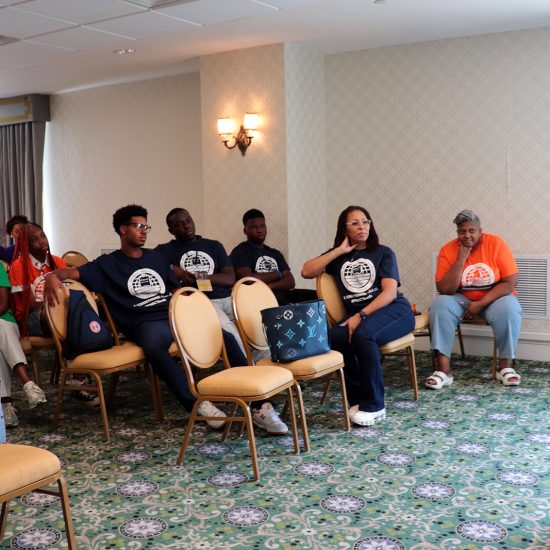
Theirs is a kind of relationship that is rare but prominent enough that the Progressive National Baptist Convention has a fellowship, launched more than four years ago, to bring together clergy couples — as well as other ministry partners — to talk about the challenge of how to serve a congregation together while maintaining boundaries between the church and their marriage. Couples spoke candidly at the historically Black denomination’s recent annual meeting in Washington, D.C., about their experiences, as well as in follow-up interviews with Religion News Service.
Communication and privacy — or lack of it, often — were hot topics as ministry couples vented and laughed.
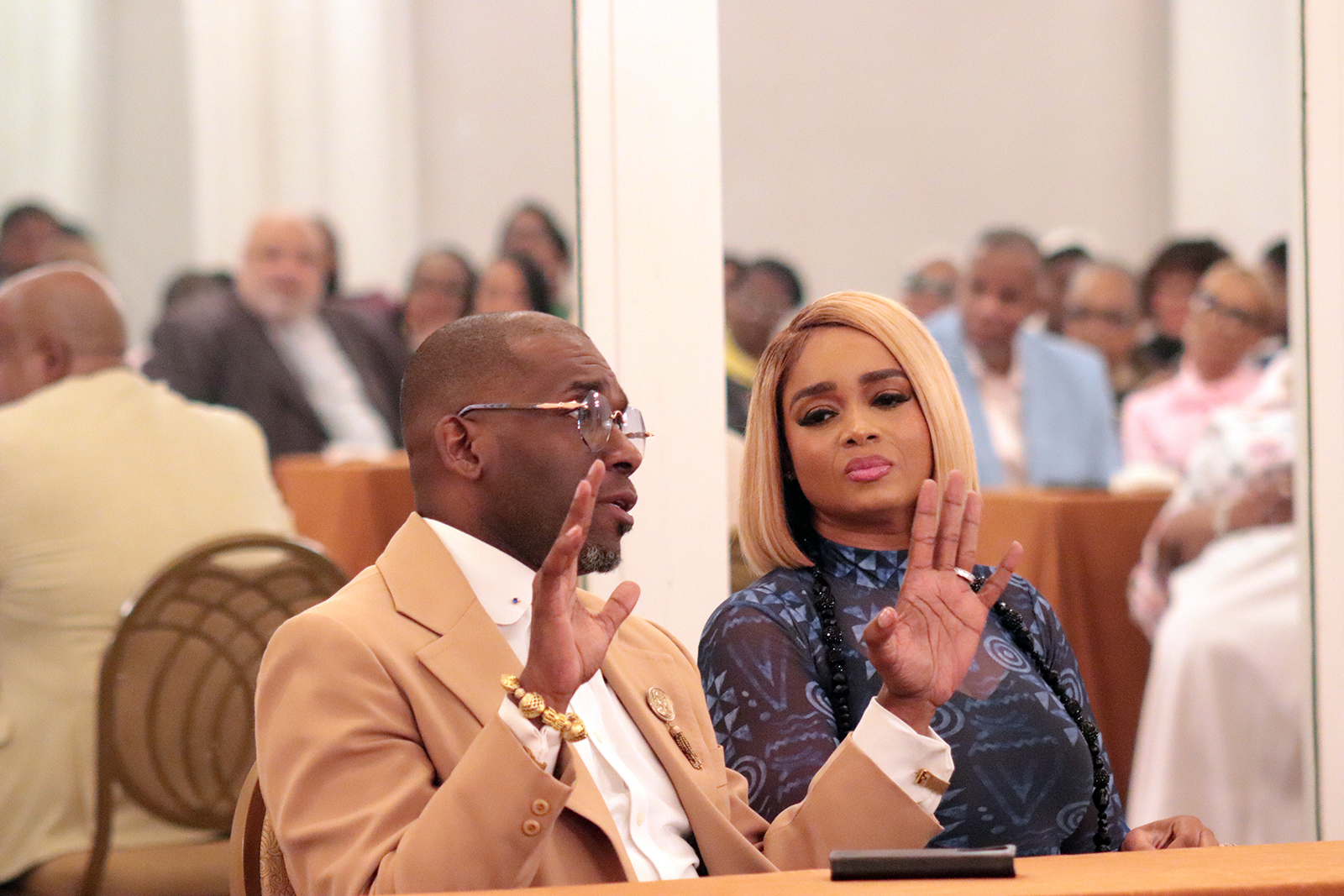
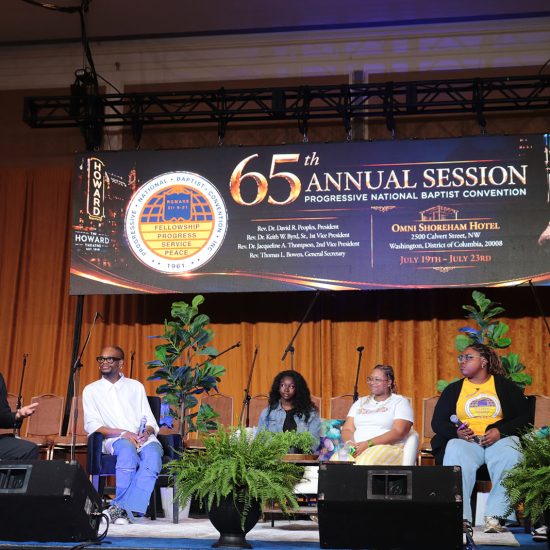
The Revs. Jamal and Karri Bryant help lead a session during the Progressive National Baptist Convention in July 2026, in Washington, D.C. (RNS photo/Adelle M. Banks)
Jamal Bryant was a guest speaker with his wife at an hour-plus discussion at the PNBC’s recent meeting.
“The things that we’ve had to endure in our marriage have been public fodder from even before we got married: It went viral because we went on an ice cream date,” he recalled.
The Bryants, she a lifelong Baptist and he a recent Baptist who was the third generation in his family to be affiliated with the African Methodist Episcopal Church, are each in their second marriage after their wedding about a year and a half ago.
In interviews, other couples in ministry together said they resonated with the Bryants’ rules and have set up some of their own.
Before they became empty nesters and traveled together, Bishop Michael Scott and Elder Tamara Scott — self-described Sunday school sweethearts based on where they met — had a rotation where he preached most of the time but she had a designated Sunday for her sermons at their church in Kalamazoo, Michigan.
“Only she and I would know which Sunday that was, so that the public would not pack it out on her Sunday,” said Michael Scott, who is affiliated with the PNBC and is also a regional bishop of the Global United Fellowship.
Statistics on clergy and their spouses are hard to come by, but despite a growing number of women clergy in some denominations, clergy couples continue to be rare. The 2018-19 National Congregations Study, which included 1,262 participants of Protestant, Catholic, and non-Christian traditions, found that fewer than 1% of those congregations had co-leaders married to each other.
Tamara Scott, who is both the church’s “leading lady” — a less hierarchical term than the more commonly used “first lady” — and the spiritual care leader on their church’s staff, added that she and her husband developed another rule about each other’s preaching.
“You have someone who is a consummate professional who can tell you what you did well and what you missed, but never on the same day,” she said. “You can’t say anything about somebody’s sermon until 24 hours after.”
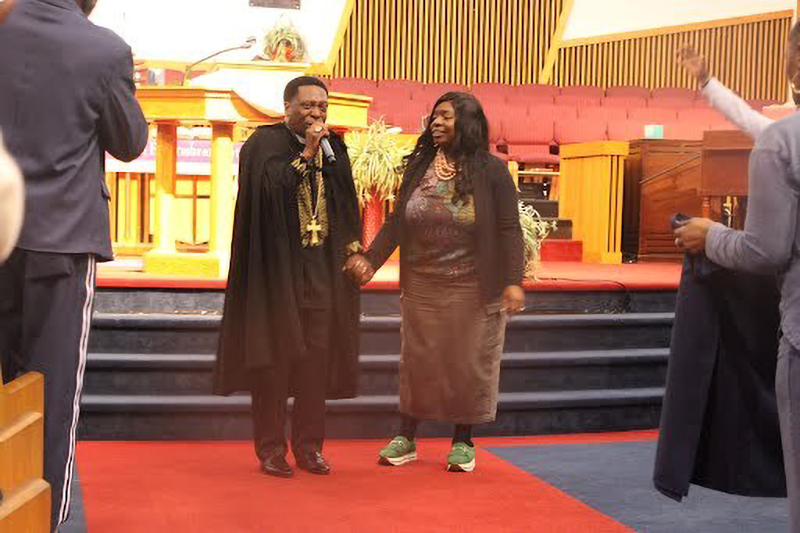
Bishop Michael Scott and Elder Tamara Scott in 2026. (Photo by Devon Robinson)
The Scotts are co-chairs of the Progressive National Baptist Convention’s Couples in Ministry Fellowship.
In a session held earlier in the PNBC meeting, Tamara Scott said the couples in ministry talked about the need for spouses to better support each other in times of grief.
“Some people even in the room even admitted to their own selfishness,” she said, as couples shared about how sometimes spouses had not offered them the same level of prayer and support they gave to bereaved families in their congregations. “I believe that there was some healing that was initiated in that space during our time together.”
Couples in ministry together say they often are expected by their congregants to behave at a higher standard than others.
A man in the audience who described himself as a “second-generation preacher” said his father would never dance, but he and his wife will go out dancing on a Friday night or dance at a wedding.
“Folks will have their cameras so it end up on Facebook, and that authenticity of who we are — we just gonna be who we are,” he said. “But it doesn’t sometimes meet the standard of the congregation or colleague.”
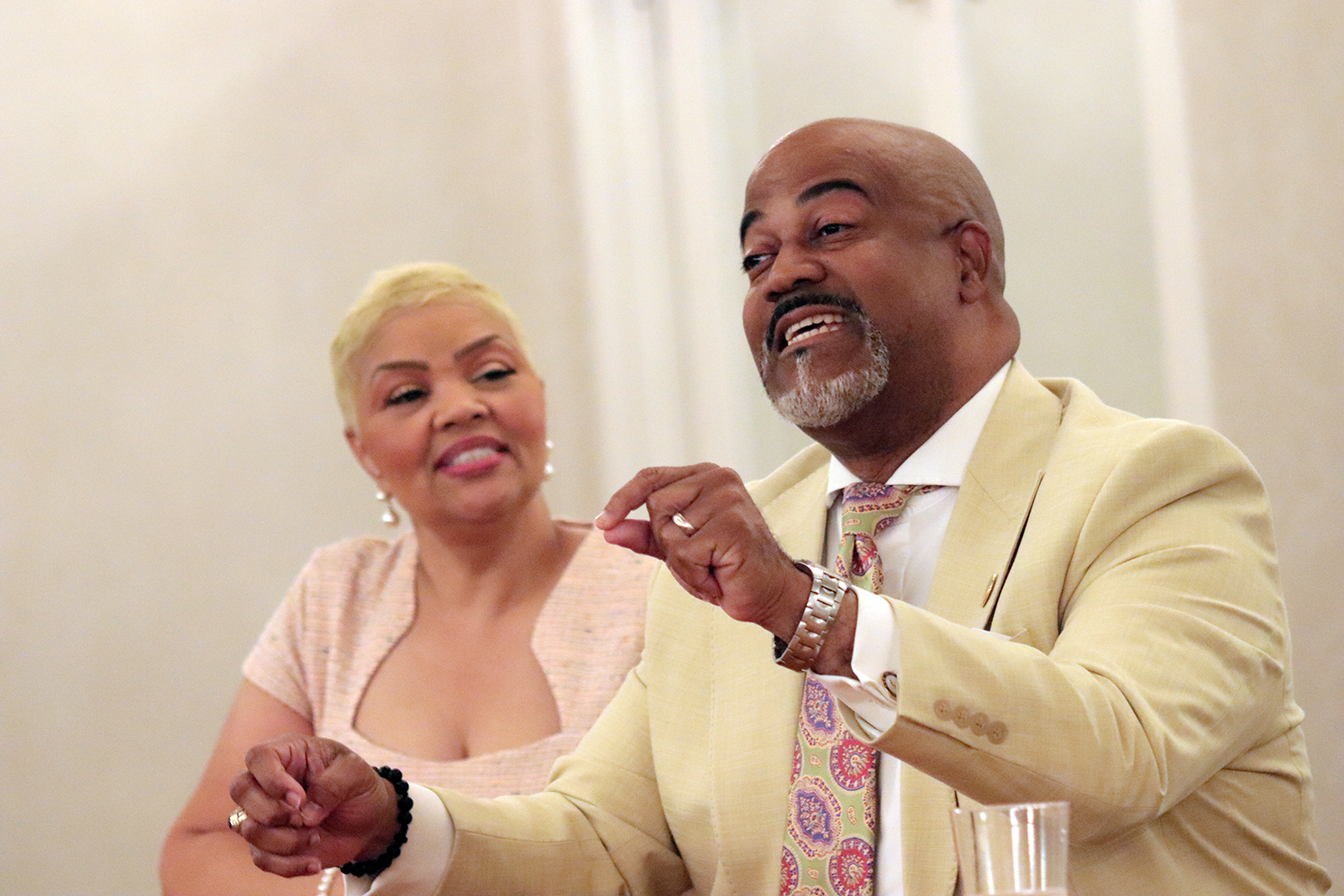
Outgoing Progressive National Baptist Convention President David Peoples, right, and his wife, Margaret Peoples, in July 2026, in Washington, D.C. (RNS photo/Adelle M. Banks)
Outgoing PNBC President David Peoples and his wife, Margaret Peoples, joined the Bryants for the panel discussion. They said they could relate to the concerns about the public perception of the private lives of pastors’ families.
“We understand because me and my siblings, being pastors’ children, we did grow up in a fish bowl, and maybe not on the same level as you all now because everything is social media,” she said. “But the Black church is always social media.”
Depending on the circumstances, Michael Scott said therapy, either as couples or individuals, is recommended by the ministry, though considering a counselor outside their spiritual leader has been “out of the question” for some.
Both the Bryants spoke of how their therapists have helped them individually and provided guidance for their joint personal and professional lives, when their “very traumatic” first six months of this year included criticism for a dress she wore at a late-December event and for the decision he made to end a faith-led portion of a boycott of Target.
“What I realized, even from talking with my therapist, even as we went into the whole Target situation, I didn’t know outside of prayer and presence what to do for my husband,” she said. “So checking in with him to say, ‘I might not have the answers to this, but have you sorted this through with your therapist? Because she may be able to help you unpack some things that I might not be able to help you unpack.’”
Jamal Bryant said an outside expert — sometimes someone of a different race or ethnicity — might be the best source for counseling, a form of assistance he said the vast majority of Black pastors personally avoid.
“We too can have rough patches in our marriage,” he said, drawing “amens” in response. “So you don’t have to always act like it’s Fantasy Island. Sometimes it’s the Titanic. You got to figure out, ‘How do I deal with the authenticity of who we are,’ and move through in that healing place.”
The Rev. Christine Smith, pastor of a Cleveland-area church and a co-chair of the fellowship with her husband and the Scotts, said she was not aware of another denomination-wide emphasis similar to PNBC’s.
“Sometimes individual churches will have couples ministries, but frequently they are pastors and ‘ministers’ wives’ events,” she told RNS.
Her husband, Aristide Smith Jr., is not clergy. He is a broadcast engineer and “first gentleman” at their church.
“Sometimes she gets all the limelight,” he said, adding, “I’m very secure in who I am and what I am.”
He said he makes sure to show respect for his wife and her church assignment by calling her “Doctor Smith” or “Pastor” in front of church members.
“I don’t say Honey or Darling like we do at home,” he said, and noted, “When she come home at night, I’m still the head of the house.” Christine Smith agreed, saying, “Amen.”
And when congregants ask him about the topic of his wife’s next sermon, he tells them, “I’ll find out when you find out.”
The Smiths enjoy listening to gospel quartets and the “old school” music of Aretha Franklin and Marvin Gaye as well as watching cooking shows like The Food Network’s “The Best Thing I Ever Ate” and “Delicious Miss Brown.”
The Scotts go freshwater fishing together at a lake near their home and enjoy bowling and watching movies. They say they strive, despite the fact that “ministry is never really finished,” to take a break from their professional responsibilities after their workdays.
“We can have those boundaries and say, ‘Well, let’s leave that at church’ because we work there together,” Michael Scott said. “I think that is very beneficial to being a couple in ministry, being able to serve together and spend your time together working, but also enjoying each other’s company.”