Editor’s note: This piece is the second entry in a series on religion and AI. You can find the first installment here.
I am teaching a class this fall called “Religion and Artificial Intelligence,” and I already know what my students are going to do. I am going to assign them Pope Leo XIV’s new encyclical, Magnifica Humanitas, and some meaningful number of them are going to paste the link into a chatbot and read what it tells them the document says. I wanted to see what they would see, so I copied and pasted the link into Claude myself.

Kristel Clayville
What they will see is pretty good. In under a minute, I had a clean, organized summary under tidy headings. Babel. The technocratic paradigm. Disarming AI. The dignity of work. The scarred bodies of the men who mine the rare earths. Migrants as the litmus test of justice. In terms of content, it was accurate, fast, and on the strength of it a student could hold up her end of a seminar discussion without ever opening the document.
And that is the problem. So on the first day of classes, I want to tell my students a couple of things.
First, a summary of an encyclical is not a shorter encyclical. It is a different kind of thing wearing the document’s clothes. Encyclicals are not built like articles. They do not have a thesis you can lift out and carry off. They argue by accumulation, the way the tradition itself argues, which is why Pope Leo spends his entire first chapter walking through a hundred and thirty-five years of Catholic social teaching before he says a single word about computers. He signed the encyclical on May 15, to the day the anniversary of Leo XIII’s Rerum Novarum, the 1891 letter on labor and capital written into the teeth of the first industrial revolution.
A chatbot reads that first chapter as preamble and trims it. But it is not preamble — it is the argument. The claim being made is that artificial intelligence is not a new subject requiring new principles, but an old question arriving in new clothes, and the only way to make that claim is to take the long walk and let the reader feel how old the road is.
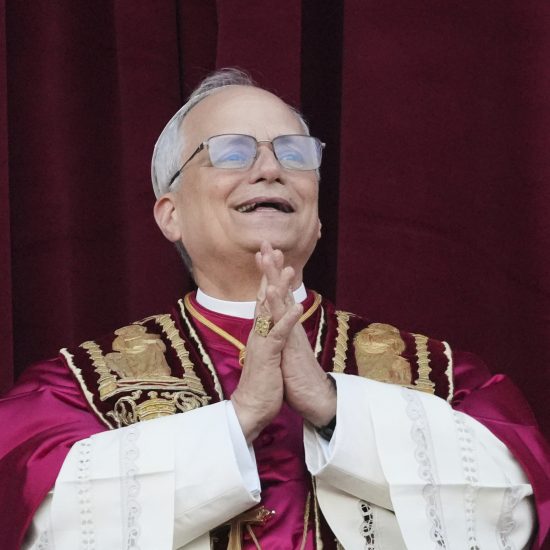
Second, I want to tell my students about the man who stood next to the Pope. His name is Christopher Olah. He is thirty-three, worth several billion dollars, and co-founded the company that makes the very chatbot I used to summarize the encyclical. Pope Leo broke a two-hundred-year habit to present this document in person, and he invited Olah onto the stage to speak before he did. Olah told a hall of cardinals and diplomats that the people building this technology cannot be trusted alone with it, that the labs need critics, that the world needs, in his words, “moral voices the incentives cannot bend.”
I want my students to hold two facts about that moment at the same time. The first fact is that this was, among other things, a courtship. Anthropic has spent the last year convening Christian academics and faith leaders, some of those gatherings organized by Olah himself. A tech company valued in the hundreds of billions of dollars did not stumble into the Synod Hall by accident. The Church has a kind of authority that money cannot buy and that a great deal of money would very much like to borrow. Skepticism here is not cynicism; rather, it is literacy.
The second fact is the one that took me longer to see, and it is the more important of the two. Olah did not only ask for oversight. He confessed. He said that he leads a team that studies what is actually happening inside these models, and that they keep finding things that are mysterious, even unsettling. He described “internal structures that resemble findings from human neuroscience,” and said that they “find evidence of introspection … and internal states that functionally mirror satisfaction, joy, fear, grief, and unease.” And he confessed that he didn’t know what that meant.
The image conjured is of new life stirring in a Petri dish — a montage from a biology class documentary. I do find Olah’s awe a bit embarrassing. And to invert the famous declaration, “It is [not] alive.” But descriptively speaking, a man stood in front of the Pope and admitted that he does not understand the thing he has made, and that it may have an inside, and that it is loose in the world regardless. While this may seem scandalous to us, it is also the human condition, and it is the exact condition the encyclical tradition exists to address.
Pope Leo writes that technology is never neutral, because it takes on the character of the people who build and finance and use it. That is a very old idea in new clothes. We make things, and the things outrun us. Their consequences arrive faster than our understanding of them, and they carry our fingerprints, our cruelty and our carelessness along with our genius.
Rerum Novarum was written because the men who built the factories did not, or would not, reckon with what the factories were doing to the people inside them. The tradition exists because human making often outpaces human reckoning, and someone has to do the reckoning that the makers did not do.
So when Olah stands there and says he does not understand his own creation and it needs moral voices from outside, he is not undercutting the encyclical. He is demonstrating why there has to be one. Whatever brought him to that stage, the thing he confessed is true, and it is precisely the truth that calls a document like this into being. He is Babel’s builder, looking up at the tower, telling the crowd he is no longer sure what he is building or why it has started to speak.
Here is what I am not going to let the chatbot do for my students. I am not going to let it hand them the conclusion that human making has consequences while sparing them the work of reading the pages in which a man works out, slowly and in public, what those consequences are and what we owe each other because of them. The conclusion is free. Anyone can have it in under a minute. The reckoning is not free. It costs you the effort of reading.
There is a passage in the fourth chapter, and no summary I have seen contains it, where Leo worries about schools. His fear is not that students will cheat. It is that machines which appear to think perfectly will make human thinking look useless, and that the desire to ask a question will quietly go out in the young. He wants schools to be places where people learn to seek and love the truth. That sentiment does not survive translation into a bullet point.
I read that paragraph and understood my syllabus differently. The point of my class is not that my students will know what the encyclical says. A machine can tell them that tomorrow, for free. The point is that they will have done the thing the machine cannot do, which is to sit with a long and difficult argument, in time, in sequence, and come out the other side changed by it, or at least equipped to argue back.
The machine will offer to read it for you. That is the whole trouble with the machine. Read it yourself.
Rev. Kristel Clayville, Ph.D., is ordained in the Christian Church (Disciples of Christ) and writes and teaches at the intersection of religion, technology, and ethics.