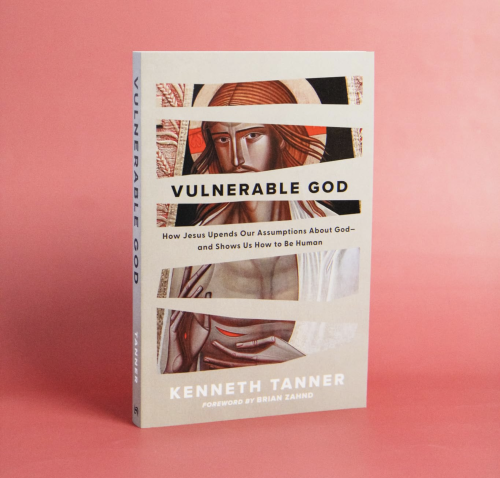
VULNERABLE GOD: How Jesus Upends Our Assumptions About God — and Shows Us How to Be Human. By Kenneth Tanner. Foreword by Brian Zahnd. Grand Rapids, MI: Brazos Press, 2026. Xiv + 224 pages.
It may have started with Constantine, but I think it goes back further than his decision to embrace Christianity, since the Christian embrace of an “omnipotent” God, who can control everything, emerged long before Constantine. Belief in an all-powerful God can have important implications about how we understand power itself. Is it possible, however, for Christians to envision God very differently? Might Jesus reveal that difference as he embodied the divine presence? That is, when Christians try to envision the nature of the God whom we cannot see, what do we see in Jesus, who is the visible manifestation of the invisible God?

Robert D. Cornwall
When we ask this question, we need to ask a further question. Where did he most fully reveal God’s nature? Is it not on the cross? Although we may turn the cross into jewelry, it was in reality the cruelest and most humiliating form of execution the Romans could come up with. So, if Jesus revealed God to humanity while on the cross, do we not see a vision of the vulnerable God? This may not be the way we often view God, especially if we wish to use God to justify using power to dominate others. That said, if Christians do believe that Jesus is the incarnate Son of God, might we not only gain a different view of God but a different understanding of power?
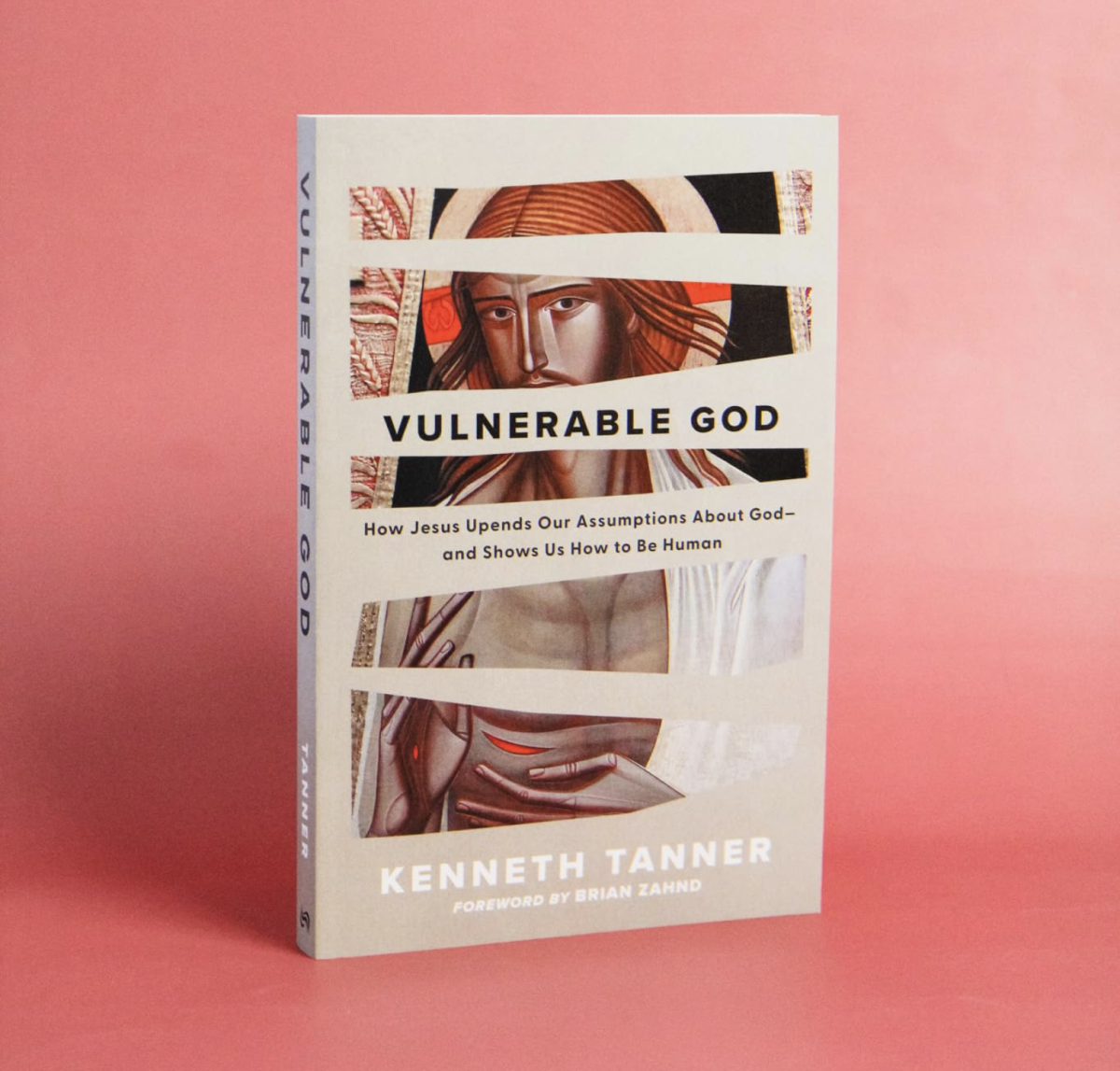
It might not be the traditional way of viewing God, but Kenneth Tanner, the pastor of Church of the Holy Redeemer in Rochester Hills, Michigan, has written a beautiful tome that invites us to encounter God in the person of Jesus. He titles the book Vulnerable God: How Jesus Upends Our Assumptions about God—and Shows Us How to Be Human (Brazos, 2026). That last phrase is important, because in viewing God through Jesus, whom the Christian tradition understands to be both fully human and fully divine, we gain a better sense of what it means to be human.
As to the author of Vulnerable God, Kenneth Tanner is a friend and colleague of many years, with whom I have enjoyed many conversations about the Christian faith. He brings a rather unique life experience to his ministry and to this book. One of the things I have appreciated about Kenneth is the way he draws on a wide variety of sources in his theological reflections. He draws on his experience as a Pentecostal/Charismatic, Anglican, Evangelical, Openness pastoral theologian with a strong interest in Eastern Orthodox theology, including the work of John Behr, David Bentley Hart, and Sergius Bulgakov. In other words, this is a work of theology that is rather eclectic, but that will help many come to grips with the God present in Jesus.
The central theological thread running through Tanner’s Vulnerable God is his affirmation that Jesus is God, just as the creeds declare. At the same time, also following the creeds, he affirms Jesus’ full humanity. It is in his existence as the God-Man that Jesus reveals to us God’s true nature, while helping us better understand our identity as humans. In his foreword to the book, Brian Zahnd points out that Tanner loves icons and is himself an iconographer in the sense that he uses words that can help us envision God’s nature, such that we might be transformed by our encounter with this icon of Jesus. The icon that he holds most dear is the Sinai Pantocrator that hangs in Saint Catherine’s Monastery in Egypt. Tanner writes of this icon that “it is meant to be for us a divine and human portrait that draws us into mystical communion with the person we behold” (p. 62). It is this mystical communion that Tanner invites us to participate in, and in doing so, we can “behold the likeness of Jesus in every human” (p. 68).
Tanner divides Vulnerable God into four sections, each of which emphasizes the ways Jesus helps us understand God’s nature as viewed through Jesus’ humanity, even as he invites us to participate in Christ’s divinity such that we might be transformed by that encounter. Along the way, he walks us through Scripture, even as he draws on a variety of sources, including his own Pentecostal background as well as his engagement with Orthodox theologians such as Sergius Bulgakov, David Bentley Hart, and John Behr. He also draws on early Christian writers including Gregory of Nyssa, Athanasius, Origen, and others. In fact, I know from my conversations over the years with him that he finds significant insight from his study of the early Christians.
The four sections are titled “A Human God,” “A Human Life”, “A Human Death,” and “A Human Future.” As we move from the mystery that is the incarnation through birth, life, death, and the eschaton, Tanner writes with an exquisite theological sensibility. Although he is well-read and draws on his own theological training, he doesn’t get sidetracked by debates over critical issues. If you’re looking for a book that wrestles with biblical criticism, this isn’t that book. Instead, this is a spiritual reflection on God’s identity as reflected in Jesus’ human life. In the course of this reflection, Tanner also brings into the conversation his own life experiences, especially his pastoral experiences in the church, as a chaplain for first responders, and simply being present to the community. What we discover here is a revelation of God that, as the subtitle suggests, upends our understanding of God.
I offer my thanks to Kenneth because he writes in a contemplative way. So, even as it is theologically informative, this book doesn’t become overly caught up in the kinds of details that might distract us from encountering the God who loves the world and shows that love through the person of Jesus. As Tanner leads us on this journey through the life of Jesus and on to the eschaton, he invites us to stop along the way to contemplate the Gospel’s portrayal of Jesus. Because this is a contemplative vision, Tanner pays special attention to the portrayal of Jesus in the Gospel of John. He doesn’t give exclusive attention to John, but he finds that portrayal especially informative. Given this attention to John’s portrayal, Tanner spends time with the raising of Lazarus and Jesus’ encounter with the Samaritan woman, who, according to tradition, carries the name of Photini. When it comes to the resurrection, he focuses on Mary Magdalene’s encounter with the risen Christ. Tanner concludes his chapter on Mary’s encounter, writing that “we all follow Mary Magdalene, who was the first of us humans to announce this gospel” (p. 176).
If you are looking for a resource that will draw you into the person of Jesus, Vulnerable God does that and more. For as we contemplate Christ, who revealed God’s true identity on the cross, we discover the vulnerable God who loves the world. This isn’t the God who sits on high, armed with lightning bolts, who justifies slavery and war. This is the God revealed by Jesus on the cross, the vulnerable God who shows us how to be human. In writing this book, Kenneth Tanner has written a beautiful icon of the vulnerable God.
Tanner closes Vulnerable God: How Jesus Upends Our Assumptions About God — and Shows Us How to Be Human with a chapter titled “One.” In this concluding chapter, Tanner focuses on the hymn found in the letter to the Colossians that describes Christ as the visible manifestation of the invisible God, who creates all things and holds all things together. He writes of the Colossian hymn: “The hymn says that everything of God was present in Christ, who we’ve learned is human without losing anything divine and divine without losing anything human. The song says that Christ, as the creator and sustainer of all things, is the first in creation to live beyond death so that he can bring everything in creation — all things! — back into union with God” (p. 211). This reference to “all things” is a key to Tanner’s vision of the vulnerable God who has been revealed to us in the person of Jesus so that we may all experience union with God. So, in a time when people are feeling vulnerable, perhaps an encounter with the Vulnerable God whom Kenneth Tanner describes in this written icon will provide spiritual sustenance for the journey into the eschaton.
This review originally appeared on BobCornwall.com.
Robert D. Cornwall is an ordained minister in the Christian Church (Disciples of Christ). Now retired from his ministry at Central Woodward Christian Church (Disciples of Christ) of Troy, Michigan, he serves as Minister-at-Large in Troy. He holds a Ph.D. in Historical Theology from Fuller Theological Seminary and is the author of numerous books, including “Eating With Jesus: Reflections on Divine Encounters at the Open Eucharistic Table” and “Second Thoughts About Hell: Understanding What We Believe” coauthored with Ronald J. Allen. His blog Ponderings on a Faith Journey can be found here.