Could the apocalyptic prophecy in the Book of Revelation only occur if Christians don’t act like Christians? Wars and rumors of wars, famine, and disease are things that would be in decline if all Christians lived by the Sermon on the Mount. And why must the end times happen — does the Bible show that all prophecy is set in stone? Can we bypass the apocalypse by becoming worthy of God’s love and presence? Maybe we should ask Jonah.
Michael Mellette
The Sermon on the Mount is one of the greatest works of ethical and moral teaching ever created. I say that not only from rose-tinted Christian glasses but through a philosophical lens as well. “Turn the other cheek” is commonly misread as passivity. It is not. It shows strength. By turning the other cheek, you cause others to show their violence because you show them your peace.
Gandhi created a whole movement based on this principle. “First take the plank out of your own eye” is humbling because it asks for self-reflection, in the same vein as Socrates saying that an unexamined life is not worth living. “Blessed are the peacemakers” rests on the distinction between the absence of conflict and the seeking of justice. Confucius taught that a society is held together by harmony between people, not by force. The Sermon goes further and gives the work of reconciliation moral weight: the one who ends a feud, not the one who wins it, is honored.
If these words are followed in good faith, how can an apocalyptic prophecy come true?
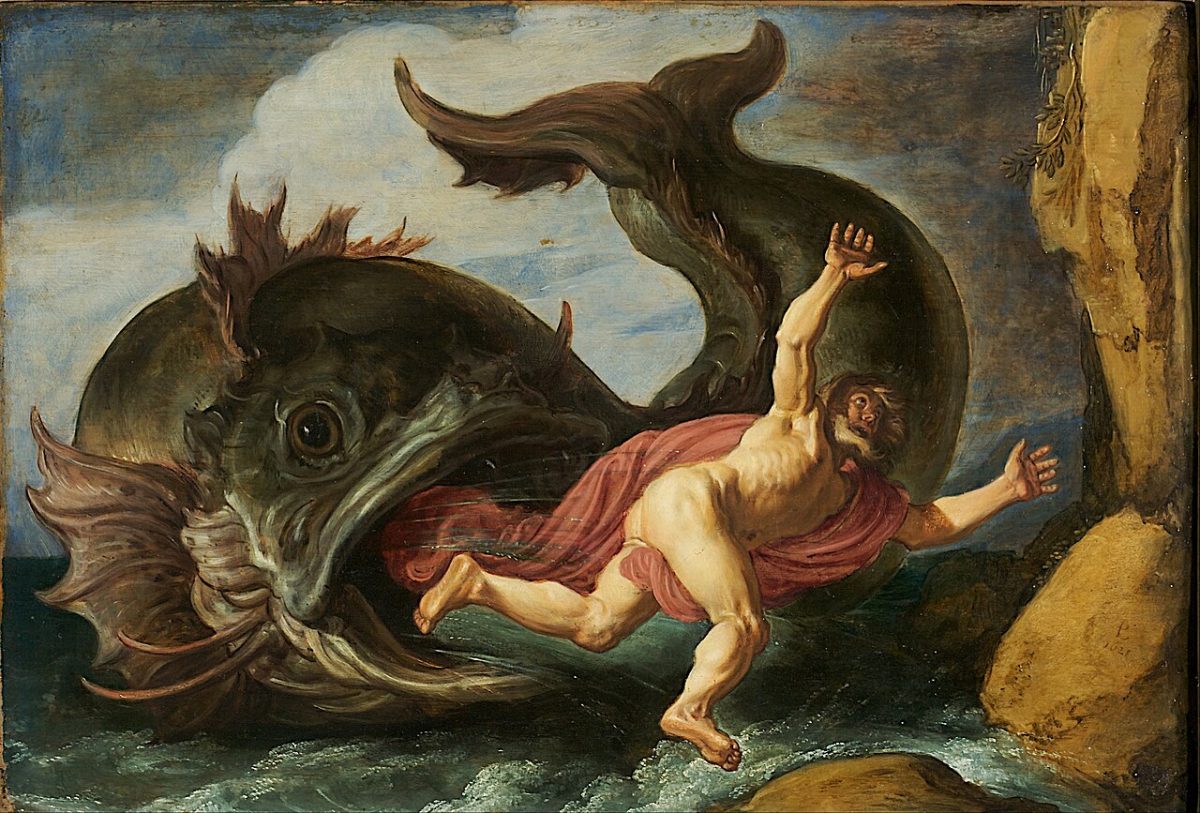
Jonah was a prophet of Israel who was instructed to go to Nineveh and warn them of their impending doom at the hand of God. Jonah ran from his responsibility and was repaid by being besieged by a storm while at sea, after which he was thrown overboard by sailors. By God’s grace, he was saved by being swallowed by a fish. He spent three days praying to God while in the fish, after which he was spat out upon land. Jonah finally proceeded to Nineveh where God’s warning was given.
The people of Nineveh heeded the warning and repented in not just words but actions also. To Jonah’s consternation, God forgave and relented. The angry Jonah decided to sit outside the city, hoping it would fall, all while he complained that the only reason he did not go to Nineveh right away was that he knew God would spare the city. So God provided him a shade tree to be comfortable while he waited.
God then wilted the given shade tree, and because of this, Jonah became more angry about the shade than the city. God then asks whether he shouldn’t care about 120,000 people, and Jonah never answers. How many Christians do you know who act as Jonah did with regard to the apocalyptic prophecy in the Book of Revelation?
The people of Nineveh showed that when true repentance is made in word and in act, God’s mercy can overrule prophecy. Yet my words will still be called blasphemy, and I will be given the moniker of blasphemer. This will be said by the Jonahs, the ones who act in bad faith by refusing to answer my good-faith question: Must the apocalypse happen, and should I not care about the millions of people?
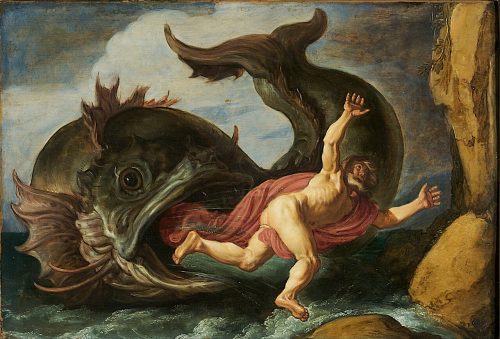
Jonah and the Whale (1621) by Pieter Lastman
But what of the argument that Revelation’s prophecy must happen? The Bible never offers a condition the way Jonah’s warning implied one. It would be in bad faith to say otherwise. “Things which must shortly come to pass” (Revelation 1:1). “Must” doesn’t leave a lot of room for ambiguity. Compare this to “Yet forty days, and Nineveh shall be overthrown” (Jonah 3:4), where overthrown can be read many ways. I can concede the point.
Some, like Rev. Jennifer Butler, have attempted to reclaim the Book of Revelation as a guide to hope. During the United Church of Christ general synod keynote last year, she made the case that the book is not a roadmap for the end of the world, as it is often portrayed by conservative evangelicals and charismatics, but “a revealing of what is hidden and what can be.” When understood in its proper context, it serves as a warning about Roman imperial culture meant to offer hope to the oppressed.
The Sermon on the Mount helps to move us away from fixating too much on apocalyptic prophecy. The peacemakers are blessed, not the warmongers. It does not change the fact that those who work towards “fulfilling” the prophecy of Revelation often do so against Jesus’s own words.
What would obeying the Sermon on the Mount and repenting in word and deed actually look like in practice? Humility. To take the plank out of one’s own eye, to understand that in God’s grand scheme, their value is insignificant. A person seeing that only their influence matters and that it will impact people long after a name is forgotten. Loving thy neighbor, including people that are political and theological opposites. Because all life has value.
Vanity would need to be looked at as shallow again instead of something worthy of praise. People as a whole would need to be able to see past themselves to see the beauty of the world God created. It would look like a large group of people moving in unison towards righteousness to be closer to God. What type of influence would that leave? And when can we start?
Maybe trying to prevent the apocalypse is the wrong path. Maybe God knows the outcome and my words are just that, words. But I cannot know that. No human can. I can only walk the path that I believe is the right one. And my prayer leads me to believe that humans are not doomed to the apocalypse, that we can become righteous enough. Not through fear but through love of God, even if Revelation speaks of the fear of God.
What if opposing God’s apparent plan is actually the most loving thing I can do? And if I purposely move against God’s plan, what happens? I would be working against God to be closer to righteousness, which brings me closer to God. I don’t know — I only have belief, not knowledge.
Only God knows if working towards preventing the apocalyptic prophecy in the Book of Revelation is blasphemous. And if God asks me why I worked against prophecy, I will answer in good faith: Because I love my neighbor.
Michael Mellette is an essayist and writer. Read more at michaelmellette.substack.com.