“Thus says the Lord:
A voice is heard in Ramah,
lamentation and bitter weeping.
Rachel is weeping for her children;
she refuses to be comforted for her children,
because they are no more.” (Jeremiah 31:15)
Every year around this time, I think back to the December day when my brother told me what had happened at Sandy Hook Elementary. Through the years, since I have a son of a similar age, I often would think about what the children who died should be doing. Last year, the survivors of the Sandy Hook tragedy graduated from high school. As the students celebrated their accomplishments, they carried a heavy weight in their hearts for all the empty seats of those who never made it to that day.
Thinking about their story helps me imagine what life was like in Bethlehem in the years after Herod’s slaughter of the innocents. The streets empty of the laughter of small children. The age gaps between older and younger siblings. The burials of all those small bodies. The trauma of witnessing such evil. The recurring nightmares of the soldiers storming in. A town without babies … then without toddlers … then without young children, and so on.
I think about the year that Jesus found himself at the temple in Luke 2:46 and how many families from Bethlehem would have also made the walk to Jerusalem that year, but without a 12-year-old with them. Did they see young Jesus in the temple courts and picture what their own son might have looked like? Did they wonder what happened to the child whose birth precipitated their own child’s death? Was it a silent walk home to Bethlehem with the absence perceived but not discussed? Were they jealous of Mary and Joseph as they came into town from Nazareth with such an engaging teenager? Did Rachel weep for her children once again? Did they have any knowledge or hope that their loss was part of a larger, joyful story of the birth of the Messiah?
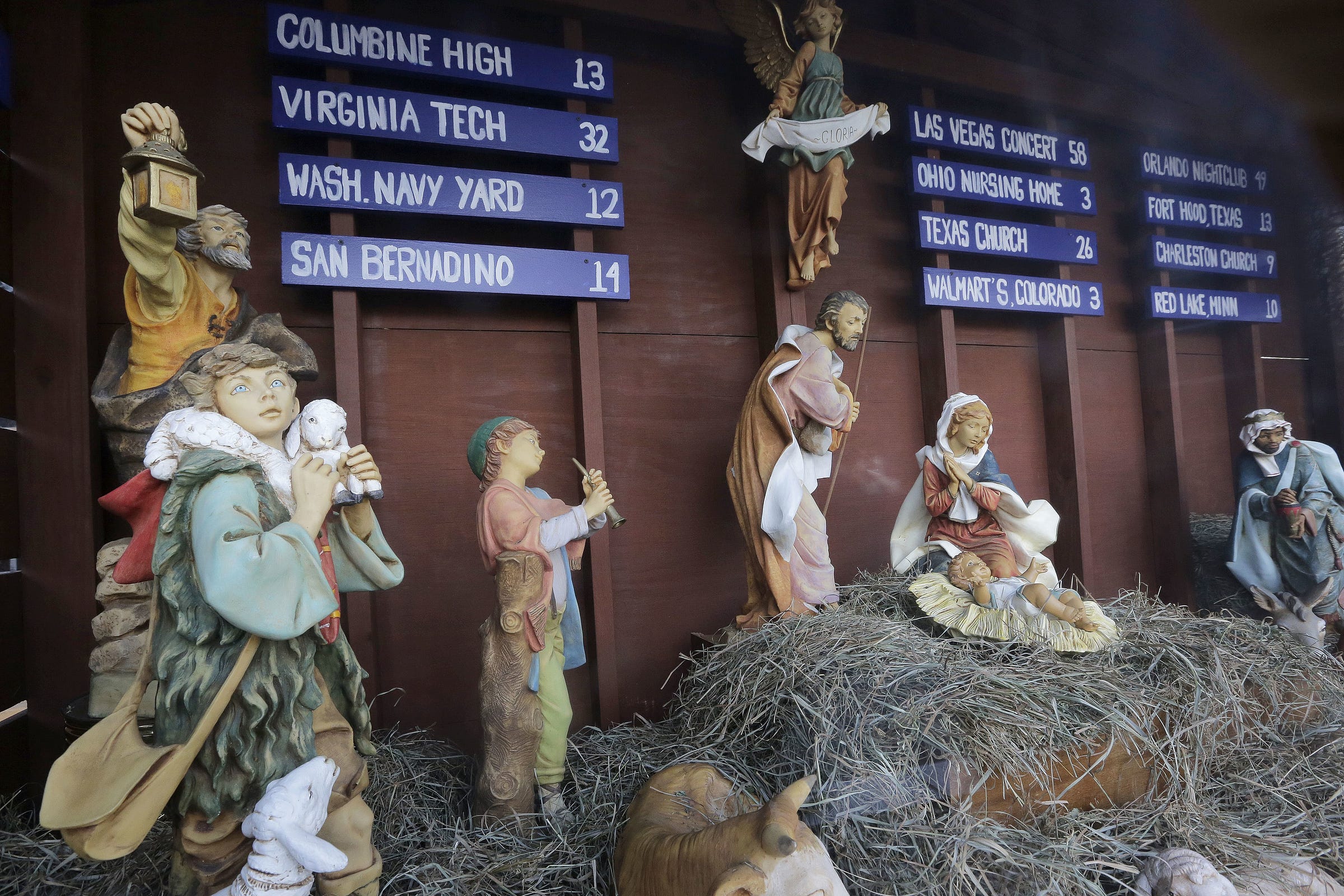
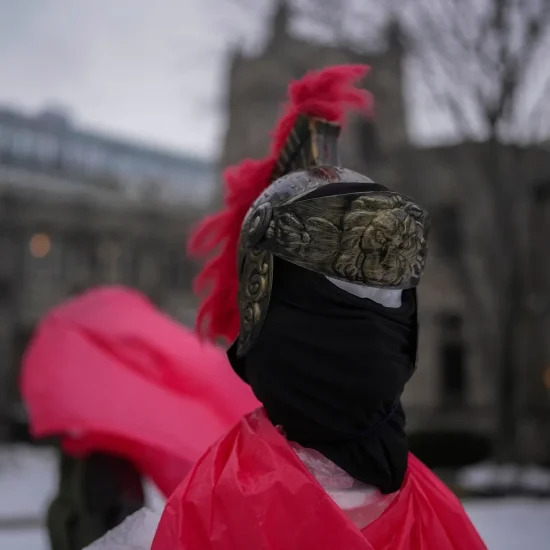
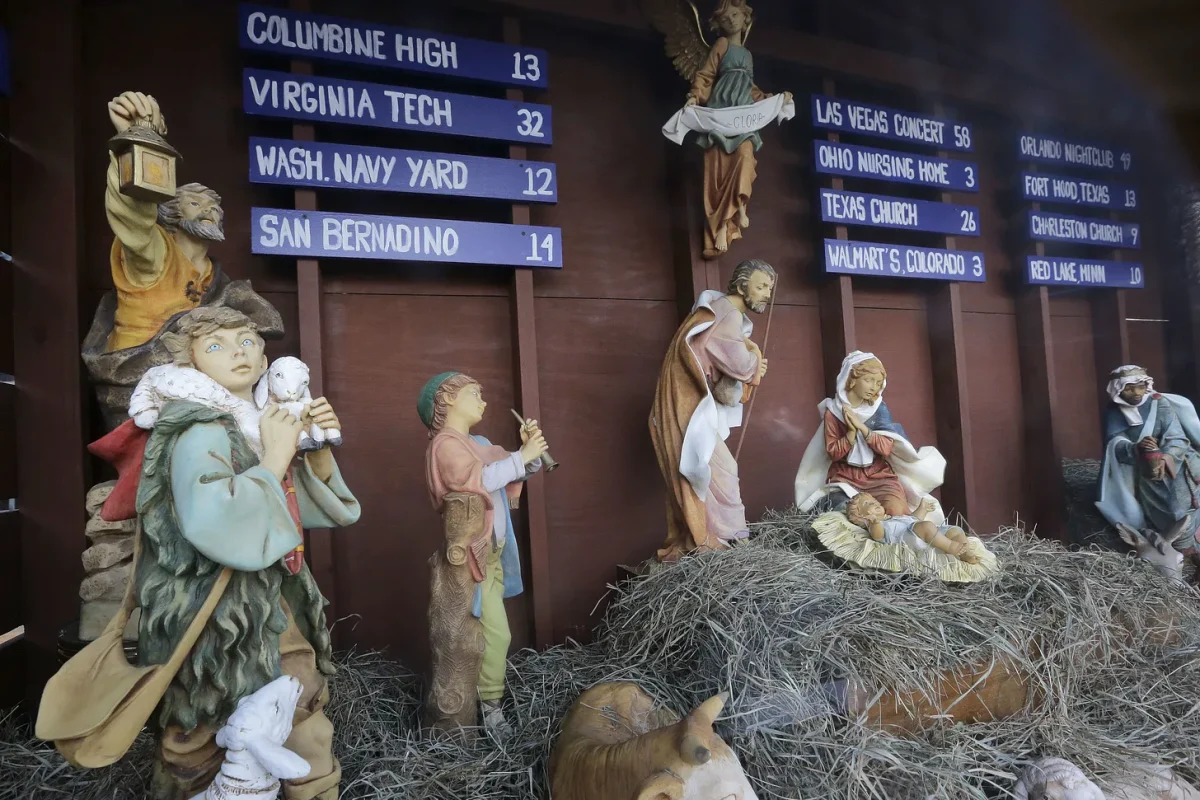
A Nativity scene in front of Saint Susanna Parish in Dedham, Massachusetts, on Dec. 7, 2017, that also includes signs listing U.S. mass shootings and the number of people killed at each in order to call attention to gun violence. (Steven Senne/Associated Press)
In our familiarity with the birth narrative, we often do not consider the long-term consequences for the secondary figures in the story. It was an unsettling time that left long and permanent scars on their lives. Through the previous four years Word&Way has published Unsettling Advent, there have been a host of different conflicts and issues that have left us feeling off-balance and afraid. As one problem seems to resolve and another arises, it is sometimes difficult to remember the long-term impacts of previous seasons of trauma or unrest.
So in this season of quiet reflection, I encourage you to take stock of the ways your life has shifted and changed due to the upheavals of the last few years. Reach out to someone to let them know you are still thinking about their loss, even many years later. Acknowledge your deep wounds and give them air to heal. For it was into the darkness that the great light of Jesus was born, so he could give us hope and assurance once again.
Rev. Dr. Sarah Blackwell is a contributing writer at Word&Way and a graduate of the Gardner-Webb School of Divinity and the McAfee School of Theology. She is an adjunct instructor in the Religion and Philosophy Department at Wingate University in Wingate, North Carolina. Follow her writings at proximitytolove.org.

NOTE: This is part of our Unsettling Advent devotionals running Nov. 30-Dec. 24. You can subscribe for free and receive them each morning in your inbox.