“For unto us a child is born, unto us a son is given: and the government shall be upon his shoulder: and his name shall be called Wonderful, Counsellor, The mighty God, The everlasting Father, The Prince of Peace.” (Isaiah 9:6)
I’ve had a song on repeat this Advent, primarily because I’ve been practicing to play it on the cello tonight at church. So it’s melded in my mind with these unsettling devotionals for this disturbing year.
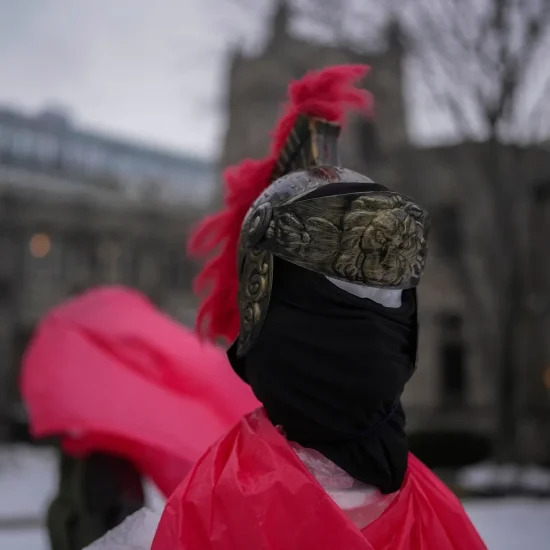
I read through each devotional multiple times: to check it out when an author submits it, as I load it up and pick out a photo for it after Jeremy Fuzy copyedited it, and then once more before scheduling it for publication. Sometimes in the midst of that each day, I’ve taken a break to practice for tonight. As I’ve pondered through these reflections on Advent in a time of religious nationalism, rising starvation in the U.S. and abroad, and soldiers in the streets, “The Coventry Carol” has hung there in the air.
Since I play the cello, it shouldn’t be a surprise I enjoy minor-key songs. But I’ll admit this one’s much darker than carols like “We Three Kings” and “O Come, O Come, Emmanuel” (both of which I love). I found an interesting and challenging arrangement of “The Coventry Carol,” so I decided to work on it. And then it started working on me.
The 16th-century song tells a story we often leave out of our nativity scenes and church pageants: King Herod’s slaughter of infants and toddlers in Bethlehem. Hauntingly, “The Coventry Carol” takes the form of a lullaby sung by the mother of a doomed baby.
Lully, lullah, thou little tiny child,
Bye bye, lully, lullay.
The song experienced a modern revival because of a powerful service 85 years ago. Germany launched a devastating bombing campaign on Coventry, England, in November 1940, killing 568 people and destroying more than 4,000 homes. The city’s 14th-century Gothic cathedral was also firebombed, leaving roofless outer walls but not much else.
Six weeks later, the BBC aired its Christmas Day special from the cathedral’s ruins. On the sanctuary wall that served as the backdrop, the priest had written, “Father Forgive.” Not a declaration with judgment but a mournful prayer requesting peace and goodwill for everyone. As war spread across the world, the service concluded with a choir in the ruins of the cathedral singing “The Coventry Carol.”
Lully, lullah.
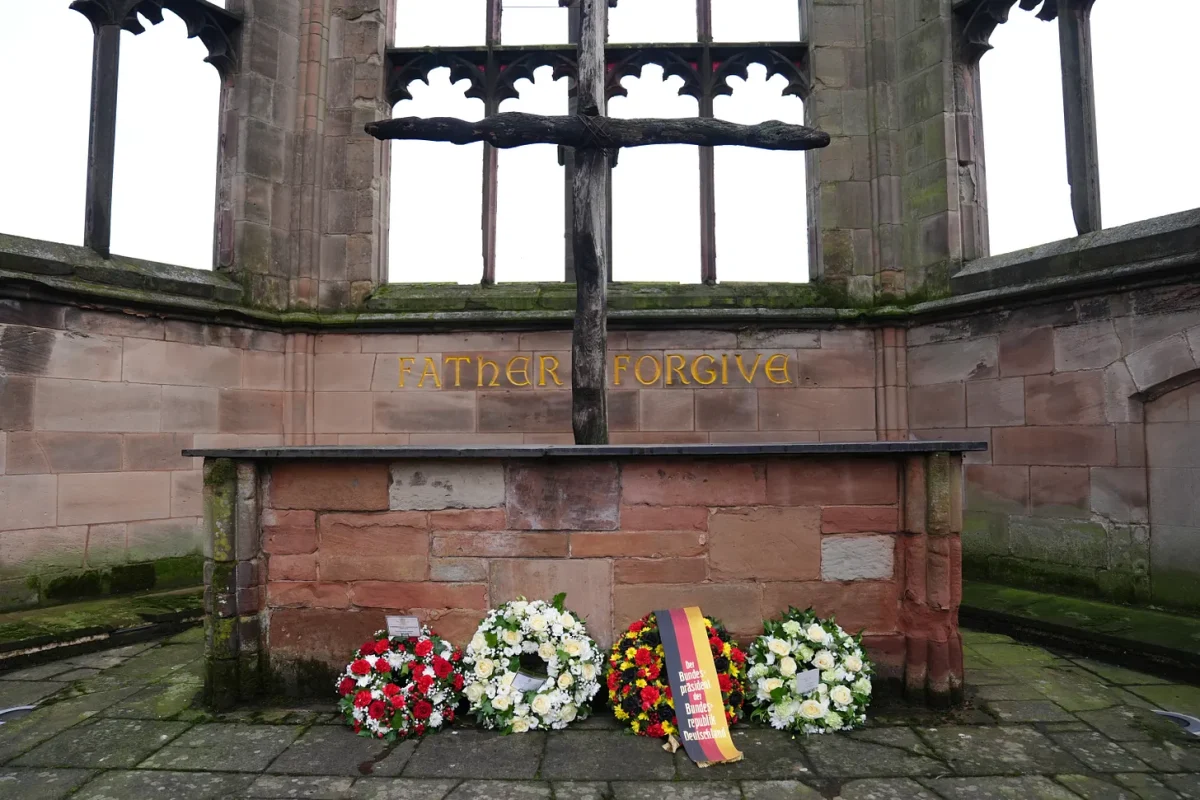
Earlier this month, German President Frank-Walter Steinmeier visited the ruins of the cathedral (and the newer structure built after the war), placing a wreath before an altar made from rubble and a charred cross — with the words “Father Forgive” on the wall behind them. He spoke about peace and reconciliation, which Cathedral leaders have devoted themselves to ever since the priest who wrote “Father Forgive” also preached peace during the 1940 Christmas service and worked to build reconciliation between England and Germany after the war.
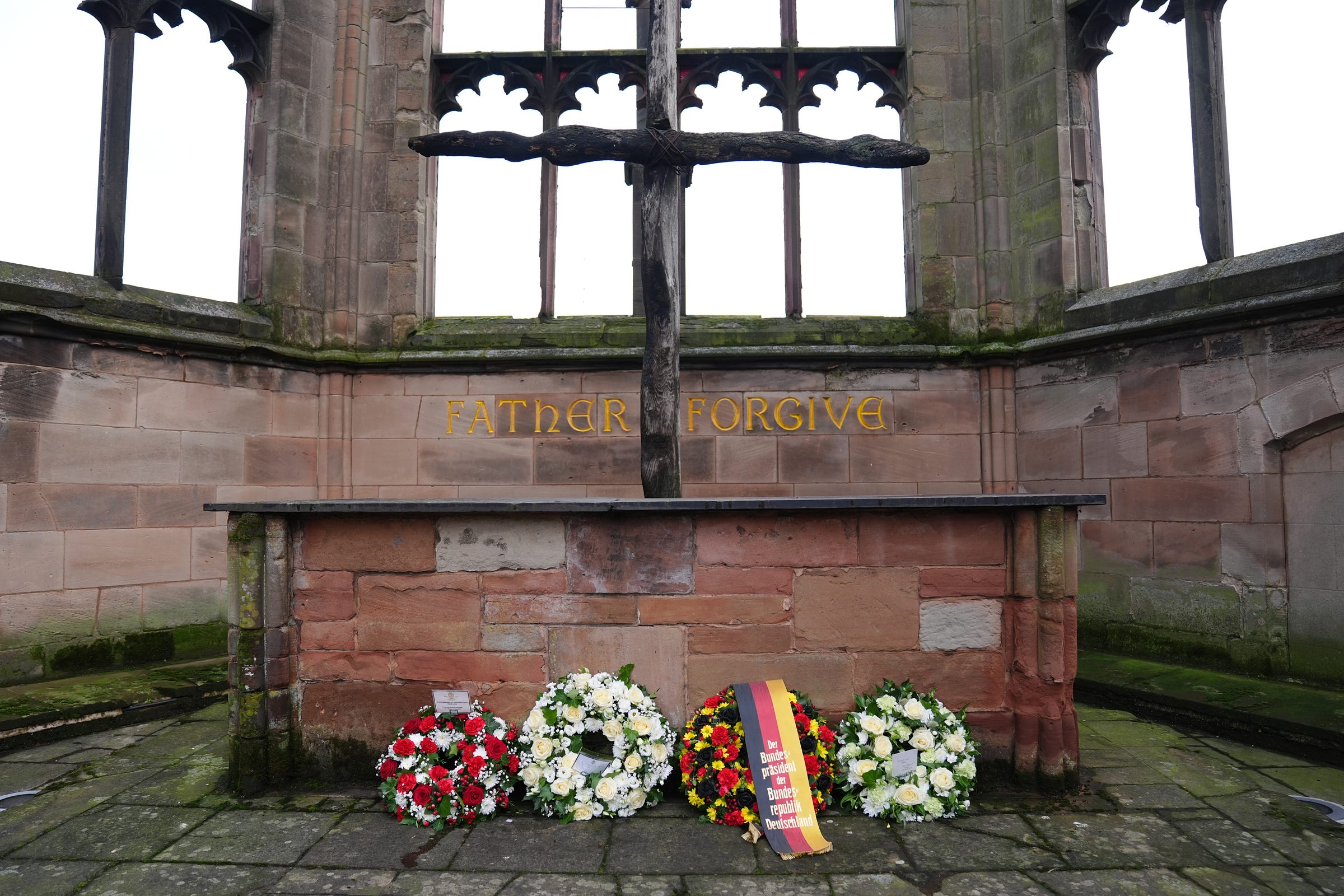
The wreaths laid on behalf of Britain’s Duke of Kent and Germany’s President Frank-Walter Steinmeier and his wife Elke Budenbender at the old Coventry Cathedral in Coventry, England, on Dec. 5, 2025. (Jacob King/Pool Photo via AP)
In these unsettling times of hatred and violence as rulers rage like Herod, may we stand in the ruins of the empire and lift our voices. For unto us a child is born.
Lully, lullay.
Brian Kaylor is president & editor-in-chief of Word&Way and author of The Bible According to Christian Nationalists.