NOTE: This piece was originally published at our newsletter A Public Witness.
Do ideas have consequences, or do consequences have ideas? This is the question the political theorist Laura Field wrestles with in Furious Minds: The Making of the MAGA New Right as she provides an intellectual tour of the movement that has twice carried Donald Trump into the White House.
The conventional way of understanding political change is that ideas build momentum until they enjoy such broad consensus that they drive social evolution. But Field’s story offers an alternative tale: Trump’s rise singularly shook the foundations of our politics, breaking the governing consensus in a way that new ideas could take hold and old convictions could become new again. Waiting in the wings were different groups of thought leaders ready to seize the moment to advance their causes, with Trump as their imperfect but powerful vehicle.

She describes three groups that were particularly adept at fueling the MAGA movement and trying to channel its passions for their purposes:
1. The Claremonters. Shaped and connected to the Claremont Institute, these thinkers draw inspiration from the work of the political philosophers Leo Strauss and Harry Jaffa. They privilege the American Founding, transformational figures like Abraham Lincoln, and present their arguments as having a lineage rooted in the exceptional ideals of the United States.
Yet, they conceptualize those ideals in ways that are often disconnected from their historical development. For example, despite his progress in creating a more egalitarian society, Lincoln’s words are used to justify legal inequality. Michael Anton, one of the Claremonters who has been influential within Trumpian circles, draws on a remark from Lincoln that people are not “equal in all respects” in support of policies that afford fewer rights and status to immigrants. What’s important to grasp here is the way that the country’s own story becomes a tool for legitimating an ideological agenda, despite that agenda often being discordant with how history has unfolded.
2. Postliberals. These thinkers question what the entire American project has become. Questioning tolerance as a virtue and individual freedom as the highest good, they seek a society ordered by shared values that classical liberalism is incapable of providing. For many, these originate from traditional religious convictions that promote family and community over the individual. Presenting liberal democracy as bringing about civilizational collapse because it lacks a common understanding of what is good, they are ready to reorder society around a particular moral vision.
3. National Conservatives. Perhaps the most prominent of the three categories, these are the ardent promoters of nationalism who believe America’s greatness is hampered by deference to international coalitions and notions of global citizenship. They believe that “American First” involves unapologetic devotion to national interests, which are narrowly understood, and evangelize for an American superiority relative to other countries and cultures.
Over the course of the book, Field unpacks the connections between these groups, the role of their leaders within Trump’s rise and administrations, and how their ideas relate to policies and events that unfold. She also speaks to incoherences that emerge and the ways that extremism has become tolerated under their banners.
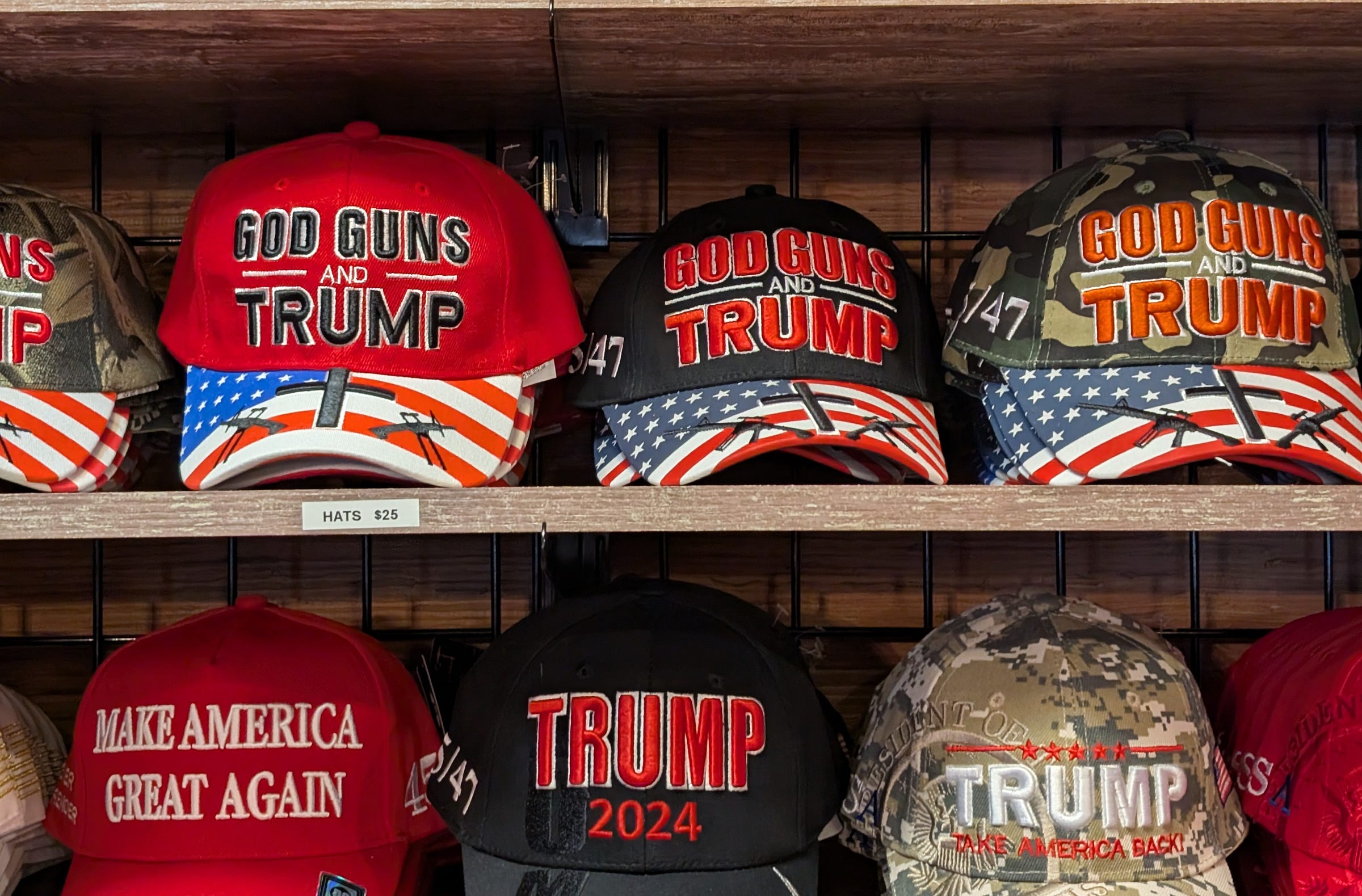
(Brian Kaylor/Word&Way)
Field writes from a unique location and perspective. She is a trained political theorist who can deftly translate obscure academic conversations tailored to specific audiences for her broader set of readers who are trying to make sense of these ruminations and the life they have taken on in our politics. She also speaks as a former insider steeped in conservative political thought who is now critical of her former intellectual home. While it would be easy to cynically dismiss her for that reason, the story she describes of her departure and the warnings she offers as an interpreter of a world she knows well should provoke critical reflection, if not alarm, in all of us.
If there’s a question the book raises, which borders on critique, it’s this: Does trying to analyze and rationalize an intellectual framework offer validation to the racism, misogyny, antisemitism, and other ills that have manifested within this movement? Given the magnitude of the MAGA New Right’s impact, seeking to understand is a natural and worthy goal. But if the impulses animating it are rooted in hatreds, grievances, and other deplorable ideas, does trying to explain it as a coherent worldview — even one presented alongside substantive criticisms — add a veneer of legitimacy to what, ultimately, needs to be rejected by a democratic society?
I don’t have the answers to that question, though it kept rising in my mind throughout the book. It’s a lamentable reminder that in so many different ways, we are all being asked to entertain and accept that ideas once relegated to the fringes of the public square have now become dominant within it.
Whether your mind is curious about this chapter in American history or furious about its consequences, Furious Minds is a book that will help you understand the complexities of our current moment. Dr. Field has generously agreed to provide a signed copy of her book to a paid reader of A Public Witness, so upgrade your subscription today to make sure you’re eligible for our drawing.
As a public witness,
Beau Underwood
A Public Witness is a reader-supported publication of Word&Way. To receive new posts and support our journalism ministry, subscribe today.