For millennia, Christians have acknowledged Satan’s three-pronged tactic to “steal, kill, and destroy” (John 10:10). Without resorting to excuses like “the devil made me do it,” we have stood firm in the face of mammoth opposition. The Black Church in America, in a sense, remains a miraculous, walking epistle, rooted in latent creativity, discipline, and prophetic and applied holiness, despite internal division and external obstruction.
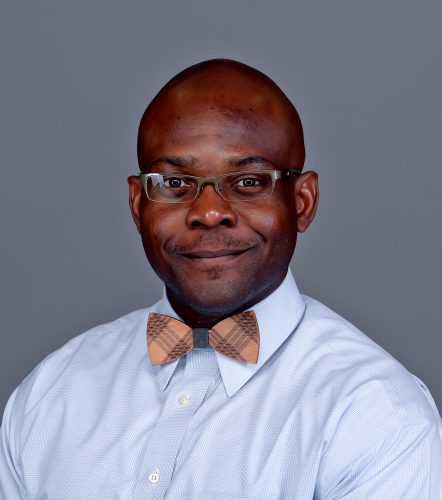
Rev. Dr. James Ellis III
Born from rejection and conquest, and of necessity when White Christians refused to accept Black Christians as equally adopted siblings in God’s spiritual family, we shook the dust off our feet and trusted a redeeming God through our own exodus. Yet, as is the case with any group, we are not monolithic. We’ve deliberated whether we should support Booker T. Washington’s method of economic independence or W.E.B. Du Bois’ “Talented Tenth” philosophy.
Do we watch Roc with Charles S. Dutton, or endorse The Cosby Show? Did President Obama do enough, or the right things, for Black people during his two terms? Obviously, life isn’t nearly as neatly partitioned as we’d like. But one issue I see rising again today, that feels needlessly contentious, is ordination — particularly the rift that can exist between Black women who feel called to vocational ministry and Black women who do not.
For the Black Church to flourish, females and males with their own sense of call must work together amidst our respective church polity. I don’t want anyone to try to force me to adopt their ecclesial system any more than I’m sure they want my unsolicited input on their governance. Upholding the best of our traditions with convicted humility, however, allows for genuine collaboration, without looking down our noses at how another congregation, denomination, or fellowship handles itself.
Most people in the pews will never pursue graduate-level theological education or ordination. And even as a seminary professor myself, I’m convinced that’s perfectly fine. The call to ministry as a career is a highly specialized, and therefore limited, path. Moreover, while I endorse the push for greater access, the bulk of us simply will not become demonstrative figures in our fields like Condoleezza Rice, Serena Williams, or Zora Neale Hurston. And that, too, is okay, so long as we are serious about the work and witness God invites us into.
Female clergy are no more capable of saving the church from its missteps and malevolence than male clergy. In 2019-20, according to the Association of Theological Schools (ATS), Black women made up nearly half of all Black seminarians, which is wonderful! Nevertheless, as enterprising, caring, careful, courageous, and loving as Black women of faith are, it is unfair to place yet another expectation on them, as if ordination is the only, or even preferred, path to be used by God.
This is true broadly for all laypeople in any capacity, but Black laywomen specifically are the unquestioned backbone of the Black Church, industriously crafting new wineskins for new wine. Yet not every young Black girl or woman who shows leadership potential, an aptitude for teaching the Bible, is charismatic, or has administrative chops is destined for the pulpit — and surely the same is true of Black men and everyone else as well.
Hear me when I say that with ordination and formal seminary training in hand, if that’s their path, Black women deserve the time and space to carry the personalized cross they believe the Spirit has given them. The Body has been enriched by the contributions of Jarena Lee, Addie Davis, Cheryl Sanders, Cynthia Hale, Vashti Murphy McKenzie, Renita Weems, and countless other heroines who challenged assumptions, broke through exclusionary “good old boys” clubs, and sacrificed for a greater good.
But for every Prathia Hall, there is also a Nannie Helen Burroughs, and countless women like her, who, in their own ways, often without titles, amplified formal education, or perhaps the specific ambitions some may have wanted them to possess, used their pioneering and deeply consecrated commitment to the Lord to change both church and society. I imagine most of us can quickly recall some such women in our own lives.
Photo by Stephen Rheeder on Unsplash
A busy avenue near a church I pastored in the historic Black neighborhood of Deanwood in the District of Columbia bears the name of Nannie Helen Burroughs, right where her legendary National Training Center for Women and Girls still stands. Built in 1914, it was eventually acquired by the Progressive National Baptist Convention. Born in Orange, Virginia, to formerly enslaved parents, Burroughs was a force to be reckoned with in Black Baptist life and beyond. I’m far from an expert on her life, but Kelisha Graves’s Nannie Helen Burroughs: A Documentary Portrait of an Early Civil Rights Pioneer, 1900–1959 and Danielle Phillips-Cunningham’s Nannie Helen Burroughs: A Tower of Strength in the Labor World are wise conversation partners.
Burroughs defied many odds, never marrying or having children, and was far from shy about sharing her beliefs. Her speeches and writings convey a woman confident in her skin, gender, and faith in the Lord, who did not tolerate anyone’s foolishness. Still, she was relational, crafty, persistent, erudite, and deeply pious in her biblical orthodoxy. In a 1900 speech to the National Baptist Convention, she remarked, “The women have done the work of the church from the beginning, but the men have done the talking. I am not asking for ordination; I am asking for opportunity.” This counters an assumption I’ve often heard over the years — that if Black women of a certain era could have been reverends or pastors, they would have been in droves.
At least in Burroughs’ case, however, there’s evidence of a different, and perhaps more common, narrative. She was a diehard Baptist and a steadfast believer in Christian women being biblically grounded and practically equipped to face the world’s “complicated evils,” as John Wesley put it. For what were considered typical means of service back then, she used her fiery nature within the Women’s Auxiliary to bring about changes that benefitted everyone in her estimation but especially honored the voices and integrated the advice of Black laywomen politically, socially, and ecclesiastically.
The rigorous moral, industrial, and dignified spiritual standards she taught focused on specializing in the “wholly impossible.” According to Burroughs, “We do not train girls merely to work; we train them to think, to pray, and to stand erect in the dignity of Christian womanhood. No labor is menial when done by one who knows her worth.”
It is vital to grasp that the thrust of Christian living is far more closely tethered to laity than to clergy. We certainly need pastoral leaders who can skillfully protect, feed, correct, and guide the sheep. But again, it is a call that does not come to everyone, regardless of gender. The contributions of clergy cannot be ignored, but they also can never outpace or overshadow the abundance of everyday men and women who lead Bible studies, have been opening and closing the church for decades, who help with VBS and Baptist Training Union, and diligently serve those in need.
Ordination has its place. Seminary has its place. But the longer we continue knee-jerk monologues advocating for Black women to “run the world” or essentially run every church by way of pastoral service, the more ground the enemy of God can take. While I don’t have all the answers, I’m persuaded that fighting over all this wastes precious time. I know Black women with all manner of terminal letters behind their names and impressive titles in front, who love God dearly. And I know Black women, just as competent in their respective vocational disciplines, who are faithful ministers of the gospel without any of that.
I love and respect them all, most notably the one I’ve been married to for 19 years. I wrote down something Jada Edwards out of Dallas once said in a sermon: “Obscurity is a beautiful thing.” We aren’t all called to the pulpit, just as we’re not all called to be engineers, front loader operators, coaches, trial lawyers, or nurses.
Black Christian women are multitalented and ambidextrous in their devotion to the upbuilding of God’s Church, yet they all are, just as everyone in Christ is, part of the “royal priesthood” (1 Pet 2:9). And that’s worth shouting about! Without laypeople grasping the art and science of how to use their gifts for God in the manner the Spirit directs them, as Nannie Helen Burroughs did, we are lost.
James Ellis III is an ordained Baptist pastor leading Maplewood Reformed Church in Holland, Michigan. He also serves as an Assistant Professor of Practical Theology at Winebrenner Theological Seminary. His latest books are In Those Days as Today: Preaching through the Book of Judges and Dysfunction in the Name of Jesus: Confronting the Idol of Pastoral Workaholism.