The first time I used an AI chatbot, I asked it whether my vitamin B-12 levels were low enough to worry about. I had just gotten bloodwork back, and my doctor was out of the office for a week, and I did what everyone does now: I asked a machine.
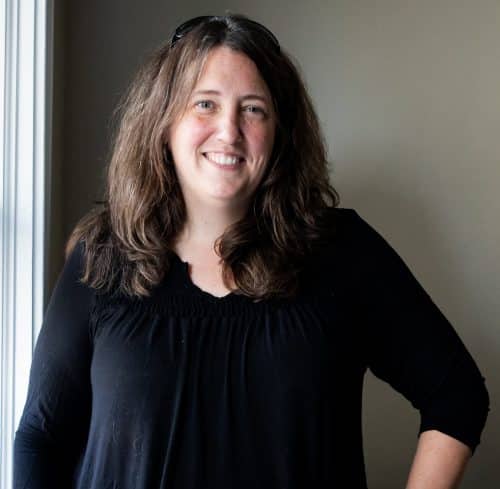
Rev. Kristel Clayville, PhD
The answer was thorough. It listed symptoms of B-12 deficiency, noted that my levels were borderline, recommended foods rich in the vitamin, and suggested I follow up with my physician. It was the kind of answer that makes you close your laptop and feel like you’ve handled something. I almost didn’t notice that it had also told me not to worry, which is a judgment call, not a fact. It had the cadence of medical expertise without the weight of it.
I sat with that for a while. Not because the advice mattered in any serious way, but because of how long it took me to notice the sleight of hand. The language was that good.
Everyone is talking about AI. I should tell you what they mean, because the term itself is doing a lot of work that it probably shouldn’t be.
When most people say “AI” right now, they mean a large language model, a system that has been trained on enormous quantities of human text and that generates responses by predicting, word by word, what should come next. It does not think. It does not understand. It performs the patterns of human language with such fluency that we keep reaching for words like “thinks” and “understands” to describe what it does, and then having to pull those words back.
The technology is remarkable. It can draft a sermon, summarize a medical record, write code, compose a sonnet. It can do these things because it has ingested more human writing than any single human could read in a thousand lifetimes and has learned the statistical structure of how we use language.
What it cannot do is mean any of it.
This distinction, between producing language and meaning it, might seem like a technicality. It is not. It is the whole question, and it is a theological question before it is a technological one.
Christians have always been interested in intelligences that are not human. The tradition is populated with them. Angels, who serve as messengers and whose very name in Greek means “one who is sent.” The Holy Spirit, who speaks through prophets and whose presence is described in language, tongues of fire, the rush of wind, before being described as a person. The voice from the burning bush, which speaks but is not consumed. The pillar of cloud and fire that leads but does not explain. These are encounters with something that communicates, that seems to know, that acts with purpose, and that is decidedly not us.
I think this is part of the appeal of AI, and I don’t mean that dismissively. The desire to encounter a mind that is not our own is one of the deepest currents in religious life. We pray, in part, because we believe that something is listening, something capable of understanding us in ways we cannot understand ourselves. The first time a person has a conversation with an AI chatbot that feels genuinely responsive, genuinely attentive, the experience can touch that same nerve. Something is listening. Something seems to understand.
But here is what I have to keep reminding myself: the intelligence we’ve built is not outside us at all. It is us, compressed, averaged, and recombined. It is trained on our words, which means it is trained on our theology and our cruelty, our poetry and our propaganda, our sermons and our comment sections. When I asked it about my vitamin B-12 levels, it didn’t draw on some independent well of medical reasoning. It drew on everything humans have written about B-12 deficiency and produced a statistically plausible version of what a knowledgeable person might say. It was a mirror, not a window.
The Christian tradition has something to say about mirrors. Paul writes, “that now we see through a glass dimly, but then face to face. Now I know in part; then I shall know fully, even as I am fully known.” The promise of that passage is that the dim, partial, reflected knowledge we currently possess will one day give way to direct encounter. An AI is not that encounter. It is the dim glass, and it is made of our own breath.
Photo by charlesdeluvio on Unsplash
I want to be clear about what this ongoing series will and will not be. I am not a technologist. I don’t work in Silicon Valley, and I didn’t come to this subject through computer science. I came to it the way I’ve come to most of the subjects I care about, through the side door of some other problem.
I was a chaplain during the COVID-19 pandemic, working on an ethics committee that had to make decisions about ventilator allocation and visitor policies, and those decisions were already being shaped by algorithms before anyone was talking about ChatGPT. I’m a former transplant ethicist, and the organ allocation system has been algorithmic for decades. I’m a biblical scholar who ended up in ethics because ethics is the discipline that lets you hold ancient texts and modern crises in the same hand without pretending they belong to the same world.
So this series of columns will be about religion and AI, but it will really be about what has always interested me: what happens when systems — medical, technological, and theological — meet individual human lives. What assumptions do those systems carry? Who benefits and who is harmed? And what does the Christian tradition have to offer, not as a set of answers, but as a way of asking better questions?
In Genesis, God creates by speaking. “Let there be light,” and there was light. The word and the thing are the same act. Large language models also create with language. They generate text, images, code, music, all from words. The resemblance is seductive. It can give users a feeling of “and thus it was so,” the exhilaration of speaking something into existence. But the resemblance is also misleading. When God speaks in Genesis, the word creates reality. When an LLM generates text, the word creates more language. The gap between language and reality is precisely what the technology cannot close, and it is precisely what we keep forgetting is there.
Over several months in the series ahead, I’ll explore that gap here in the Word&Way Voices section. I want to think about what it means that this technology is built on language, and built on stolen language at that. I want to think about the Gnostic undercurrents in Silicon Valley, the persistent fantasy that intelligence can be separated from the body, that the mind is software, that flesh is a limitation to be transcended. I want to think about the people who are invisible in the AI story: the workers labeling data for pennies, the artists whose work was scraped without consent, the patients whose treatment decisions were already being made by machines before anyone thought to call it artificial intelligence. And I want to do all of this from within the Christian tradition, not because that tradition has the answers, but because it has been asking these questions, about intelligence, about language, about what we owe each other, for a very long time.
We made this thing in our image. It’s worth asking what that image looks like.
Rev. Kristel Clayville, Ph.D., is ordained in the Christian Church (Disciples of Christ) and writes and teaches at the intersection of religion, technology, and ethics.