
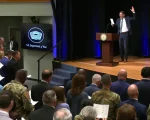
Hegseth’s Pastor Tells Pentagon Leaders ‘God Has Providentially Placed You’ There ‘For Such a Time As This’
With the midterm elections less than two weeks away, Pete Hegseth’s job security is increasingly uncertain — meaning this could be the final Pentagon worship service.
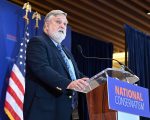
Taxpayers Are Funding Private School Tuition. It’s Helping Classical Christian Schools Expand
Securing public money for private education raises issues over church-state separation but fulfills a longstanding goal for Christian Nationalists like Doug Wilson, who founded the Association of Classical Christian Schools.
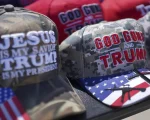
An ‘Empathy Gap’ Divides Americans Ahead of the Midterms, Says PRRI Report
A survey released Tuesday (Oct. 20) found that Republicans and evangelicals increasingly see empathy as a danger that can lead society away from God. The survey found that more than half of Americans see President Trump as a threat to democracy.
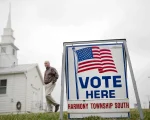
Faith Leaders Unite Across Religions to Counter Voter Intimidation on Election Day
While the idea of poll chaplains has been around for several years, 2026 will likely be different because there is widespread concern that the presence of federal immigration agents could create a chilling effect.

Reflecting on ‘Pastor Spies’ in Minnesota
This issue of A Public Witness contemplates historical parallels between the Stasi secret police force in East Germany targeting activist Lutheran congregations and DHS agents spying inside ELCA churches today.
After Religious Pushback, Trump Says Pentagon Won’t Livestream Execution
President Donald Trump announced Thursday (Oct. 15) that the Pentagon will not livestream the execution of the Fort Hood shooter, backing away from a proposal that triggered widespread pushback from prominent religious leaders.
Pew Midterm Report: Religious Voters Worry About Economy; Evangelicals Stick With GOP
Religious Americans are unhappy with both political parties, Donald Trump, and the state of the country ahead of the midterms, according to Pew Research. The economy and the future of democracy top their concerns.
Oklahoma State Board Again Rejects Jewish Charter School in ‘Shocking’ Vote
The Oklahoma Supreme Court rejected the existence of a publicly funded Catholic charter school in the state in 2024, and a deadlocked U.S. Supreme Court later upheld that decision.
Planned Public Execution Sparks Debate of Biblical Proportions
This issue of A Public Witness considers the claims that ‘the Bible says so’ and the diverse Christian voices opposing the snuff film planned by the Crusader leading the Pentagon.
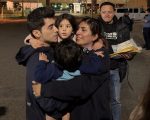
Immigrant Who Helped Set Off Delaney Hall Hunger Strike Released From ICE Custody
'I don’t have words,' Martín Alonso Soto Hernandez said in Spanish while holding his wife and two children. 'Thank you so much for everything. I always, always stayed in prayer.'