
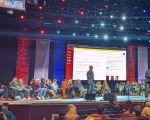
The ReAwaken America Worship Service in Branson
In this issue of A Public Witness, Brian takes us inside the latest iteration of the ReAwaken America Tour that occurred Nov. 4-5 in Branson. Based on what he heard from the stage and what he saw walking around inside the event, it was clear they see this as a church gathering. So, Brian shares highlights of the event by considering it in the form of a church service.

People of Faith Delivering Democracy This Midterm Season
Andrea Marta of Faith in Action argues that this year we are increasingly seeing how white Christian Nationalism is dominating midterm election campaigns and contributing to voter suppression tactics. While advocacy efforts cannot be limited to the ballot box, voters of faith, especially Black and Brown voters, will ensure elected officials are held accountable and everyone’s sacred right to vote is protected.
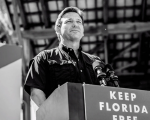
In ‘God Made a Fighter’ Ad, DeSantis Paves Way to Replace Trump as Anointed One
The ad is the latest sign that DeSantis may be making a play to become the anointed candidate of conservative religious voters. Doing so would likely challenge the electoral ambitions of former-President Donald Trump, who may end up facing off against DeSantis in the Republican presidential primaries.
United Methodist Church Announces Date, Location for Thrice-Postponed General Conference
Perhaps the third time will be the charm for United Methodists awaiting a vote to officially split the denomination. The United Methodist Church has announced the dates for the next meeting of its global decision-making body after postponing its 2020 General Conference meeting three times for pandemic-related reasons.
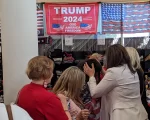
Scenes from a MAGA Revival
Over the weekend, the ReAwaken America Tour rolled into Branson, Missouri. This traveling variety show of Christian Nationalism, anti-vaccine rhetoric, QAnon conspiracies, and election denialism featured significant political figures in the MAGA world.
Walker, Warnock Offer Clashing Religious Messages in Georgia
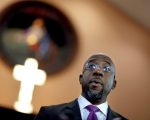
One candidate in Georgia’s Senate contest warns that “spiritual warfare” has entangled America and offers himself to voters as a “warrior for God.” But it isn’t the ordained Baptist minister who leads the church where Martin Luther King Jr. once preached.
Ministers Condemn ReAwaken America’s Branson Arrival
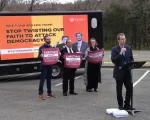
Each faith leader took turns denouncing ReAwaken and its headliner, General Michael Flynn, in front of a mobile billboard that offered messages like “stop twisting our faith to attack democracy” and “beware of false prophets.” The ministers also called out other notable far-right speakers at the event, such as Mike Lindell, Clay Clark, and Eric Trump, for their COVID-19 conspiracy theories and continued election denialism.
Missouri Leaders Should Condemn This Weekend’s Christian Nationalist Rally in Branson
As the Jan. 6 insurrection showed, our democracy is under attack. And Christian nationalism, which seeks to privilege one faith tradition over others, has fueled the anti-democratic efforts. Rather than serving as a balm for our fractured nation, religion is being used to further divide us.
Major Christian Leaders Asked Jan. 6 Committee To Investigate Christian Nationalism
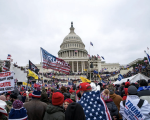
A group of prominent Christian leaders, including the heads of major denominations, say they submitted a letter earlier this year to the House select committee investigating the Jan. 6 attack on the U.S. Capitol, urging members to examine Christian nationalism and arguing the ideology played a crucial role in the insurrection.
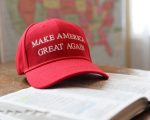
Why the False Prophets of Christian Nationalism Don’t Speak for Me
Nathan Empsall, executive director of Faithful America, makes the case that with hundreds of right-wing political candidates using Christ’s name to deny election results, demonize their opponents, and spread discrimination – all with the blessing of far too many evangelical pastors and activists – Christian Nationalism is the single biggest threat to both democracy and the church today.