

Sign up to receive full essays in your inbox!

Featured
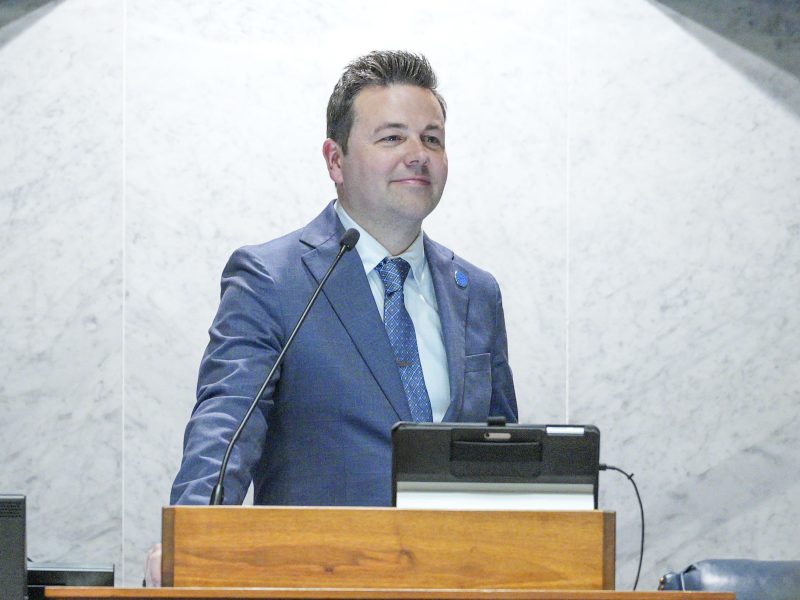
Flunk Those Who Want a Religious Test for Office
In light of advocacy from figures like Doug Wilson and Micah Beckwith, it’s worth remembering why the American experiment includes a ban on religious tests for office.

‘We Garden on Our Knees’: Kew Theology & Gardening Project Explores Faith, Nature, and Climate
In a corner of west London, an Anglican church is using its proximity to one of the most famous botanical gardens in the world, Kew Gardens, as a reason for a new venture linking theology and nature.
Nuclear Weapons as ‘God’s Grace and Mercy’?
This issue of A Public Witness looks at how the head of the Russian Orthodox Church nukes God’s grace and mercy before considering how it serves as a warning about militaristic Christian Nationalism more broadly.
Church
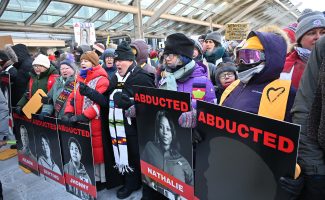
How the Sanctuary Movement Became the Faithful’s Answer to ICE Raids
The sanctuary movement has deep biblical roots, but it has evolved from the 1980s in important ways.

Judge Grants Minneapolis Clergy Access to Detainees in ICE Holding Facility
'This is one important step in our struggle for justice and my call to live out Jesus’s command to care for the captives,' said the Rev. Susie Hayward, who is cited in the legal case and was in court for the ruling.
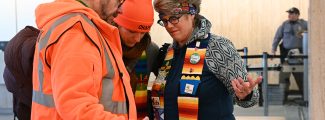
Clergy Seek Court Order to Allow Pastoral Access to Immigrants Held at Minneapolis ICE Facility
U.S. District Judge Jerry Blackwell will hear Friday from attorneys for Minnesota branches of the Evangelical Lutheran Church in America, the United Church of Christ, and a Catholic priest.
Nation
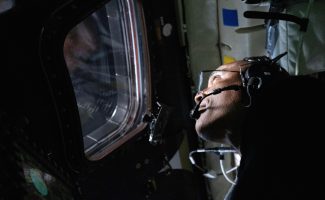
Astronaut Victor Glover Is Still Trying to Find the Spiritual Words to Describe His Moon Mission
'At the end of it, when we were just responding totally instinctually, we talked a lot about God,' Glover told RNS in a recent interview, referring to the Artemis II crew.
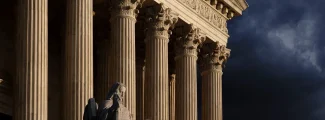
Supreme Court Stops Execution of Inmate Who Became a Ministry Leader on Death Row
At the heart of Alabama’s latest death penalty controversy is Jeffery Lee, who became a Christian mentor to other incarcerated men on death row. Opponents to Lee’s execution ask courts to 'choose life.'
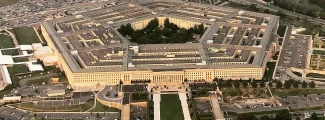
Latest Pentagon Revision of Religion Affiliation Codes Creates Fresh Problems
After complaints by Mormon politicians, a revised list of recognized religions now excludes denominations like the Disciples of Christ and United Church of Christ — whose churches boast membership among the founding fathers.
World
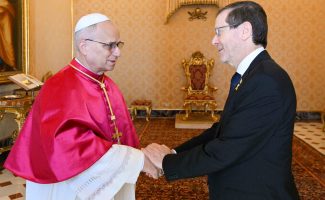
Pope Leo and Vatican Insist on 2-State Solution to End Gaza War During Meeting With Israel President
The audience marked the first by history’s first American pope with the Israeli head of state. Leo spoke by telephone with Israeli Prime Minister Benjamin Netanyahu in July after an Israeli shell slammed into the only Catholic church in Gaza.

A Historic Swedish Church Embraces Inclusion With Minority Languages
The Lutheran church, called Kiruna Kyrka in Swedish, moved 3.1 miles east on Tuesday and Wednesday as part of Kiruna's relocation because the world’s largest underground iron-ore mine is threatening to swallow the town.
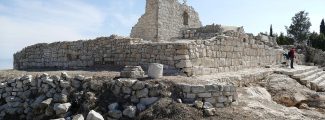
Jerusalem Freezes Greek Patriarchate’s Finances in Latest Squeeze on Holy Land Christians
‘As an Armenian living in the Old City, it is deeply troubling to witness the gradual erosion of our Christian presence here,’ said Levon Kalaydjian, an Armenian Christian activist in Jerusalem.
Editorials
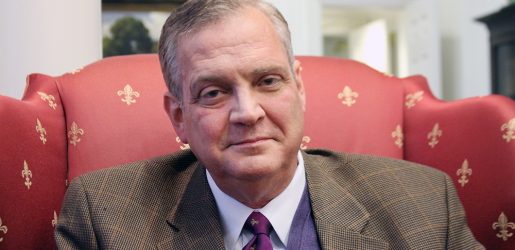
Al Mohler’s Religion
Editor-in-Chief Brian Kaylor responds to a claim by Al Mohler of Southern Baptist Theological Seminary that Methodists who disagree on LGBTQ issues are from “two different religions.” Perhaps Mohler is right.
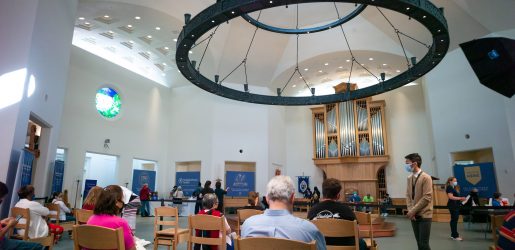
Reject Preachers Jabbing Us with Falsehoods
Editor-in-Chief Brian Kaylor reflects on preachers spreading anti-vaccination messages amid a continuing COVID pandemic. Kaylor also highlights the medical and biblical wisdom of Francis Collins of the National Institutes of Health.
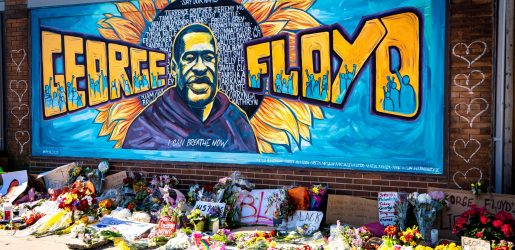
Justice & Not-Yet Justice
Editor Brian Kaylor reflects on the guilty verdicts in the trial of Derek Chauvin and the concept of justice. Kaylor argues that while holding someone accountable for murdering George Floyd is a step toward justice, we must not confuse it with justice itself.
Word&Way Voices

Attention, Preachers: Read More!
Contributing writer Rodney Kennedy makes the case that fiction — short stories and novels — serves as a bridge to great preaching.
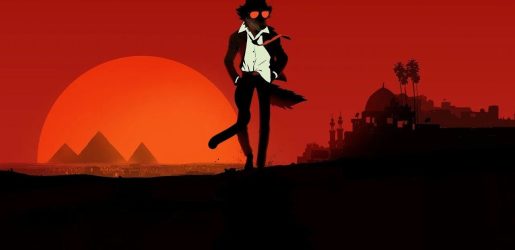
’The Bad Guys 2’ Offers a Second Chance at Redemption
The new animated feature from Pierre Perifel is lighthearted and visually stunning, utilizing various animation styles for different scenes — but it also offers a profound lesson for the church.
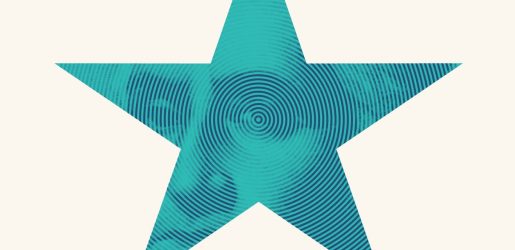
Molly Worthen Reveals the Hidden Truths Behind American Charismatic Leaders
In her new book, ‘Spellbound,’ the historian of religion traces the mysterious force that is charisma from the Puritans to Donald Trump.
E-Newsletter
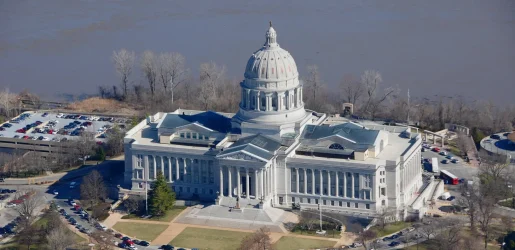
The Room Where a Bad Bill Happens
The head of the Missouri Senate Education Committee thinks we should force public schools to teach that the Constitutional Convention prayed after Benjamin Franklin said they should — even though it very much never happened.
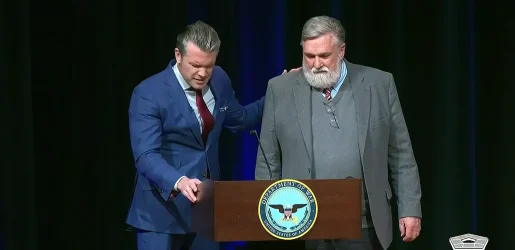
Doug Wilson Preaches at Pentagon, Compares Services to Day of Pentecost
The controversial ‘paleo-Confederate’ Christian Nationalist pastor stood at a podium on Tuesday as the guest preacher for the latest monthly Christian worship service held for leaders of the U.S. military.
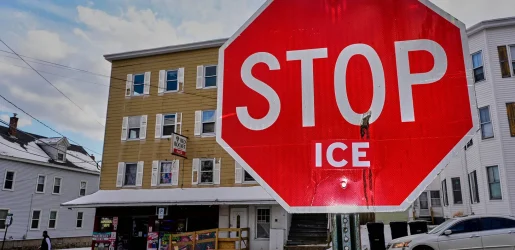
Judge Freezes ICE Raids at Some Baptist, Lutheran, & MCC Churches
For the second time in a year, a federal judge has issued an injunction to block the Department of Homeland Security from conducting warrantless immigration enforcement actions at some houses of worship.
-
Claiming God's Name in Politics, War, & Sports
 This episode of Dangerous Dogma features a conversation between Word&Way Editor Brian Kaylor, Lutheran minister and journalist Angela Denker, and Disciples pastor and author Beau Underwood. The conversation includes discussion about a botched execution in Tennessee, religious issues in political campaigns, and Pete Hegseth's misuse of the Bible. And Beau shows off his White Sox…
 -
Backslide with Robert P. Jones
This episode of Dangerous Dogma features a conversation between Word&Way Editor Brian Kaylor and Robert P. Jones, author of the forthcoming book Backslide: Reclaiming a Faith and a Nation After the Christian Turn Against Democracy. Jones is also the founder and president of PRRI. He previously appeared on Dangerous Dogma in 2023. You can watch a… -
DHS Spies on Churches & White Sox Honor Pope Leo
This episode of Dangerous Dogma features a conversation between Word&Way Editor Brian Kaylor, Lutheran minister and journalist Angela Denker, and Disciples pastor and author Beau Underwood. The conversation includes discussion about revelations that the Department of Homeland Security has been spying in churches, a controversial golf ad, and a White Sox night celebrating Pope Leo.… -
The State of the Senate, from SC to ME to TX to KS
This episode of Dangerous Dogma features a conversation between Word&Way Editor Brian Kaylor, Lutheran minister and journalist Angela Denker, and Disciples pastor and author Beau Underwood. The conversation includes discussion about the death of Sen. Lindsey Graham as well as issues of faith and morality in Senate races in Maine, Texas, and Kansas. You can… -
Southern Baptists, the Pentagon, & UFC
This episode of Dangerous Dogma features a conversation between Word&Way Editor Brian Kaylor, Lutheran minister and journalist Angela Denker, and Disciples pastor and author Beau Underwood. The conversation includes discussion about the Southern Baptist Convention's push against women in ministry, the Pentagon changing how it codes the faith of military members, and the latest in… -
Southern Baptists, Women in Ministry, & a Billboard
In this episode, Word&Way President Brian Kaylor talks with Meredith Stone, executive director of Baptist Women in Ministry. The conversation includes discussion of efforts in the Southern Baptist Convention to further target women serving in churches and how BWIM is advocating for women (including with a billboard to greet SBC messengers next week in Orlando,… -
Divergent Visions for Rededicating the Nation
This episode of Dangerous Dogma features a conversation between Word&Way Editor Brian Kaylor, Lutheran minister and journalist Angela Denker, and Disciples pastor and author Beau Underwood. The conversation includes discussion about Rededicate 250, gerrymandering, Adam Hamilton's Senate campaign in Kansas, and the MAHA movement. You can watch a video version of the conversation here. Here are a few pieces… -
The Christian Past That Wasn't
In this episode, Word&Way President Brian Kaylor talks with Warren Throckmorton, a retired professor who has spent years debunking false claims by Christian Nationalist pseudo-historian David Barton. Throckmorton is the author of the new book, The Christian Past that Wasn't: Debunking the Christian Nationalist Myths that Hijack History. You can watch a video version of… -
Trump vs. Leo
This episode of Dangerous Dogma features a conversation between Word&Way Editor Brian Kaylor, Lutheran minister and journalist Angela Denker, and Disciples pastor and author Beau Underwood. The conversation includes discussion about President Donald Trump's attacks on Pope Leo XIV, Leo's witness against the Iran war, Trump's AI image of himself as Jesus, and the electoral… -
Fight Like Jesus with Jason Porterfield (Reissue)
In this episode, Word&Way President Brian Kaylor talks with Jason Porterfield about his book Fight Like Jesus: How Jesus Waged Peace. This episode originally aired in 2023, except for a new introduction noting a violent prayer by Pete Hegseth during a recent Pentagon worship service and Palm Sunday comments by Pope Leo XIV. Note: Don't forget…


Books
Review: 1 Corinthians — A Theological, Pastoral, and Missional Commentary
Renowned New Testament scholar Michael J. Gorman designed this commentary for pastors, students, scholars, and lay people who want to consider Paul’s spiritual implications for today.

Review: Reading While Black
In “Reading While Black: African American Biblical Interpretation as an Exercise in Hope,” New Testament scholar Esau McCaulley demonstrates an ongoing conversation between the collective Black experience and the Bible.

The Bible According to Christian Nationalists
We are excited to announce a new book unpacking seven types of misuses of Scripture by influential preachers and politicians pushing Christian Nationalism today, officially out Oct. 7 from Chalice Press and available for pre-order now.

Review: The Traveler’s Path
In “The Traveler's Path: Finding Spiritual Growth and Inspiration Through Travel,” pastor and scholar Douglas J. Brouwer challenges readers to go beyond tourism and embrace the religious dimension of travel.