

Sign up to receive full essays in your inbox!

Featured
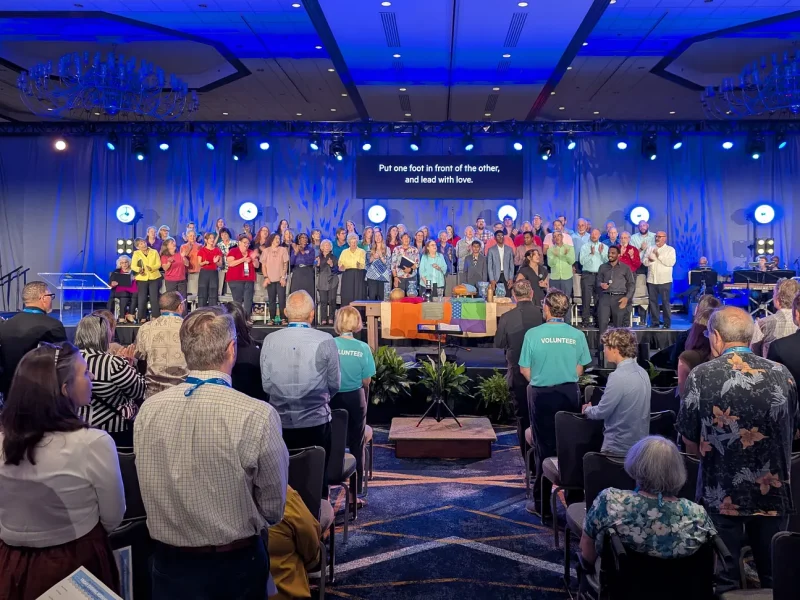
Cooperative Baptists Challenge Christian Nationalism, Advocate for Loving Neighbors
This issue of A Public Witness treks to Jacksonville to hear from an impressive lineup of speakers at the recent Cooperative Baptist Fellowship general assembly.
Which Bible Passages Are in Texas’ Proposed Student Reading List? Here’s What the Sections Reveal.
The chosen readings, to be voted on by the State Board of Education, draw heavily from Christian perspectives.
With Cuba in Crisis, Faith Groups Work To Influence Policy, Deliver Aid
A group including leaders from the World Council of Churches, the Anglican Communion, the World Methodist Council, and the PCUSA recently paid a solidarity visit to Cuba, aimed at highlighting Cuban suffering and condemning U.S. sanctions.
Church
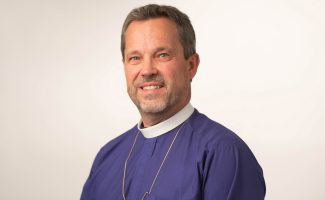
ACNA Archbishop Steve Wood Accused of Sexual Misconduct
Archbishop Steve Wood, who heads the Anglican Church of North America, faces allegations of sexual harassment, bullying, and plagiarism. The list of charges is the latest in a string of crises to rock the small, conservative denomination.
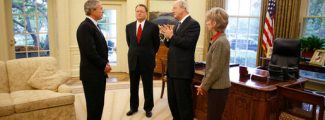
Morris Chapman, Longtime SBC Executive Committee Leader, Dead at 84
Morris Chapman, a longtime leader of the Southern Baptist Convention’s Executive Committee, died Monday. He was 84.
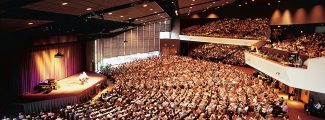
As Willow Creek Turns 50, the Onetime ‘Church of the Future’ Redefines Success
In the mid-1970s, a group of high schoolers and their former youth pastor started a church in a movie theater and named it Willow Creek. American religion hasn’t been the same since. The church celebrates its 50th anniversary Oct. 11-12.
Nation
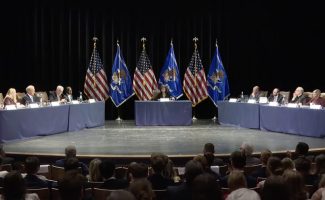
Church-State Separation Is a ‘Lie,’ Says Trump’s Religious Liberty Commission Chair
‘Church-state separation ensures we are all free to live as ourselves and believe as we choose, as long as we don’t harm others,’ Rachel Laser of Americans United for Separation of Church and State countered.
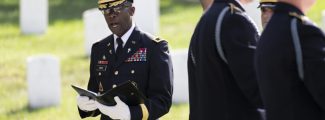
Hegseth’s Removal of Top Army Chaplain Raises ‘Troubling Questions’ From Black Denomination
‘Our nation must be careful not to allow partisan agendas to undermine institutions built on merit, sacrifice, and service,’ said the president of the historically Black National Baptist Convention U.S.A. Inc.
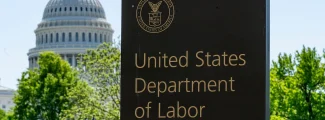
Baptist Pastor Urges Department of Labor to Seek a ‘Living Jesus’ Not a ‘Dead Jesus’ During Monthly Worship Service
Rev. Caleb Morell, a Southern Baptist, offered an evangelistic message about the resurrection of Jesus that stopped just short of a formal altar call as he urged government workers to follow Jesus.
World
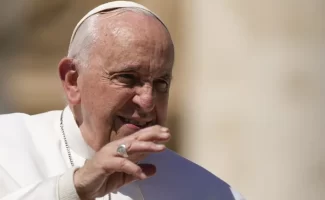
Pope Rebukes Trump Administration Over Migrant Deportations, and Appears To Take Direct Aim at Vance
“Christian love is not a concentric expansion of interests that little by little extend to other persons and groups,” Francis wrote in a letter to U.S. bishops.
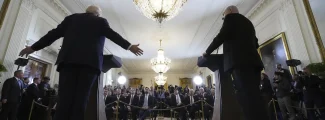
Pave Palestine and Put Up a Parking Lot?
This issue of A Public Witness explores what Trump’s outburst about taking over the Gaza Strip reveals about the oligarchic values of the new administration as well as the immorality of prominent MAGA Christians.
Preacher’s Kid Refocused the World Health Organization on Social Justice
This issue of A Public Witness looks at the evolution of the WHO, its religious connections, and why it matters in the face of Trump ordering the U.S. to leave the valuable global agency.
Editorials
A Dangerous Campaign Phase
In about two months, U.S. voters will head to the polls (if they don’t first drop their ballot in the mail). So, we are entering the final, busy dash of the campaign. But we are also entering a dangerous time in the campaign.
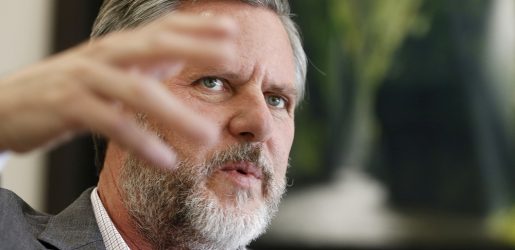
Beyond the Fall of Falwell
It’s tempting to watch Jerry Falwell’s fall and, well, cheer or snicker. After all, he’s done much to hurt the witness of Christianity with his history of hateful rhetoric and partisanship politics — not to mention the sordid details of the scandal that did him in. But this is a
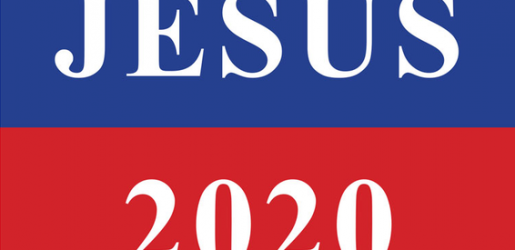
Jesus 2020
During this campaign season, a Baptist church in Alabama started making “Jesus 2020” yard signs. How would such a candidacy go? Editor Brian Kaylor imagines the race.
Word&Way Voices

Unsettling Advent 2024, Day 7
Reflecting on Advent in a time of rulers clinging to power, Guthrie Graves-Fitzsimmons explores the connections between “Wicked” and the story of Christmas.
Unsettling Advent 2024, Day 6
Reflecting on Advent in a time of rulers clinging to power, Jeremy Fuzy explores the lessons we can learn from a true 20th-century ‘power broker.’
At Christmas, We Celebrate Light Dispelling Darkness
What is the true meaning of the Christmas story for all who claim to believe in and follow Jesus?
E-Newsletter
Out in the World
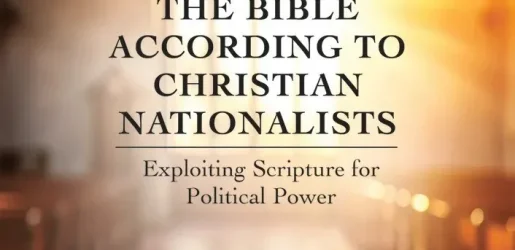
With the weaponization of Scripture regularly making headline news, “The Bible According to Christian Nationalists” officially releases today to point to better ways of reading and applying sacred texts.

The Danger of Doing Theology by Cartography
This issue of A Public Witness flips to the maps section of the Bible to see who should really control the ‘biblical heartland.’
Defending America’s Best Idea
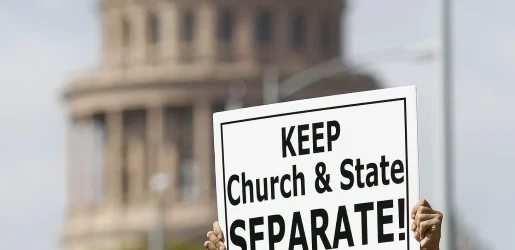
In the first of a three-part special podcast series produced in partnership with Moravian Theological Seminary, Randall Balmer discusses how church-state separation has been good for both government and religion.
-
Claiming God's Name in Politics, War, & Sports
 This episode of Dangerous Dogma features a conversation between Word&Way Editor Brian Kaylor, Lutheran minister and journalist Angela Denker, and Disciples pastor and author Beau Underwood. The conversation includes discussion about a botched execution in Tennessee, religious issues in political campaigns, and Pete Hegseth's misuse of the Bible. And Beau shows off his White Sox…
 -
Backslide with Robert P. Jones
This episode of Dangerous Dogma features a conversation between Word&Way Editor Brian Kaylor and Robert P. Jones, author of the forthcoming book Backslide: Reclaiming a Faith and a Nation After the Christian Turn Against Democracy. Jones is also the founder and president of PRRI. He previously appeared on Dangerous Dogma in 2023. You can watch a… -
DHS Spies on Churches & White Sox Honor Pope Leo
This episode of Dangerous Dogma features a conversation between Word&Way Editor Brian Kaylor, Lutheran minister and journalist Angela Denker, and Disciples pastor and author Beau Underwood. The conversation includes discussion about revelations that the Department of Homeland Security has been spying in churches, a controversial golf ad, and a White Sox night celebrating Pope Leo.… -
The State of the Senate, from SC to ME to TX to KS
This episode of Dangerous Dogma features a conversation between Word&Way Editor Brian Kaylor, Lutheran minister and journalist Angela Denker, and Disciples pastor and author Beau Underwood. The conversation includes discussion about the death of Sen. Lindsey Graham as well as issues of faith and morality in Senate races in Maine, Texas, and Kansas. You can… -
Southern Baptists, the Pentagon, & UFC
This episode of Dangerous Dogma features a conversation between Word&Way Editor Brian Kaylor, Lutheran minister and journalist Angela Denker, and Disciples pastor and author Beau Underwood. The conversation includes discussion about the Southern Baptist Convention's push against women in ministry, the Pentagon changing how it codes the faith of military members, and the latest in… -
Southern Baptists, Women in Ministry, & a Billboard
In this episode, Word&Way President Brian Kaylor talks with Meredith Stone, executive director of Baptist Women in Ministry. The conversation includes discussion of efforts in the Southern Baptist Convention to further target women serving in churches and how BWIM is advocating for women (including with a billboard to greet SBC messengers next week in Orlando,… -
Divergent Visions for Rededicating the Nation
This episode of Dangerous Dogma features a conversation between Word&Way Editor Brian Kaylor, Lutheran minister and journalist Angela Denker, and Disciples pastor and author Beau Underwood. The conversation includes discussion about Rededicate 250, gerrymandering, Adam Hamilton's Senate campaign in Kansas, and the MAHA movement. You can watch a video version of the conversation here. Here are a few pieces… -
The Christian Past That Wasn't
In this episode, Word&Way President Brian Kaylor talks with Warren Throckmorton, a retired professor who has spent years debunking false claims by Christian Nationalist pseudo-historian David Barton. Throckmorton is the author of the new book, The Christian Past that Wasn't: Debunking the Christian Nationalist Myths that Hijack History. You can watch a video version of… -
Trump vs. Leo
This episode of Dangerous Dogma features a conversation between Word&Way Editor Brian Kaylor, Lutheran minister and journalist Angela Denker, and Disciples pastor and author Beau Underwood. The conversation includes discussion about President Donald Trump's attacks on Pope Leo XIV, Leo's witness against the Iran war, Trump's AI image of himself as Jesus, and the electoral… -
Fight Like Jesus with Jason Porterfield (Reissue)
In this episode, Word&Way President Brian Kaylor talks with Jason Porterfield about his book Fight Like Jesus: How Jesus Waged Peace. This episode originally aired in 2023, except for a new introduction noting a violent prayer by Pete Hegseth during a recent Pentagon worship service and Palm Sunday comments by Pope Leo XIV. Note: Don't forget…


Books
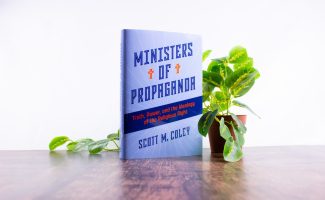
Review: Ministers of Propaganda
In "Ministers of Propaganda: Truth, Power, and the Ideology of the Religious Right," Scott Coley trains a critical eye on the fusion of evangelicalism and right-wing politics.
Review: Mornings with Schleiermacher
In "Mornings with Schleiermacher: A Devotional Inspired by the Father of Modern Theology," Chad Bahl seeks to introduce a contemporary audience to the theological ideas of Friedrich Schleiermacher, one of the most important Christian theologians of the nineteenth century.
Review: Hebrews (Commentaries for Christian Formation)
In "Hebrews (Commentaries for Christian Formation)," New Testament scholar Amy Peeler offers insights into Christology, the relationship between Judaism and Christianity, and the letter’s canonical resonances.

Review: Irreverent Prayers
In "Irreverent Prayers: Talking to God When You’re Seriously Sick," Episcopal priests Elizabeth Felicetti and Samantha Vincent-Alexander offer readers a more candid way of communicating with God.