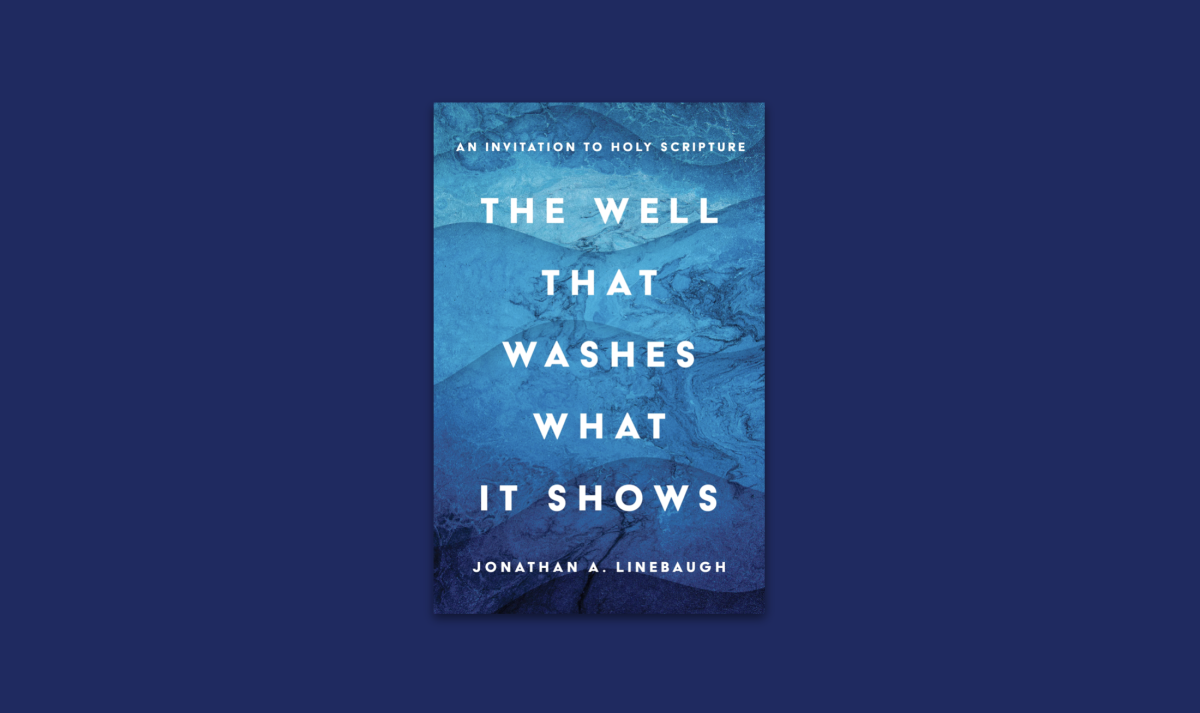
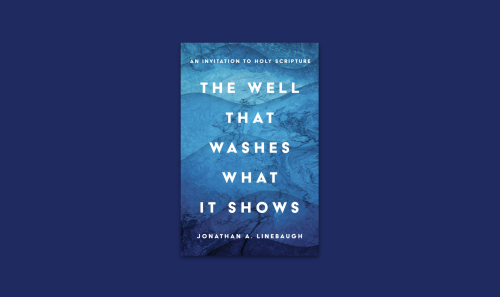
THE WELL THAT WASHES WHAT IT SHOWS: An Invitation to Holy Scripture. By Jonathan A. Linebaugh. Grand Rapids, MI: Wm. B. Eerdmans Publishing Company, 2025. 206 pages.
For both Jews and Christians, Holy Scripture provides the (for some, an) authoritative witness to God’s existence, God’s presence and work in creation, and more. Jews and Christians share sacred texts, though they differ on what Christians speak of as the New Testament. For Christians, the Jewish or Hebrew scriptures, known by Jews as the Tanak, form the first part of the Christian scriptures, to which is added the New Testament. Although some Christians, starting with Marcion in the Second Century, tried to eliminate the Jewish scriptures, very few Christians have sought to exclude what Christians denote as the Old Testament from the Christian scriptures. If that seems confusing, try to explain this to your Muslim, Buddhist, Hindu, or others who stand outside the so-called “Judeo-Christian” tradition. It can even be confusing to those who stand within these two traditions due to the growing biblical illiteracy in our faith communities. Thus, we need accessible introductions to the Scriptures, especially those that adopt a pastoral perspective. While there is a place for critical study of Scripture, due to this biblical illiteracy, many Christians — whether new to the faith or long-term members — may need something with a pastoral bent.

Robert D. Cornwall
Jonathan A. Linebaugh, the Anglican Chair of Divinity and professor of New Testament and Christian Theology at Beeson Divinity School, Samford University, offers readers that needed pastorally sensitive introduction to Holy Scripture in his book The Well That Washes What It Shows (Eerdmans, 2025). He offers this book to readers as a word of consolation and hope, a word that provides a divine offer of forgiveness and love. He seeks to offer what Thomas Cranmer called “the ‘comfortable words’ of God’s love in Jesus that gives hope to the hurting, ashamed, worn-out, and afraid (Book of Common Prayer)” (p. 2). That is the pastoral side of the book. The second dimension of the book is Linebaugh’s introduction to the Bible, which he hopes will offer what Paul calls “the gospel of the glory of Christ.”
With these hopes and sense of purpose in mind, Linebaugh takes the reader on a journey through Scripture, starting with three chapters on the Old Testament. These chapters follow the organizing principles of the Jewish Tanakh, which is a bit different from our usual Christian configuration. Then he offers three chapters on the New Testament, followed by a chapter using the Book of Romans “as an interpretive case study, theological synthesis, and pastoral bridge” (p. 3). Finally, Linebaugh concludes the book with a chapter on “how to read the Bible with and as ministry to others.” That is, it is in this concluding chapter that Linebaugh returns to Cranmer’s “comfortable words” about God’s love.
Part One of The Well that Washes What It Shows focuses on “The Old Testament” in three chapters. Note the Jewish order of the chapters. Chapter 1 focuses on “The Law (Torah). Chapter 2 explores “The Prophets (Nevi’im). Here, it is important to note that the “Prophets” include the familiar Major Prophets, Isaiah, Jeremiah, and Ezekiel, but not Daniel, along with the Book of the Twelve (Minor Prophets). It also includes what are also known as the historical books — Joshua, Judges, 1 & 2 Samuel, and 1 & 2 Kings (known as the “Former Prophets). Finally, he introduces readers to “The Writings (Ketuvim). This category includes the Wisdom literature, 1 & 2 Chronicles, Ezra, Nehemiah, Esther, and Daniel. Yes, in the Tanak, Daniel is found in the third section. In his chapter, he focuses on the wisdom traditions and the Psalms. Linebaugh points out that the Old Testament offers a “sense of almost and anticipation.” He writes, “There is movement, and the promise has not failed, but the fulfillment is still on the horizon. The promises hold, but they hold as hope. There is a pattern in the Old Testament, a promise that stands but seems to stop on the cusp of the hoped-for” (p. 21).
Part two focuses on the New Testament, beginning with a chapter on “The Gospels” (Chapter 4). Here, he wants to emphasize the Gospels as good news. The Gospel is the message of the New Testament as a whole, not just the four gospels and Acts. However, when it comes to the four Gospels, they share the message of good news differently, but they nevertheless preach just one gospel. That one gospel is the good news of Jesus. The second chapter in this section (Chapter 5) focuses on “The Letters (and Life of Paul). He emphasizes what he believes is Paul’s only sermon — “I decided to know nothing among you except Jesus Christ and him crucified” (p. 91). He also recognizes that Paul’s letters are, for the most part, pastoral interventions dealing with crises popping up in congregations he had founded, though a few, such as the church in Rome and perhaps Colossae, were churches he didn’t found. Linebaugh appears to treat the Pastoral Epistles as Pauline, but again, the point of the book is not to focus on critical matters but the overall message. So, overall, I found this chapter to offer a helpful, pastorally directed overview of Paul’s message, which again was centered on the gospel. The third chapter in this series on the New Testament (Chapter 6), focuses on “Hebrews to Revelation.” The primary focus here is on two books that are rather mysterious and can be frustrating to many readers, Hebrews and Revelation. He mentions the letters of John, Jude, James, and Peter, but they are not his primary concern.
Parts 3 and 4 each have one chapter. Part 3 is titled “Case Study and Synthesis.” It focuses its attention on “Paul’s Letter to the Romans” (Chapter 7). Once again, Linebaugh’s emphasis is on pastoral concerns, not critical analysis. In his engagement with Romans, he believes Paul’s message can be summed up in three words: Word, Faith, and Love. That is, “the word of Christ creates the faith that clings to it, and this faith is active in love” (p. 154). The final section in Linebaugh’s The Well that Washes What It Shows is titled “Ministers of the Word” (Part 4). This section, like the previous one, has just one chapter (Chapter 8). This chapter takes us back to Cranmer’s concern: “Comfortable Words.” Here, Linebaugh brings things full circle, suggesting that the biblical message, the good news, offers what Cranmer called “Comfortable Words.” He asks a question for pastors to ponder as they engage with Scripture: Can “ministers of the Word give any comfort — any hope?” (p. 160). This is a helpful question, especially for Mainline pastors who feel the need to be prophetic. While there is a need for the prophetic, Linebaugh helpfully reminds us that Scripture brings to the people a word from God that is ultimately one of hope and comfort. So, even as preachers are called to bring “comfortable words,” they are also called to bring to the people diagnoses of sins that need to be addressed, such that as the title implies, scripture is “The Well That Washes What it Shows.” That is, the gospel both reveals sins and washes them away.
The church today suffers from biblical illiteracy. Adult Sunday school classes and Bible studies have become increasingly rare. Even when they are offered, they tend to be poorly attended. As we’ve seen in recent years, biblical illiteracy has struck the evangelical world as well, such that many in the churches cannot discern the difference between the teachings of Jesus and Donald Trump. Here, in Jonathan Linebaugh’s The Well that Washes What It Shows, we have a good starting point for a re-engagement with the Bible that washes what it shows (reveals).
This review originally appeared on BobCornwall.com.
Robert D. Cornwall is an ordained minister in the Christian Church (Disciples of Christ). Now retired from his ministry at Central Woodward Christian Church (Disciples of Christ) of Troy, Michigan, he serves as Minister-at-Large in Troy. He holds a Ph.D. in Historical Theology from Fuller Theological Seminary and is the author of numerous books, including “Eating With Jesus: Reflections on Divine Encounters at the Open Eucharistic Table” and “Second Thoughts About Hell: Understanding What We Believe” coauthored with Ronald J. Allen. His blog Ponderings on a Faith Journey can be found here.