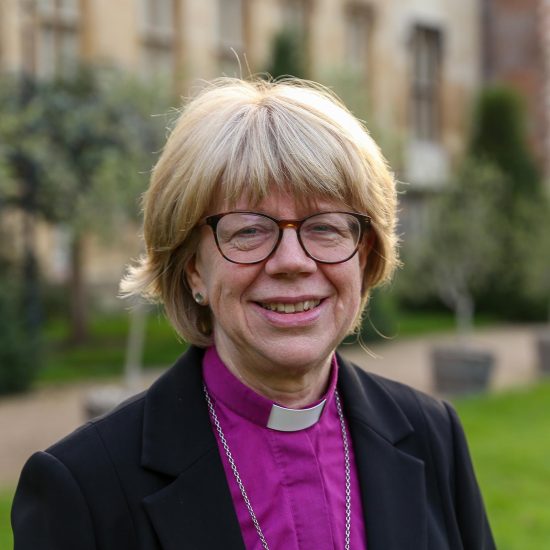
“What we need to know in Greenland is that we are not alone. We are used to having to wait until the snowstorm is over for the sun to come back.”
That’s what Lutheran Bishop Paneeraq Siegstad Munk from the Church of Greenland said last week during an online meeting convened by the World Council of Churches. As her remarks indicate, there has been both a threat to Greenland lately and also an outpouring of support. As U.S. President Donald Trump blasted American ally nations this month — sometimes with incoherent claims — several Christian leaders in the U.S. and other nations have criticized any effort to seize the autonomous Arctic territory of Denmark.
Trump’s interest in Greenland isn’t new, but his obsession has surged in recent weeks. He said in 2019, during his first term, that he wanted to acquire Greenland but it was a low priority. Shortly after winning the 2024 election to return to the White House, Trump again raised the idea, arguing on social media that “the ownership and control of Greenland is an absolute necessity.” Trump Jr. then visited Greenland, a stunt that raised attention to his father’s interest. Like in 2019, these comments were quickly criticized by leaders in Denmark and Greenland.
But for most of Trump’s first year back in office, Greenland was a back-burner topic. Until last month. On Dec. 21, Trump appointed Louisiana Gov. Jeff Landry as a special envoy to Greenland — something he did without informing the Danish government in advance. Landry, who will continue as governor of The Pelican State, quickly said his position was part of the administration’s efforts “to make Greenland a part of the U.S.” Greenland’s Prime Minister Jens-Frederik Nielsen responded, “Greenland is our country. We have our own democracy, our own decisions, and a strong community that stands firm. Greenland belongs to the Greenlanders and territorial integrity must be respected.”
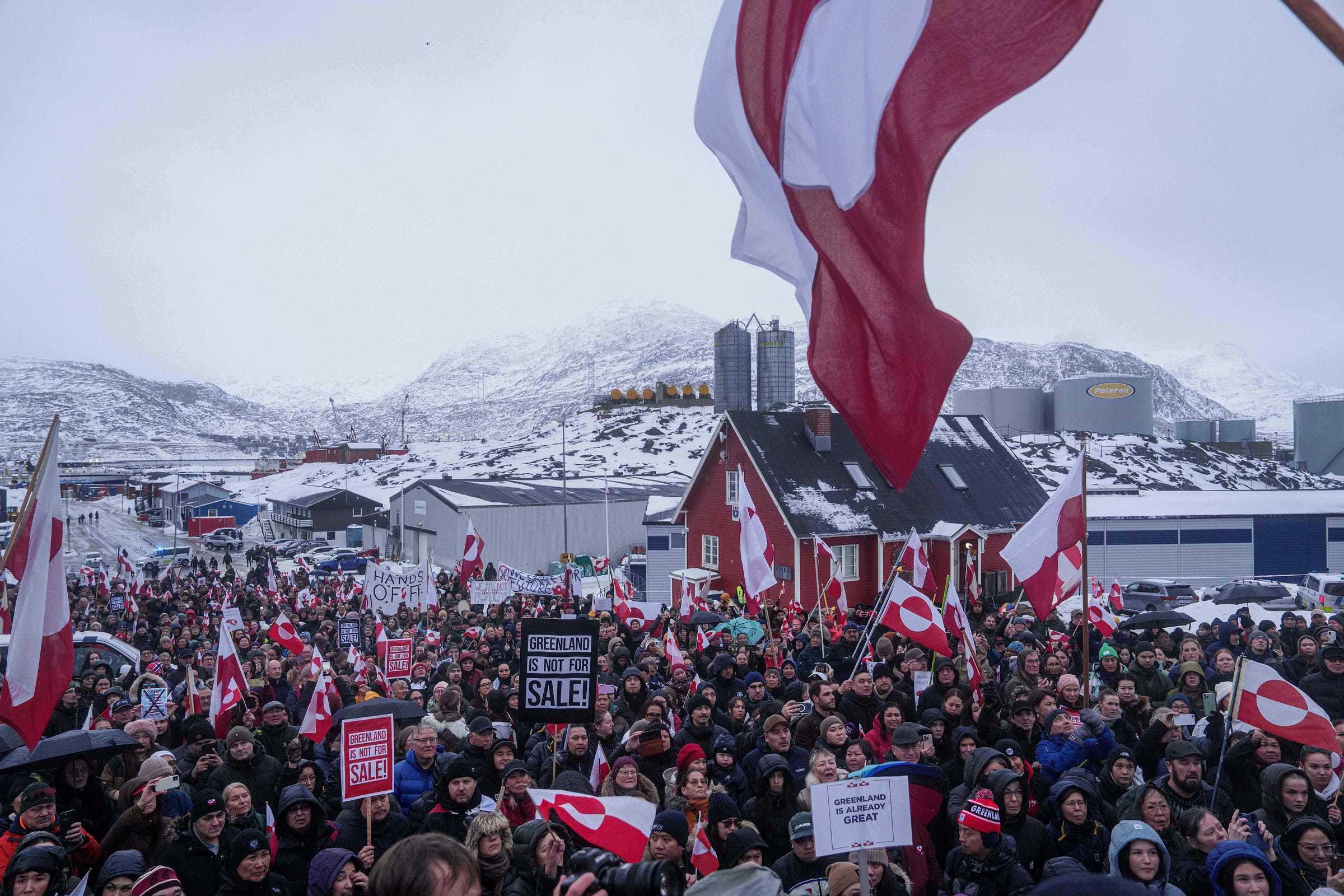
People protest against Trump’s comments about Greenland in front of the U.S. consulate in Nuuk, Greenland, on Jan. 17, 2026. (Evgeniy Maloletka/Associated Press)
Although Trump has often mused about buying Greenland in a real estate deal, he’s also at times refused to rule out military action (though last week suggested he would not attack). Military action would mean attacking not just an ally nation but one that’s part of the NATO treaty that obligates all other members to respond to the attack. Invading Greenland would put the U.S. in violation of that treaty and, in theory, at war against the 31 other NATO member nations that include Canada and most of Europe.
As European leaders criticized Trump over Greenland, he even threatened last week to launch a tariff war with them, though he later backed down on that. Most wildly, he wrote a letter to the prime minister of Norway, arguing that since that country did not give Trump the Nobel Peace Prize, he no longer is thinking “purely of peace” and so will take “complete and total control of Greenland.” Of course, the country of Norway doesn’t actually decide the peace prize winners and he didn’t explain why Norway’s behavior would justify taking Greenland from … checks notes … Denmark.
As Trump alienates the U.S.’s closest allies, 75% of Americans say they oppose taking over Greenland and several Republican members of Congress have publicly criticized the idea. Yet, Trump’s obsession hasn’t abated. So many Christian leaders in the U.S., Denmark, Greenland, and elsewhere are speaking out against the imperial plotting of the man who commands the world’s largest military. This issue of A Public Witness lifts up these important religious voices of opposition.
Lutherans Hammer Back
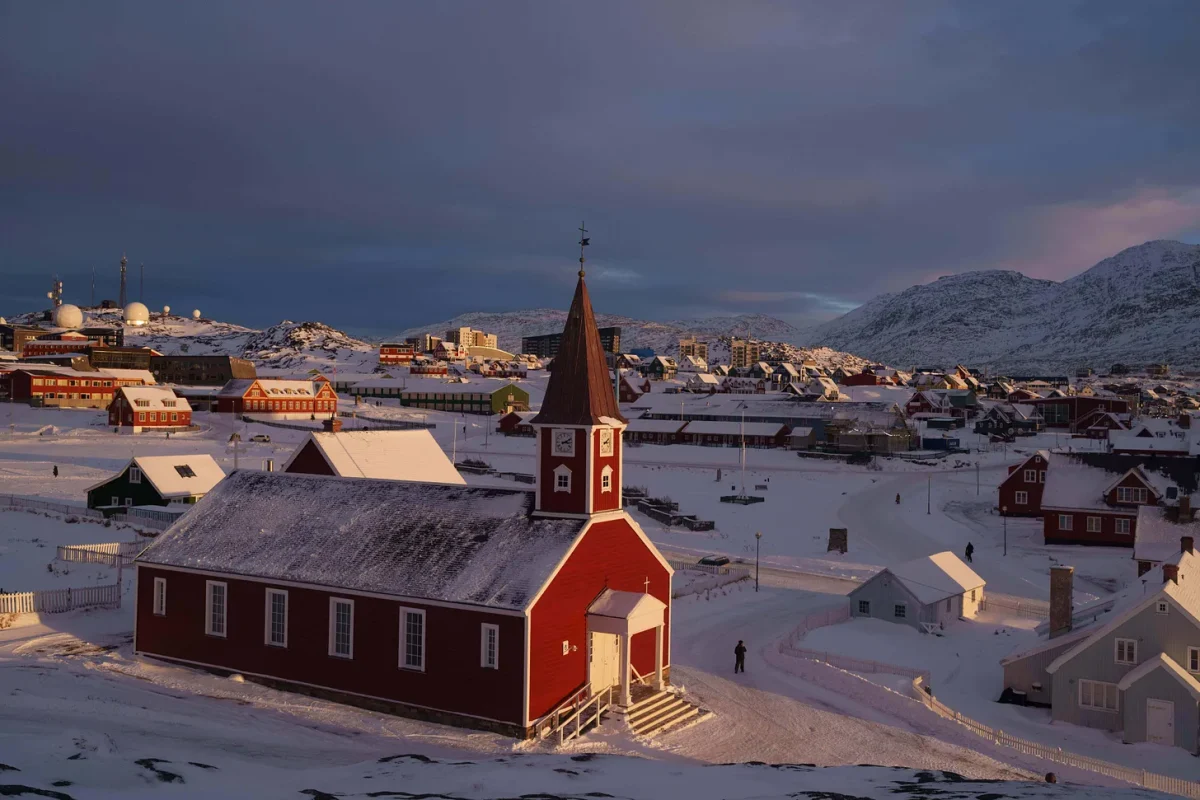
Greenland, like Denmark, is overwhelmingly Lutheran. A Danish missionary arrived on the world’s largest island just over 300 years ago, and that branch of Christianity has dominated there since. The Church of Denmark, a Lutheran body, is the established church in Denmark and its territories. The Church of Greenland, a diocese of the Church of Denmark, has also enjoyed local government support and funding.
And so, just over 90% of Greenlanders officially belong to the Lutheran church. But, as in other European nations with a historically established church, attendance is often quite low compared not just to the official membership but also the United States. For instance, there are only two Lutheran churches in the capital city of Nuuk, despite having a population of more than 20,000 people (making it Greenland’s largest city). One of those churches is named for Hans Eged, the missionary who launched evangelistic efforts to Greenland and founded the city now known as Nuuk. But he’s also a divisive figure, with statues of him being vandalized in recent years with words like “decolonize.”
Given the centuries-long history and the dominant membership in Greenland, Lutheran leaders there and globally have been particularly vocal against Trump’s dreams of conquest. Earlier this month, the heads of the Evangelical-Lutheran Church in Denmark (also known as the Church of Denmark), the Evangelical Lutheran Church in America, and the Evangelical Lutheran Church in Canada issued a joint statement to offer their “full support” to the Greenlandic people against Trump’s threats.

The rest of this piece is only available to paid subscribers of the Word&Way newsletter A Public Witness. Subscribe today to read this essay and all previous issues and receive future ones in your inbox.