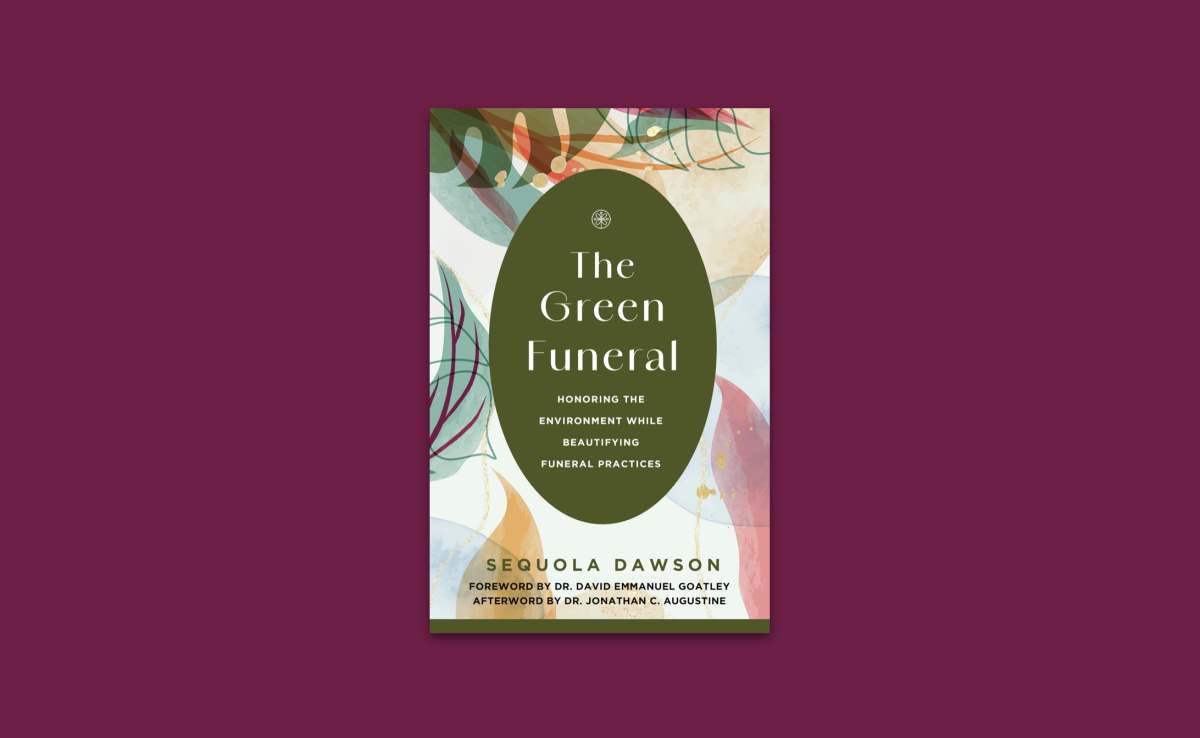
THE GREEN FUNERAL: Honoring the Environment While Beautifying Funeral Practices. By Sequola Dawson. Foreword by David Emmanuel Goatley; Afterword by Jonathan C. Augustine. Minneapolis, MN: Broadleaf Books, 2025. X + 214 pages.
Death is inevitable, which means that as we age, we begin to think about what will happen to us upon our deaths. We not only think about what happens on the other side of the grave, but also what will happen to our bodies. Will there be a funeral? A Memorial service? A graveside committal? Will we be buried? Cremated? Or maybe something else? As a pastor who has presided at numerous funerals, memorial services, and committals, whether for church members and strangers, I have witnessed a variety of choices when it comes to a person’s death. Being originally from the West Coast, visitations were uncommon. Now in Michigan, they seem common. While cremation dominates in the West, burials are more common in the Midwest, although that trend appears to be changing. One of the reasons why burials have been more common than cremations is the continuance of visitations prior to the funeral, where the casket with an embalmed body is present. Most often, with visitations, if not the funeral, the casket is open, revealing the embalmed body.
Robert D. Cornwall
While my thoughts on this matter are influenced by my calling as a pastor, I have to think about what happens to me when I die. That is especially true now that I’ve retired and my death is closer than ever before. Until recently, I had assumed that I would be cremated, which has also been the choice of my wife. Cremation is less costly and appears to be better for the environment. But lately, I have been thinking about another option known as a green or natural burial. Green burial involves a direct burial of the body, without embalming, and probably in a shroud. There is no need for a casket or a vault because the body will naturally decompose. There is even a cemetery nearby that offers that option. In this case, the body is buried in a serene natural field, with a simple stone marker.
This introduction to the possibility of choosing a natural or green burial leads me to my review of The Green Funeral: Honoring the Environment while Beautifying Funeral Practices, by Sequola Dawson. Dawson, who is the senior pastor of St. Mary African Methodist Episcopal Church and a chaplain dealing with bereavement, offers the reader a helpful discussion of green funerals and burials, with a focus on honoring the environment while also acknowledging the traditions and needs of families. She writes The Green Funeral for the Black Church, which has developed practices and traditions that honor the bodies and the lives of the dead. However, Dawson argues that many of these practices tend not to be environmentally friendly. So, she offers this book to the Black Church as a guide to funeral and burial practices that might better consider the environment. While Dawson writes this book for the Black Church, I believe it can be helpful to those of us outside that context who wish to be more environmentally friendly in our burial practices.
For those of us living outside the Black Church tradition, Dawson’s exploration of the role that funerals and burials play in the Black community is very enlightening. We learn how ingrained and important the funeral and burial practices are to the African American community. She shares how these practices developed, often due to discrimination by white funeral homes and directors, which led to the establishment of Black funeral homes, often owned by African American clergy, as well as cemeteries. Honoring the dead with embalmed and beautified bodies, along with special clothing and expensive caskets, serves as an important sign that the person who has died is worthy of honor.
While Dawson understands why these practices developed, as she became more aware of the environmental factors involved, she began to question some of those practices. At the same time, she wanted to find ways to honor the traditions that have developed in the community. While cremation is less expensive (as long as the body is not preserved beforehand) than traditional burial, and somewhat more environmentally friendly due to the lack of embalming chemicals, she came to believe that even this option might not be the best. Therefore, she introduces the reader to some of the other options available, which is why I was initially interested in the book.
Sequola Dawson’s book, The Green Funeral, is deeply personal. This is not a purely academic question for her. While she has a background in environmental science, including a Ph.D. in the field, in addition to her D.Min., she has been deeply involved in bereavement ministry within the Black church setting. Therefore, she knows from personal experience how people perceive death and seek to honor their loved ones after they die. She wants to respect the needs and wishes of the families, but she also wants to help her community consider other possibilities. As David Goatley, her D.Min. advisor at Duke Divinity School and now President of Fuller Theological Seminary, points out: “Her text is an invitation to a deeper discipleship. She calls Christians to turn away from guilt-or-ego-driven funeral expenses and indebtedness; toxic decisions with devastating environmental impacts; and ecclesial complicity in practices that are harmful to families and the earth” (p. x). Her discussion of green burial and funeral practices includes reimagining the nature of beauty by asking whether a beautifully embalmed body is the true measure of beauty.
Dawson begins by laying out the concern she has about “Greening Death” (Chapter 1). In this opening chapter, Dawson lays out the basic issues, including some of the theological resources available to this conversation. Then, in Chapter 2, titled “The Setting,” she goes into great detail, describing how the Black community approaches death, including going to great expense to provide funerals that are believed to honor the dead. At the same time, while addressing traditions and economic considerations, she addresses the ecological effects of these funerals. These include the toxicity of the embalming process, the contamination of soil and water that can happen, especially in older cemeteries, along with the expense of such burials. She points out that caskets are big business, ranging from $2000 to $10,000 dollars. She even provides a table with costs comparing prices from 2014 and 2019. Then there is cremation, which is on the rise, especially in white communities, while less expensive has its own issues. She couches all of this in discussions of cultural and social perceptions and pressures, while drawing our attention to the ecological and environmental issues at hand.
In Chapter 2, Dawson lays out the major issues and concerns, doing so in great detail. Then, in Chapter 3, titled “Raised Awareness,” she combines her own personal story about how she moved from an engineering career to ministry. She introduces us here to some of the resources available to people to address the concerns she raises, including concern for the environment, doing so theologically. This discussion is followed in Chapter 4 with a discussion of “The Green Funeral.” While she acknowledges the importance of Black Church funerals to the African American community, she proposes here a “more excellent way” by engaging in green funeral practices. Here she describes what a green funeral would look like in a Black Church context, such that the practices honor tradition while also protecting the environment. Chapter 5, titled “To Be a Mango Tree,” shares a conversation that Dawson had with podcaster James Wilson, who advocates for green funerals. Here again, we gain an understanding of the possibilities and values inherent in this move to a more environmentally friendly form of burial.
One of the issues present in traditional burial practices within the Black community concerns the question of beauty. So, in Chapter 6, titled “In House Beauty, Everyday Beauty,” Dawson engages in a conversation about what this entails, especially in an everyday sense. This provides a context for a discussion about what beauty might look like in a visitation, especially one where a body might be present, but not embalmed. Ultimately, this is a conversation of moving to a better, more environmentally friendly way of dealing with death. Chapter 7 is titled “Staying Woke in Death.” This is a reminder that the use of the word “Woke” has its origins in the Black community and has been misappropriated by those who wish to abolish diversity, equity, and inclusion. To be woke is to be awake and aware. Here, it has to do with the nature of death and its aftermath. Dawson closes with a chapter titled “Beauty and Honoring Covenantal Relationships.” Throughout the book, Dawson takes note of the concept of beauty and how that applies to the funeral process. How we define beauty affects the way we approach such things as embalming, caskets, and more. So, in conclusion, she invites the reader to reconnect with the earth through an ecological conversion. In doing so, changes in practices can take place that will affect everyone.
Although I read Sequola Dawson’s The Green Funeral as an outsider to the Black community, I am cognizant of the importance placed on how we handle death and its aftermath. Traditions and practices have developed, and industries along with those practices. Nevertheless, though different communities will respond differently, we can learn from each other, especially when the earth we share is at stake. So, there is much helpful information present in The Green Funeral that can be helpful to other communities as they wrestle with questions of the environment, the nature of beauty, and how to honor loved ones in the time of death. For those outside the African American community, learning something about why certain practices developed and why they are difficult to abandon should prove enlightening.
This review originally appeared on BobCornwall.com.
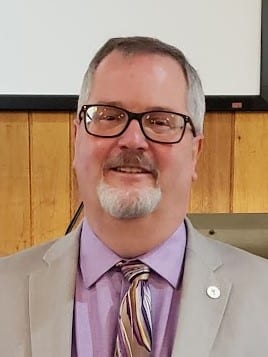
Robert D. Cornwall is an ordained minister in the Christian Church (Disciples of Christ). Now retired from his ministry at Central Woodward Christian Church (Disciples of Christ) of Troy, Michigan, he serves as Minister-at-Large in Troy. He holds a Ph.D. in Historical Theology from Fuller Theological Seminary and is the author of numerous books, including “Eating With Jesus: Reflections on Divine Encounters at the Open Eucharistic Table” and “Second Thoughts About Hell: Understanding What We Believe” coauthored with Ronald J. Allen. His blog Ponderings on a Faith Journey can be found here.