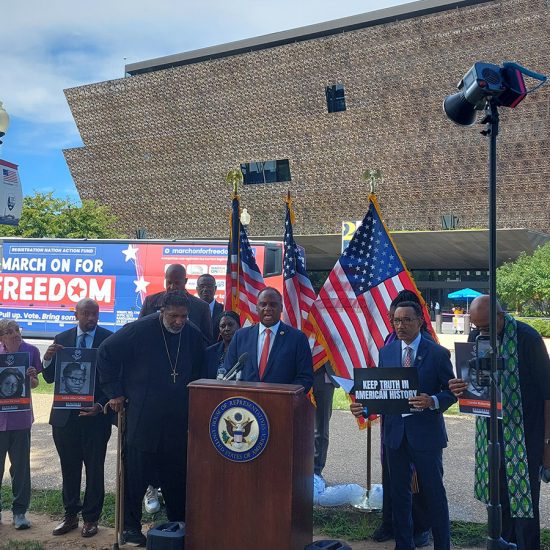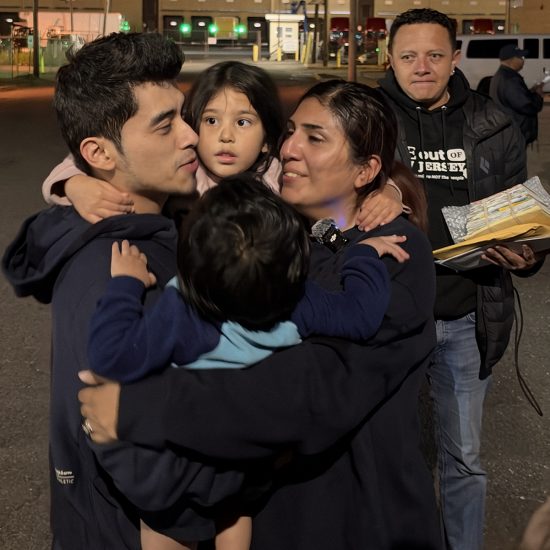
NOTE: This piece was originally published at our newsletter A Public Witness.
The Religious Right is a term that invites a strong reaction, positively or negatively, because everyone knows what it means. For decades, there has been a concerted political effort to mobilize rightwing Christians in support of a particular social agenda for the benefit of the Republican Party. Its strategy and successes have been well documented and studied.
You could say the exact opposite about progressive religious political actors. They have garnered relatively little attention because they are perceived as organizationally fractured, politically weak, and socially inconsequential. As a result, they garner little attention from journalists and scholars.
Well, the acclaimed sociologist Robert Wuthnow would like a word. His new book, The Religious Left: What It Does and How It Can Do Better, puts the activities and advocacy of faith-filled progressive actors front and center. He seeks to both illuminate what has been hidden and to add complexity where a story has been too simply told.

“My contention is that the Religious Left has massively reinvented itself in recent decades,” Wuthnow explains in reference to the way the movement now structures itself, the way it tries to exert influence, the allies it chooses, and the technology it deploys. Yet, he writes, “its core convictions are undiminished. Progressive faith communities’ moral strength comes from their faith that God cares about the good of humanity, wants the world to be better than it is, and encourages people of faith to be engaged in acts of mercy and kindness.”
The chapters of the book document how those ideals are concretely enacted with regard to specific issues and historical episodes, revealing both the reach and the limits of the Religious Left. Some of the examples, like environmental advocacy and the reduction of gun violence, are well known. Others, such as the coalition that pushed for international debt relief under the Jubilee 2000 banner, garnered less popular attention.
A close student of how religion and politics intersect within the contemporary United States will find a lot of the ground this book covers to be familiar, but there are still nuances and insights to be gained from re-examining the terrain with Wuthnow as an expert guide. Those looking for an introduction to progressive faith activism or those who harbor suspicions of it — either because they disagree with religious roots or political values — will find this volume a useful conversation partner for grasping an important vehicle for social change that has too often been ignored.
At a time of intensifying Christian Nationalism, others will be intrigued by the insinuation of the subtitle that there’s practical wisdom to be found here that will increase the effectiveness of progressive people of faith in our nation’s public life and policy debates. Some of this is to be found in the lessons provided by the historical examples Wuthnow highlights and analyzes. Additionally, he names three places that serve as the foundation of the Religious Left’s current and future vibrancy, or lack thereof.
The first are local congregations and faith communities. These are spaces where people find meaning, support, and inspiration to act. They are also organizing hubs where like-minded individuals can connect, plan, and take action. It’s one more reminder, especially in a time when many are choosing to disengage from formal participation in religious communities, that nurturing the vitality of congregations can be beneficial far beyond the sanctuary walls of a church, synagogue, or mosque.
Next is the work of progressive faith leaders, who give voice to the ideals and desires of those they lead, represent, and serve. Through their networks, these leaders foster connections that expand the movement’s reach and make its power visible. Their voices also provide a contrast to the perspectives of conservative faith leaders who try to claim the moral high ground for their side with little opposition or contestation.
Finally, there is the importance of progressive advocacy organizations whose resources and expertise create the potential, sometimes realized and other times not, for a symbiotic relationship with the progressive faith movement. They must also overcome mutual suspicions and find strategic alignment on both means and ends.
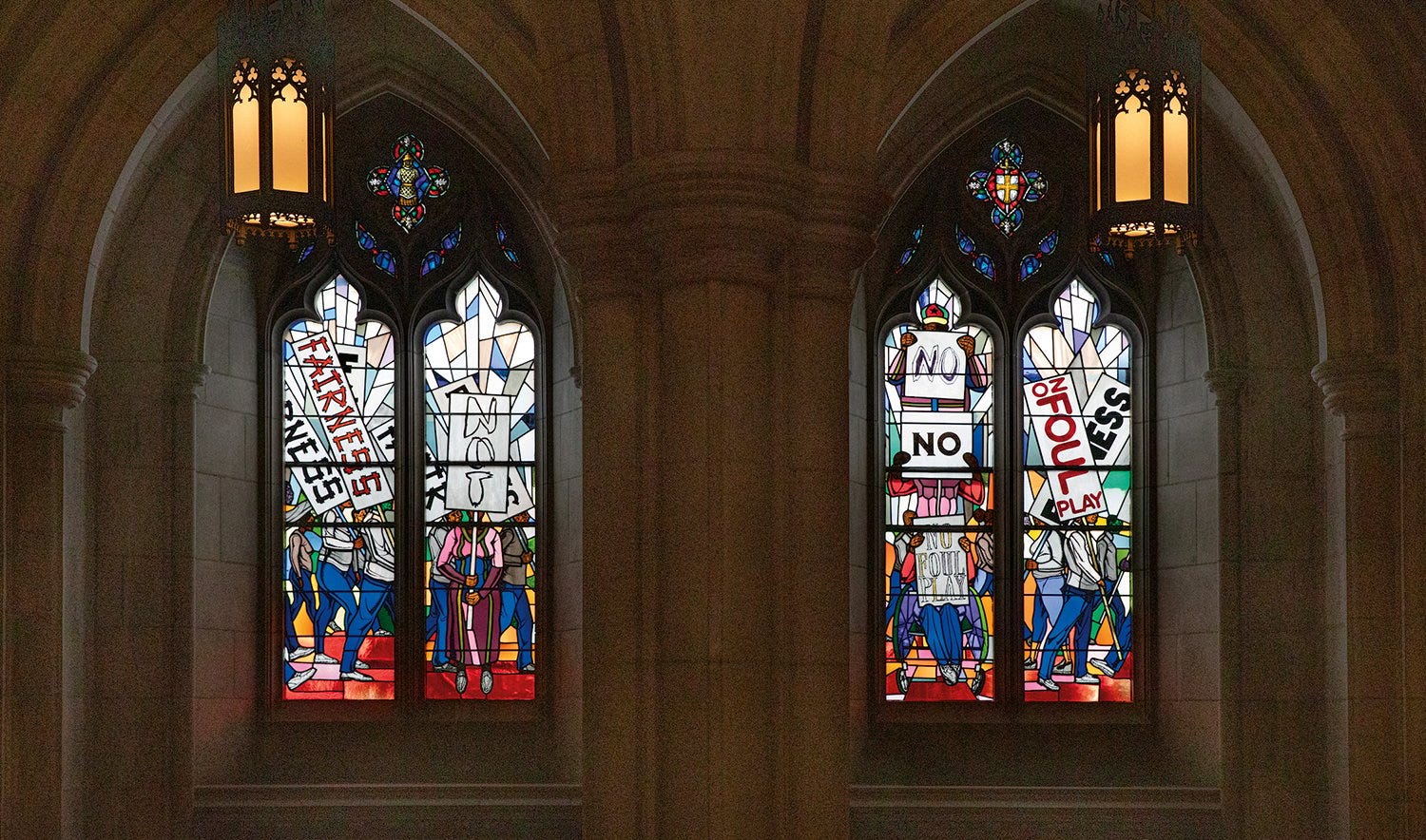
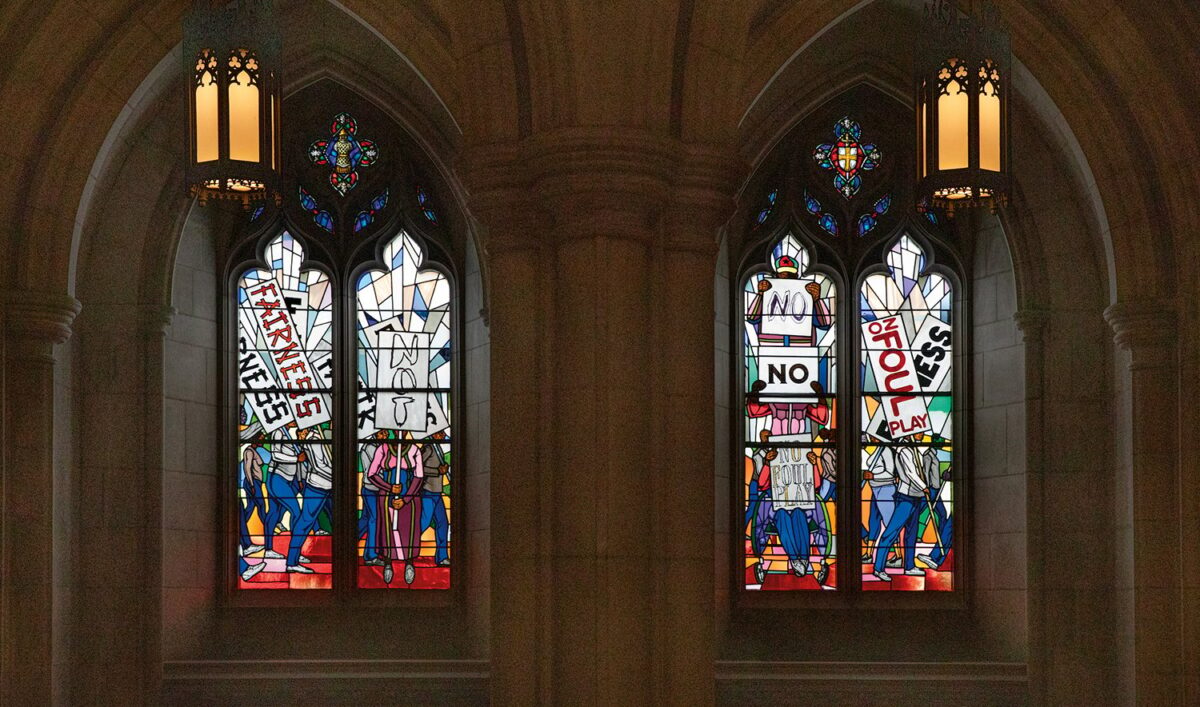
Stained-glass windows in the Washington National Cathedral that were unveiled on Sept. 23, 2023, to replace windows removed for including a Confederate flag and Confederate generals. (Washington National Cathedral)
The hope, Wuthnow states at the end, is that “the bad news for an authoritarian regime is that religion’s voice is not easily silenced. When religious groups are motivated to take action, they know how to express their moral convictions. … Faith communities have the potential to be that prophetic voice even in democracy’s darkest hours.”
Perhaps you identify as part of the Religious Left or just want to know more about this side of faith-based activism. Robert Wuthnow has graciously agreed to send a signed copy of his new book to one of our paid subscribers, so upgrade today to support our award-winning writing and ensure you’re eligible for that drawing.
As a public witness,
Beau Underwood
A Public Witness is a reader-supported publication of Word&Way. To receive new posts and support our journalism ministry, subscribe today.