NOTE: This piece was originally published at our newsletter A Public Witness.
The #MeToo movement brought global awareness to how sexual abuse and harassment were both widespread and overlooked in too many places. The #ChurchToo campaign focused attention on how those same sins were often prevalent in places that were supposed to be sacred. Both efforts prioritized the stories of women who testified to the pain and harm they had suffered, along with the strength and resilience they had demonstrated.
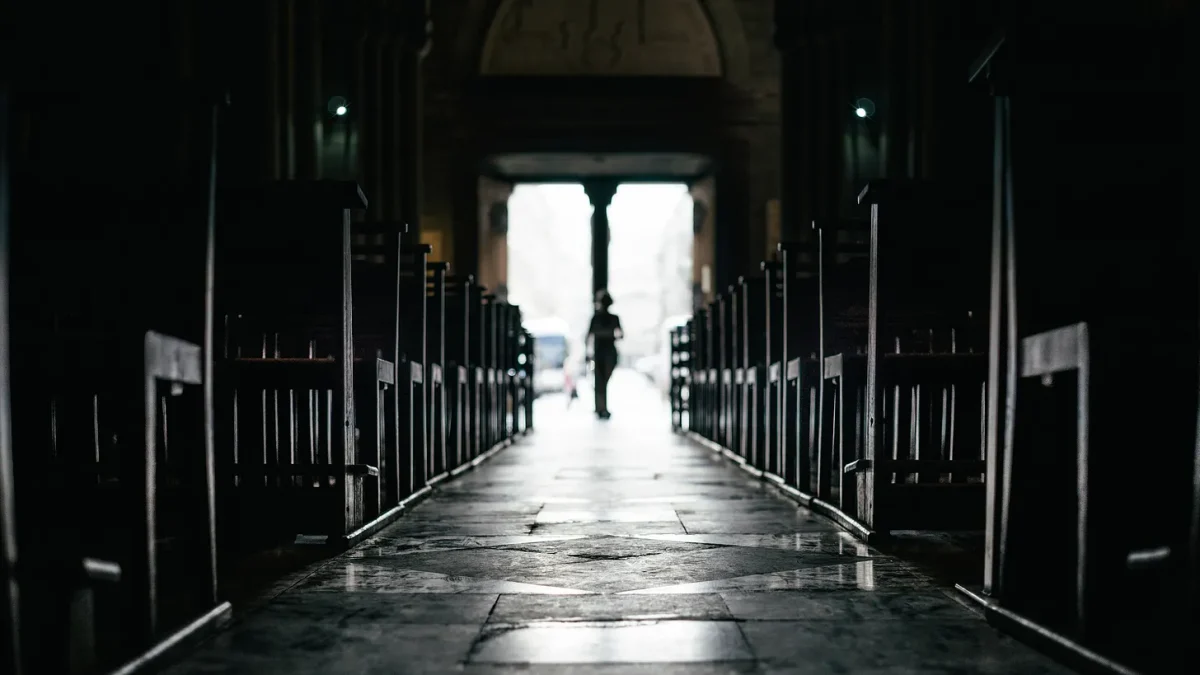
In the forthcoming Damned If She Does: Why Women Quit Church and What It Means for the Future of Religion, journalist and author Sarah Stankorb puts women’s voices and experiences of American Christianity front and center. Exploring a broader range of transgressions within Christian communities, the chorus of repressive tales and moral abuses ends on a common note: for many women in recent decades, the healthiest and most liberating decision they could make was to walk out of the church.

“This story of women leaving the church is revealed in statistics but better understood in the intimate accounting of heartbreak: churches that tried to suppress them or were silent on racism or sexual abuse but loud on abortion or gay marriage or how to vote,” Stankorb writes. “Their collective experiences indicate a recalibration of American values, a spiritual and ideological reorganization. Whatever Christian faith’s underlying influence in our civil sphere, this fresh vacancy leaves space to redefine or, perhaps, rediscover what ties have bound us as Americans all along.”
Those dynamics were certainly clear in the vocational arc of Georgette Gaston. A United Methodist pastor who shepherded a congregation through pandemic upheaval and denominational divisions over the inclusion of LGBTQ members, she managed to overcome a plethora of headwinds to grow her congregation both numerically and in terms of willingness to extend love to neighbors. By the conventional standards of ministry, she was doing everything right.
Yet, her “reward” was to be handed more responsibility with little additional remuneration and lots of extra headaches. She was asked to tolerate toxic leadership and defer to those who held power because of the financial resources they controlled. She watched as Christian Nationalism grew in strength within the pews. It was the stained-glass cliff in action, with successful women being invited into higher but more difficult leadership roles. They are left with either working to the point of exhaustion or shouldering the blame when a fragile institution collapses despite their best efforts.
“I never lost my faith in God,” Gaston says in Stankorb’s book. “I lost my faith in the church. I often felt used by the system that they were trying to prop up.”
The circumstances of the different characters are quite different, but the conclusions they arrive at are eerily similar. The women whose perspectives we have the privilege of learning from reach a point where the church took more life than it gave to them.
“When many American churches traded Christian virtue for Christian power, they left the virtuous or bored or disgusted or disbelieving with only two real options: practice faith outside the institution or abandon faith altogether. People’s lived experience, including their own Christian values, pulled and tugged. For longer than many men, women hung on,” Stankorb writes.

Without detracting from the power of the book’s narrative or the authenticity of the voices within it, I did wonder how much one can extrapolate from the stories it tells to the broader trend it seeks to explain. There is no doubt that many women have left the church because of the outdated views and terrible abuses the book describes. At the same time, there are also women who embrace the theological views that have alienated so many others. It is always hard to make the jump from illuminating examples to confident explanations. Is what we read here just some of the story or most of the story?
Still, what Stankorb accomplishes in Damned If She Does is quite impressive. She makes clear the frustrating and harmful predicaments so many women have faced trying to live up to standards imposed on them by American Christianity, while documenting the many hypocrisies the church tolerates or pretends to ignore out of delusion or self-interest.
Near the end of the book she states, “[Disaffiliating women] have felt the pain of disillusionment, which can be psychic and spiritual; but in America, it currently comes with the threat of corrupt powers overtaking our most fundamental truths. That version of the church asks us to worship a lie. And here, women, who are the last to go, are the canary we ought to watch as she takes wing.”
For pastors and leaders valuing the leadership and presence of women in Christian communities, this book is an alarming reminder that the sins of patriarchy and other social ills are alive and well in those places. It’s a shame how those who claim to care so much about drawing people closer to God have instead driven so many women out of the church.
As a public witness,
Beau Underwood
By the way, Damned If She Does: Why Women Quit Church and What It Means for the Future of Religion will be released by Broadleaf Books on Sept. 15, but it is already available for preorder.
A Public Witness is a reader-supported publication of Word&Way. To receive new posts and support our journalism ministry, subscribe today.