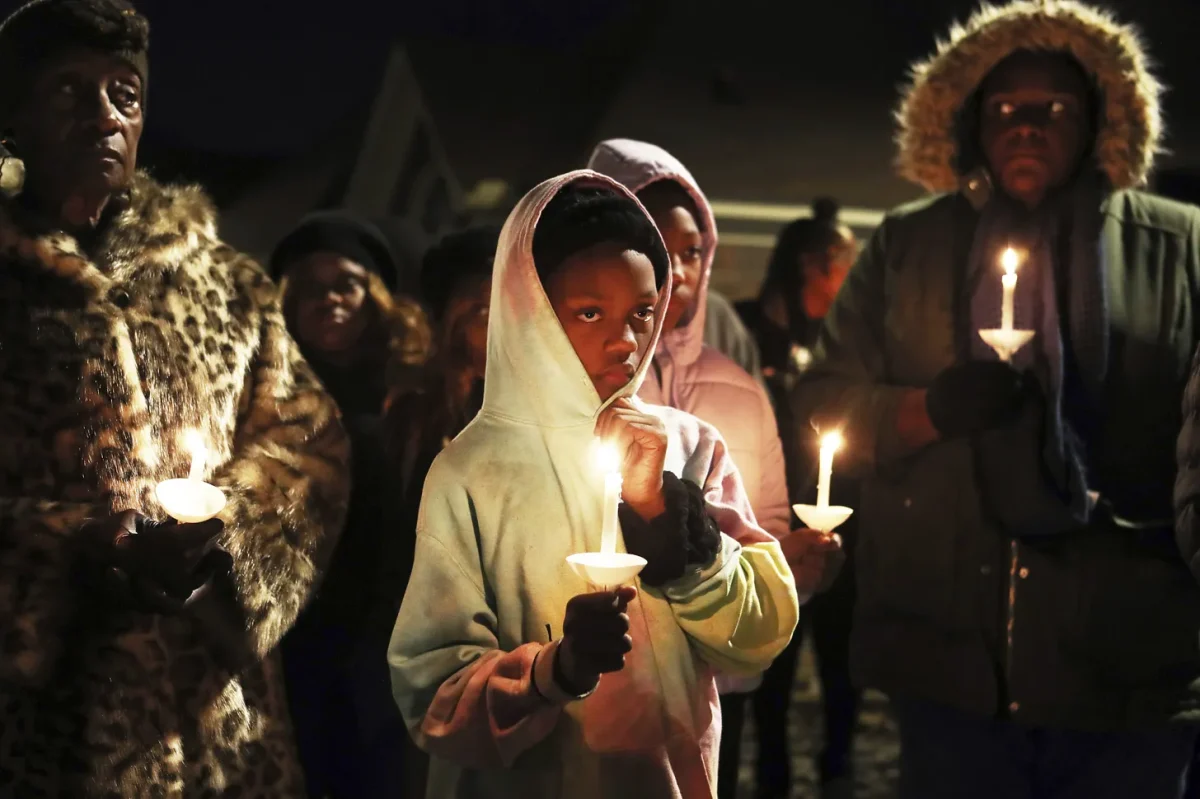
“The light shines in the darkness, and the darkness did not overtake it.” (John 1:5)
“On Jan. 7, 2023, officers in one of MPD’s specialized units kicked, punched, tased, and pepper sprayed Tyre Nichols, a 29-year-old Black man, during a traffic stop,” reported the Department of Justice and the U.S. Attorney’s Office for the Western District of Tennessee. “When officers caught up to Mr. Nichols, they beat him as he cried out for help and for his mother, who lived just a block away. Mr. Nichols died three days later.”
The murder of Tyre Nichols was brutal, but not anomalous. The report — released during Advent last year — found that MPD regularly used excessive force and discriminated against Black people and people with behavioral health disabilities, especially during traffic stops. The report offered 18 remedial measures which included a clear directive: “Limit the routine use of pretextual vehicle or pedestrian stops.”
In May, President Trump’s Department of Justice retracted the report’s findings. In September, at the president’s behest and without request from local officials, Gov. Bill Lee formed the “Memphis Safe Task Force” to aggressively police Tennessee’s largest majority-Black city with traffic stops “to bring peace into the community.”
Between September and early December, there have been over 40,000 traffic stops in Memphis. Day-to-day life is incessantly ruptured by police activity. I see camouflaged soldiers in Chrysler Pacificas at my neighborhood Target and my child’s church-run daycare. I can’t drive to work, take my kids to school, or go to the grocery store without seeing flashing blue lights and officers writing citations for minor violations. Each stop is a glaring reminder that state and federal politicians often prefer militarized control over genuine peace. Each stop stubbornly, insistently, recklessly attempts to forget Tyre Nichols.
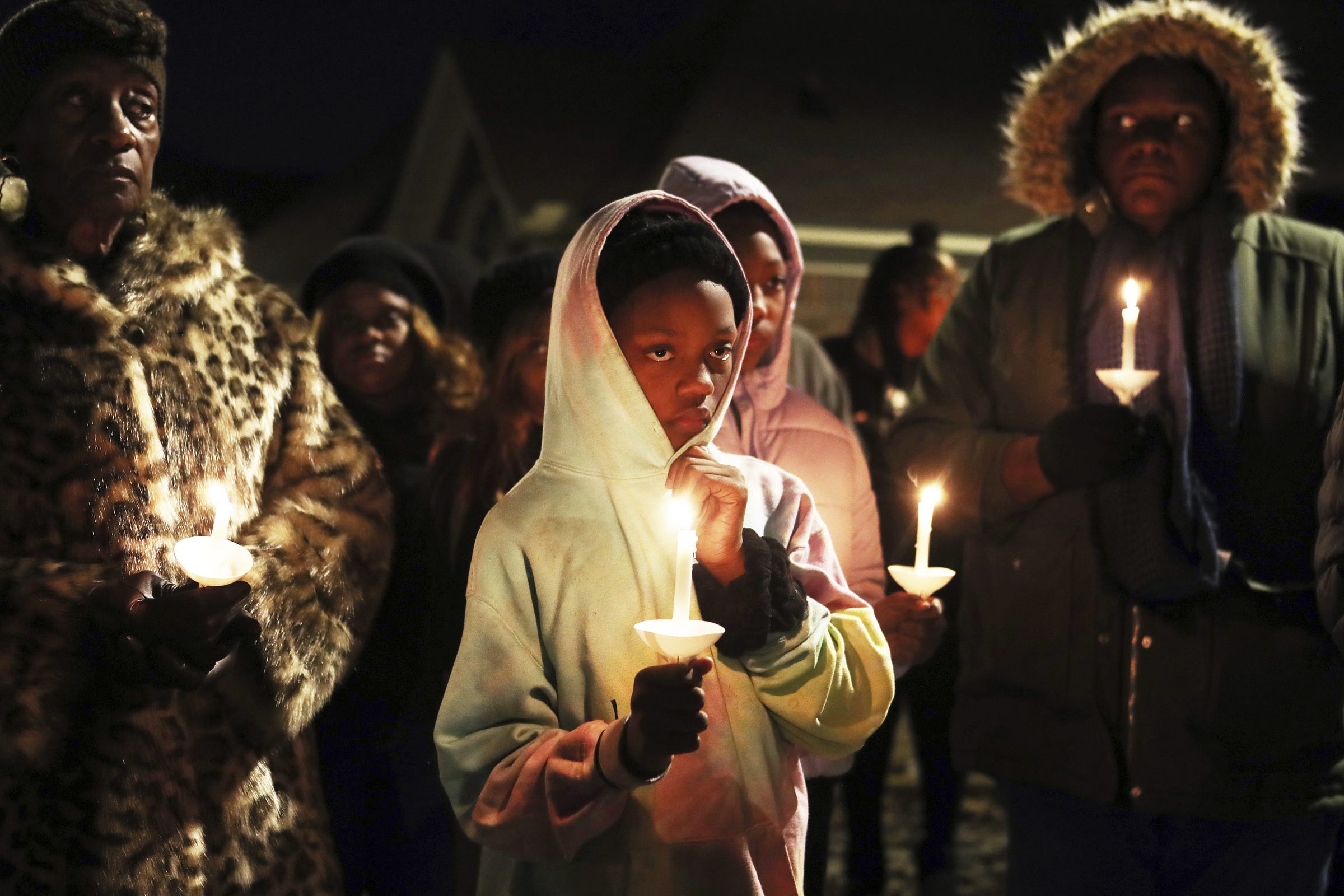
People participate in a Jan. 7, 2024, candlelight vigil in Memphis, Tennessee, for Tyre Nichols on the anniversary of his death. (Karen Pulfer Focht/Associated Press)
During this season of Advent in Memphis, it is easy to despair. And yet, there is a persistent call for something else amongst Memphians who know the history of the centuries-old struggle for civil rights in the city: a seemingly counterintuitive insistence on joy.
I first noticed this call to joy following a march organized by the grassroots organization “Free the 901.” Addressing a crowd of demonstrators, a community organizer declared, “We must center joy. Joy is resistance! Joy clarifies our shared purpose!” Her words struck me as peculiar in the moment, but they stayed with me.
This call to joy resurfaced when I reread Rev. Dr. Martin Luther King, Jr.’s final speech. Speaking to a packed crowd gathered in Memphis’s Mason Temple, King admonished his listeners to keep up the struggle for human rights. He expressed joy that he was part of the collective fight, ending his speech by saying, “And so I’m happy tonight. I’m not worried about anything. I’m not fearing any man! Mine eyes have seen the glory of the coming of the Lord!”
To be clear, this call to joy should not be confused with a call to commercialized holly jolly merriment. This joy is not characterized by ignoring the pain of neighbors terrorized by police violence and the threat of deportation. Instead, this joy is an invitation to embrace a divine gift freely given. A gift that prepares and sustains us as we collectively endeavor to complete the difficult work laid before us.
In the second chapter of Luke’s gospel, angels appear to shepherds proclaiming “good news of a great joy which will come to all the people.” This good news, this great joy often feels just out of reach. Calamity follows crisis like an ever-unspooling tragedy. But the season of Advent urges us to slow down; to dwell in the fullness of God’s good news. God offers us life-affirming joy.
All around Memphis, I see examples of what it means to accept God’s joy. Memphians teach me to find joy in togetherness. To find joy in expressions of care. To find joy in the bonds of community. To find joy in carrying on the work of the saints who walked this path before us.
J. David Maxson is a member of the Justice and History Committees at Grace-St. Luke’s Episcopal Church in Memphis and a new member of the Becoming Beloved Community Commission for the Episcopal Diocese of West Tennessee.
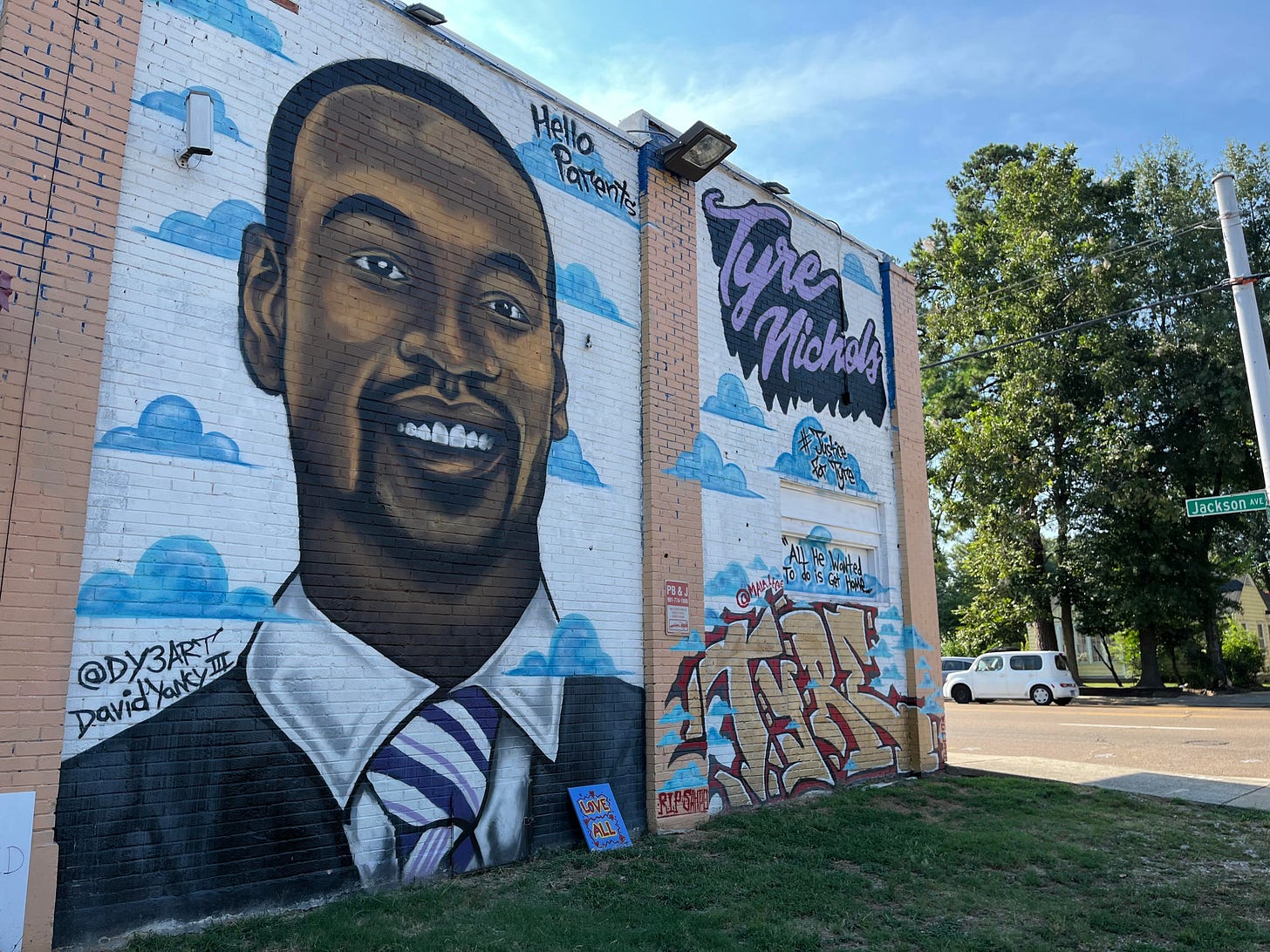
A mural of Tyre Nichols in Memphis, Tennessee. (J. David Maxson)