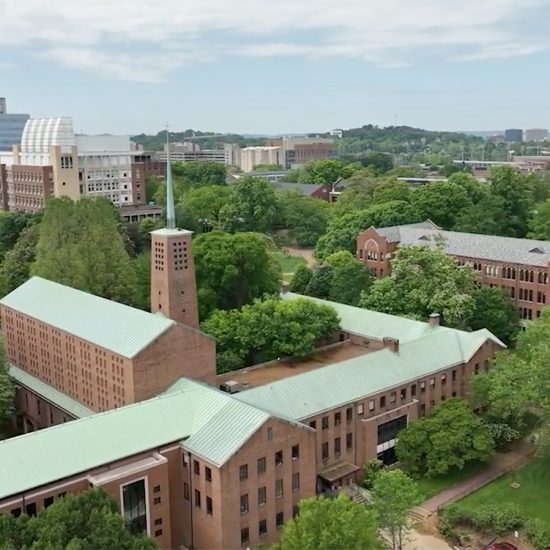
In 1995, my university was just two short years past its split with the Southern Baptist Convention. A more ecumenically inclusive future was on the horizon, but it was still straddling the vestiges of old with the hope of the new. As a Midwestern girl raised in the Christian Church (Disciples of Christ) tradition, I found myself outside of the cultural world that was Southern evangelicalism in the 1990s. I had grown up attending church almost every Sunday, served as a junior deacon, preached two Youth Sunday sermons, and had done hands-on service in several cities around the country in addition to the food pantry at my local church. However, my church had female pastors and elders and did not speak the same evangelical-ese that these southern Christians did, and I often found myself not fitting into the religious spaces offered on campus.
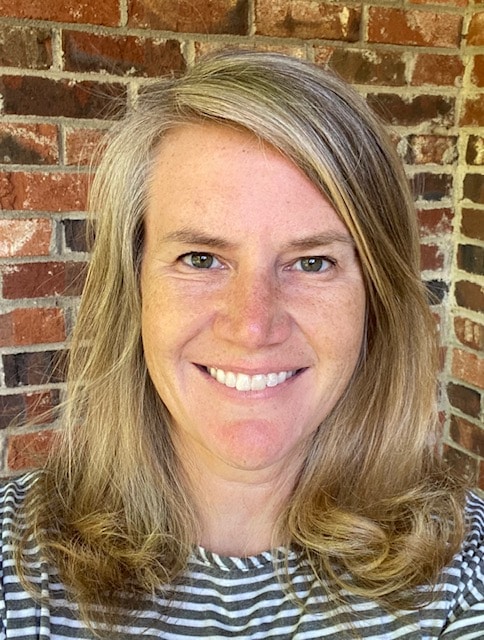
Rev. Dr. Sarah Blackwell
In fact, I was told by a friend that one group on campus had actually “marked me for conversion” since, apparently, I was not doing this Christianity thing right. Really, without the support of my then-boyfriend (now husband) who came from a Southern Baptist church that had found itself ceremoniously kicked out of the convention a few years prior over issues of women in leadership, I might have just walked away from any meaningful campus religious experience.
Instead, I turned my attention to service in the Christian tradition and funneled my energy into the campus volunteer network that served the local community. It was led by a spunky reverend who showed me through her life that loving your neighbor meant you best get up off your butt and do something to make someone else’s life better right now. That’s what Jesus meant when he was talking about bringing the kingdom of heaven to earth. I found a spiritual home on campus through this volunteer organization, but I could have easily just walked away after encountering a strand of Christianity that felt so wrong within me. The back door could have slammed behind me, and I might not have looked back.
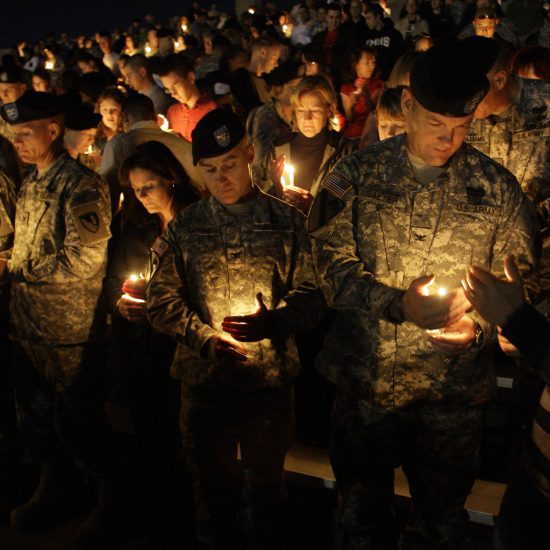
The assassination of Charlie Kirk has brought a lot of attention to college campuses and how faith is shared and developed in places of higher education. College is a time of great exploration and questioning as students try to find a way forward without the structures they grew up with and claim a spirituality that is their own. And yes, I do believe that this generation is thirsty for real conversations about deep issues and a grounding that comes from beyond themselves. Unfortunately, many are only given one narrative path.
Students are brought in by talk of the love and care of Jesus, as well as community, but as they move further into certain organizations, some start to hit cognitive roadblocks. They run up against teachings that they disagree with regarding immigration, gender roles, sexuality, inclusion, power structures, and the disparagement of any Christian who does not believe exactly like the organization does. Biology students are given explanations about the origins of life that do not resonate with their scientific studies. Women who are feeling calls to ministry are shut down and redirected. Those who seek to love without limit, like Jesus, are called out for being “woke” or “following false teachers.” They are funneled into one church or type of church and told that others are not “Bible believing.” They do not know another way, as the predominant voice on campus does not speak for all Christians.
Thus, as students are brought into the warm front porch of campus organizations, others are finding their way out the back door. Why? Because of the rigidity and proliferation of only one strand of Christianity on their campus. There cannot be only one room in the house! Many students are not versed enough in theology to do deep dives into what their organizations are built to do, though. Some see words like “non-denominational” as signifiers of openness and freedom from dogmatics when, in actuality, many of these organizations were birthed out of conservative denominational mindsets (many adults also do not recognize this). They do not even know the questions to ask — they just want to go where they find community. And for that, I cannot fault them.
Often, I encourage students who are struggling to find their spiritual home to look at the mission statement of any organization they want to be part of and see how much of what is mentioned is about the life of Jesus. Are they expected merely to worship Jesus and not follow his teachings? Sometimes in the “About” pages of college ministries, there is a lot about introducing young people to Christ and salvation — but not so much about learning to follow the lived example of Jesus of Nazareth. Success seems measured in the number of “converts” and not in a deepening understanding of the commands of Jesus in the Sermon on the Mount or Matthew 25. Some students need this outward-looking piece to be the focus.
Often, they notice when we are not instilling a moral imperative to love our neighbors in the real world. “Love” becomes saving from hell rather than making their actual lived lives reflect the kingdom of God on earth as it is in heaven, as Jesus so often preached. I understand that we need organizations on campus to connect with students who are seeking and give some structured guidelines for how to begin a life of faith, but we also must have those that strive to deepen spiritual formation by allowing students to ask hard questions without being told one dogmatic answer that they must adhere to or else. Additionally, sometimes we are sending those still developing in their beliefs with a mission to proselytize a faith without sufficient catechesis to know how to navigate difficult questions.

I fear any faith space where one certain path is prescribed to all students on how to live life and be blessed. Unfortunately, often we do not help them with what to do when the formula does not work. Sometimes we do not have good places in our universities for students to develop their faith understanding without feeling that a clearly designated path is the only “holy” way to take. Even leaders can be caught in nets of certainty where they cannot grow and develop their own faith life because they must stay true to prescribed tenets to keep their jobs. Moderate, big-tent, and progressive denominations must make the kind of financial commitments to our colleges and universities to fund more places where students can wrestle with their faith questions in safe and supportive environments where they do not feel condemned for having questions or pointing out inconsistencies.
At times, these ministries do not boast the large numbers of other organizations, and donors may question the work ministers are doing when not leading massive worship experiences; however, these organizations are discipling small groups through the type of deep work that can only be done on a more intimate scale. It is also how we maintain thriving congregations in the future as less-conservative students look for other church expressions rather than taking the off-ramp from organized religion altogether. We need to connect these students with church bodies that are living out the same ideals that they hold dear so that we can sustain mainline churches in the future.
Thus, we must have a diverse theosphere at each university. We need a variety of campus ministers who work together and appreciate the role that each expression of Christianity has in reaching into different places and meeting students where they are, rather than prescribing a one-size-fits-all method. We should be a mighty oak, rooted in Christ and possessing the trunk of unity that Paul describes in his letters, but with different branches that help each Christian find authentic expressions of their faith. It should never be a “turf war” where people cling to “their students,” even if their particular manifestation of the church is not serving a particular student. We cannot just cut off or discredit other branches because they are not for us. Those that are truly outside the bounds of Christian expression will not be connected to the Source and will wither and die on their own. Just like biodiversity helps an ecosystem thrive, theodiversity allows spiritual life to flourish.
Selfishly, I hope for a place that I can send my 18-year-old freshman into where I know that he will not immediately be combated by those who think he is some kind of heretic because his mom is an ordained minister. He needs somewhere that his dear refugee friends who helped raise him are viewed not only as children of God but as welcome parts of our country. I want a place where he will not be “marked for conversion” in a combative way, nor where people spend their time fighting against the body of Christ rather than embracing the different manifestations of it.
Maybe I am extra sensitive to church-hurt in this time of vulnerability when students first leave the comfort of their home church and family system because it is my story. Without a few key players showing up at the right time, my faith life could have gone much differently. I could have easily been out the back door. I want to help shut that door by making sure the house of spirituality on college campuses has many rooms (just like Jesus says in John 14) where a wide variety of students feel comfortable to explore their faith and claim it as their own. It is time now for all congregations across the theological spectrum to step up and work together to help every seeking college student find a place that promotes their spiritual flourishing. If college students are not important in your church context, they need to be.
Rev. Dr. Sarah Blackwell is a contributing writer at Word&Way and a graduate of the Gardner-Webb School of Divinity and the McAfee School of Theology. She loves working with college students as they explore their faith context. Her intergenerational faith formation book, “God is Here” is available through Amazon and other online book retailers. Follow her writings at proximitytolove.org.