NOTE: This piece was originally published at our newsletter A Public Witness.
t the start of worship on Sunday morning (Aug. 16), Rev. Cody Sanders gave an announcement that’s not what he typically offers: the congregation had been one of several churches “targeted by undercover Department of Homeland Security infiltration.” The interim pastor of University Baptist Church in Minneapolis, Sanders noted the church learned from news reports on Friday that an undercover agent entered the church’s building in May to secretly record a group meeting there. Additional court filings have since revealed three other DHS incidents — including two on Sundays — at UBC, and the church has already responded in court since its property is covered by a federal injunction blocking warrantless DHS actions there.
“We should not become accustomed to this. We should not let this become sort of the taken-for-granted, status-quo norm that we just expect, because this is wrong,” added Sanders, who is also a professor of congregational & community care leadership at Luther Seminary. “It’s something that many of our sibling congregations and denominations have been fighting in court for some time. So we name this as the reality that we are facing in the world right now, and a reality that we should continue to resist.”
As reported by A Public Witness on Friday, DHS sent undercover agents into at least five church buildings to track activists attending events at Baptist, Lutheran, Episcopal, and Unitarian Universalist churches in Minnesota’s Twin Cities (and an event featuring Minnesota activists at a Lutheran church in Michigan). Multiple pastors have said they were unaware of the DHS actions inside their buildings until news broke last week.
“It’s a strange time,” Rev. Steve Sylvester, intentional interim lead pastor at Prince of Peace Lutheran Church in the Twin Cities suburb of Roseville, told me. “Even with the kind of aberrations that we’ve been dealing with, typically people don’t sit down and think, ‘Well, the Stasi might know what I’m doing.’”
He added that while he “knew that people who should not have been looked into were looked into,” it still came as a surprise that people coming to his church building were surveilled. He also questioned the accuracy of the agent’s report about the discussion and reactions of people at the meeting. But he’s mostly alarmed that DHS would target churches and people coming to events at churches.
“It’s a big deal because it’s an infringement on our rights as citizens,” he said. “It’s frightening that, apart from any conceivable suspicion of wrongdoing, the federal government is able to invade privacy of individuals involved at a house of worship. … The reality that our government is surreptitiously spying on our houses of worship, I hope is something that breaks through whatever it needs to break through so that people can understand what’s going on.”
During worship on Sunday, Sylvester also informed the congregation about the news, calling it a “weird thing” he didn’t expect to deal with during his time as interim. He noted they don’t yet know all that happened or what it means, but he promised that church leaders would continue to update members. He then demonstrated the church remains undaunted in its public witness since his very next announcement was about a group “that did the trainings for the legal observers back during the occupation in the winter” and is now helping train congregations and others in “defense of democracy” to “ensure that elections are safe for all.” He added that some members from the congregation had been part of the election training and would share more in a meeting after the service. It is not yet known if anyone from DHS also attended that meeting Sunday.
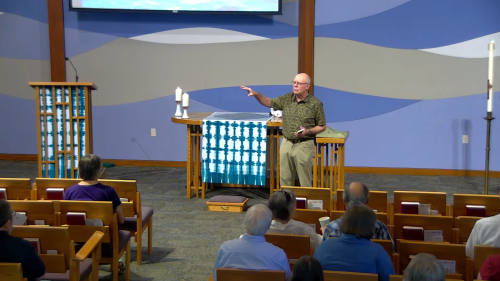
Screengrab as Rev. Steve Sylvester speaks about surveillance at Prince of Peace Lutheran Church in Roseville, Minnesota, on Aug. 16, 2026.
Another church that was spied on, St. John the Evangelist Episcopal Church in St. Paul, issued a public statement to members on Friday after the news broke. Rev. Craig Lemming, the church’s associate rector, mentioned the surveillance incident and insisted the church “acts within the law, supports our community, loves our neighbors as Christ commanded, and we continue to seek out ways to improve the safety and security of our building.”
“During Operation Metro Surge, our neighbors asked St. John’s if they could gather in our facility so that they could provide mutual aid to support people who were suffering through that horrific season. We supported these efforts by providing our neighbors space to gather to coordinate mutual aid for those in need. Some of our parishioners joined those meetings,” he wrote. “We proclaim Christ’s love of all people joyfully; we remain devoted to growing in the knowledge and love of Christ; and we welcome, love, and serve all of our neighbors. As these court proceedings unfold, we pray that God’s truth, justice, and peace shall prevail.”
Meanwhile, the understanding of the level of DHS’s spying on churches continues to grow as more incidents are revealed in court records.
New Court Filings on University Baptist Church
The news that undercover DHS agents had secretly entered churches came in court filings on Aug. 13 in the case of one member of the “Minnesota 15,” individuals arrested in June and accused of “conspiracy to impede or injure federal officers” and efforts to allegedly “violently oppose immigration law enforcement” earlier this year during DHS’s “Operation Metro Surge,” which saw federal agents kill Renée Good and Alex Pretti. The individuals pleaded not guilty and insist they are being prosecuted for speech and not any actual acts of violence.
Kevin Riach, a defense attorney for one of the individuals, filed numerous documents as he accused DHS of “abuses” that demonstrated “the political animus driving the case.” In addition to filing DHS documents and reports that show agents had spied at libraries, schools, labor union buildings, and elsewhere, the documents he included also detailed five times DHS agents entered a church building: at First Universalist Church in Minneapolis on Dec. 13, at Prince of Peace Lutheran Church in Roseville on Feb. 1, at Zion Lutheran Church in Ann Arbor, Michigan, on April 8, at St. John the Evangelist Episocpal Church on April 14, and at University Baptist Church on May 28.
After the revelation of the church surveillance garnered news attention, UBC leaders filed a statement with the court noting the federal injunction that is supposed to block such activity by DHS. UBC is part of the American Baptist Churches USA and the Alliance of Baptists. A federal judge on Feb. 13 granted an injunction for both denominations to block DHS from conducting warrantless actions on the property of affiliated congregations. And the judge specifically mentioned UBC in his ruling. That injunction also protected congregations in the Metropolitan Community Churches and several ELCA regional synods, and an earlier injunction covered churches in the Cooperative Baptist Fellowship and several regional Quaker groups in addition to at a Sikh Temple in California. Despite the injunction, an undercover DHS agent entered UBC’s building to record people inside.
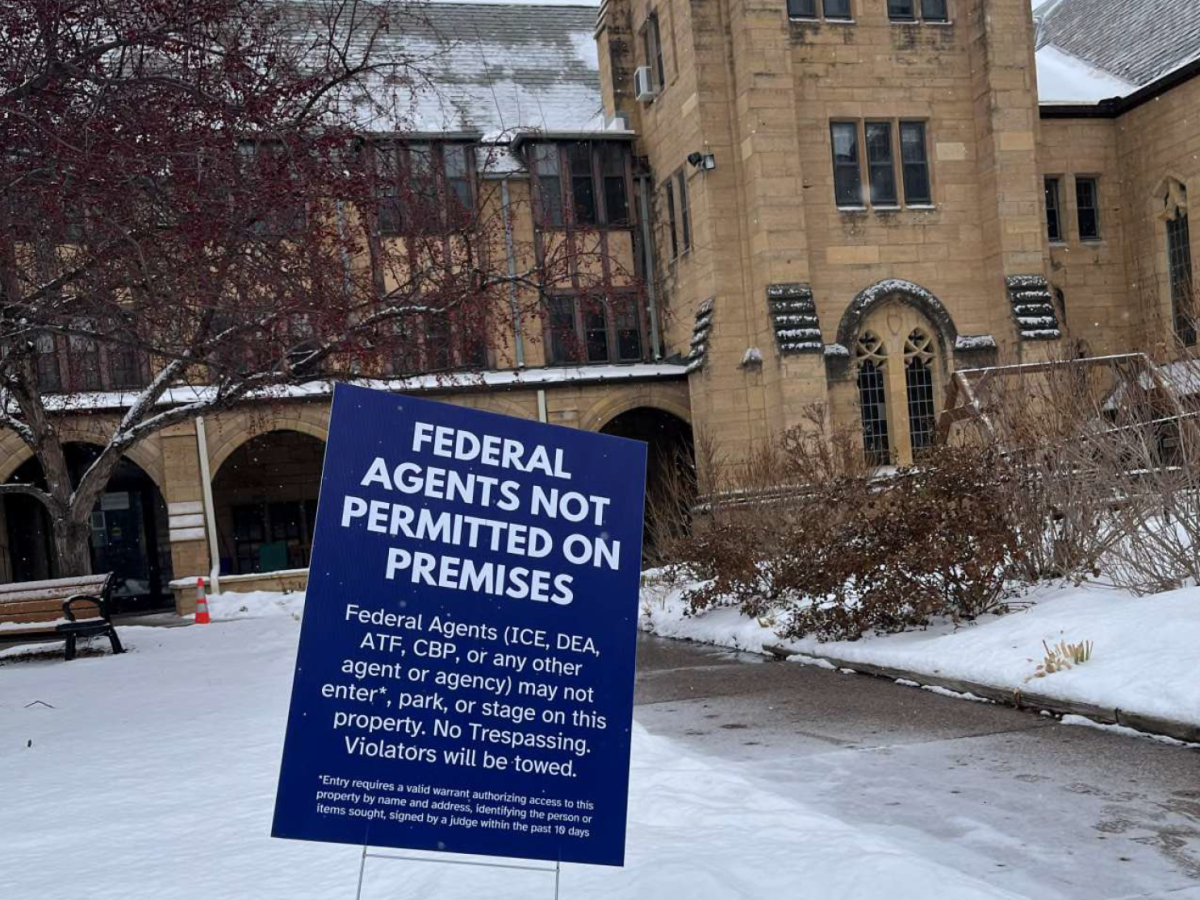
Jean Lubke, who served as president of UBC’s church council at the time of the DHS action on May 28, filed a statement in the court case on Aug. 14 after church leaders learned of the incident earlier that day. Her document informed the court of the federal injunction and that UBC’s address had been provided to DHS by denominational leaders so DHS would know it was a protected location. She also noted that the church “prominently posted signs at all main exterior entrances to the church stating: ‘These Premises are a Protected Area Pursuant to Federal Court Order in New England Synod v. Department of Homeland Security, Case No. 4:25-cv-40102-FDS.’” Additionally, she mentioned the church has a larger yard sign in front of the building declaring, “Federal Agents Not Permitted on Premises. Federal Agents (ICE, DEA, ATF, CBP, or any other agent or agency) may not enter, park, or stage on this property. No Trespassing. Violators will be towed.” The signs were up at the time the DHS agent entered the building. The presence of the signs was not mentioned by the agent in her report, but UBC included photos of them in their court filing.
An image included in a court filing on Aug. 14, 2026, of a sign outside University Baptist Church in Minneapolis, Minnesota.
DHS did not respond to my request for comment about the surveillance of churches in general or the issue of the federal injunction covering UBC. Additionally, my requests for comment were ignored by the Department of Justice, the White House’s “Religious Liberty Commission,” and the White House’s “Task Force to Eradicate Anti-Christian Bias.”
In addition to the statement by Lubke and UBC, defense attorney Riach also filed more official reports from DHS documenting at least three other times federal agents went to UBC’s property during its surveillance of targeted activists beyond the previously noted incident on May 28:
- On the afternoon of April 12 (a Sunday), agents went to UBC to observe people arriving for a meeting. They ran registration checks on vehicles parked nearby and waited to monitor who left the meeting nearly two hours later. The report adds that the person they were trying to track was not even seen by agents at the church that day.
- The next Sunday brought a similar scene, with agents arriving at UBC late on the morning of April 19 — perhaps while some people were still there for the church’s Sunday morning activities. Agents once again tracked who entered the church for a meeting, checked the plates of nearby cars, and recorded video of people exiting the building after the meeting. But once again, the targeted individual was not among those agents saw or recorded at UBC.
- On June 11, agents again waited at UBC and this time saw the person they were trying to track enter to help teach a Mixed Martial Arts class led by a progressive group in UBC’s building. The class, called “Left Jab,” is the same one that an undercover agent secretly attended and recorded after entering UBC’s building on May 28. On June 11, agents did not mention entering the building but did record video of people going inside the church.
The four incidents at UBC’s building occurred despite a federal judge’s injunction to specifically “prohibit warrantless enforcement actions — absent exigent circumstances — inside a church, at the entrance to a church, at a religious education facility (such as a Sunday school), at a religious social-service facility (such as a day-care center), or on adjacent church property (such as a parking lot).” Judge Dennis Saylor IV added in his Feb. 13 ruling that “violations of this preliminary injunction may subject [DHS] and all other persons bound by this order to sanctions and penalties, including contempt of court.”
‘Government-Sanctioned Desecration of Churches’
In addition to the pastors of the targeted churches, others are also speaking out against DHS’s actions. Guthrie Graves-Fitzsimmons, vice president of programs & strategy for Interfaith Alliance, denounced the spying as “shameful.”
“One of Donald Trump’s first actions as president in 2025 was removing protections from houses of worship that restricted ICE activity in sacred spaces. Now, we’ve learned that ICE sent undercover agents into churches to spy on constitutionally-protected activity,” Graves-Fitzsimmons told me. “Trump’s surveillance of sacred sites is shameful. We can now see a pattern of government-sanctioned desecration of churches.”
“If the Biden or Obama administrations had sent government agents to spy on churches, conservative media would have had a meltdown. It’s time for our leaders — especially those who regularly talk about protecting religious liberty — to come together across our religious and political divides to stop this abhorrent ICE cruelty and protect sensitive locations,” he added.
Interfaith Alliance has also put together a petition calling on DHS to “stop spying on churches.” It declares, “Houses of worship are sacred sites. Government agents conducting undercover investigations risk desecrating our houses of worship. Americans of all beliefs across the political spectrum can unite in respecting the religious freedom rights of houses of worship. As Americans of diverse faiths, we call on DHS to stop its undercover spying on houses of worship. The Trump administration must hold anyone who infringes on Americans’ religious freedom rights accountable.”
‘Bestow a Special Blessing on Our Informer’
Sanders, the interim pastor at UBC since the start of June, told me in a statement over the weekend that the church denounces the surveillance by DHS and also stands in solidarity with other houses of worship targeted by this and previous administrations.
“Government surveillance of activity inside houses of worship and prayer is, unfortunately, not new. Many of our Muslim friends and neighbors have known this reality in a much more pervasive and pressing way than Christian communities like University Baptist Church have ever experienced,” he explained. “We should, as a society, agree that sacred places and the many and varied community activities taking place within them should not become targets of government infiltration.”
“Yet we know that many churches like University Baptist Church and our sibling congregations around the country have become a threat to those in power when we care for our neighbors, provide safe spaces for our community members to gather in peace, and strive together toward justice,” he added. “In these ways, we resist the lure of xenophobia, organized abandonment, and the disposability of lives on the margins of society that have become such forceful influences in our contemporary political lives. We will continue to insist that solidarity with our most vulnerable neighbors is the way that we best follow the ways of Jesus in the world.”
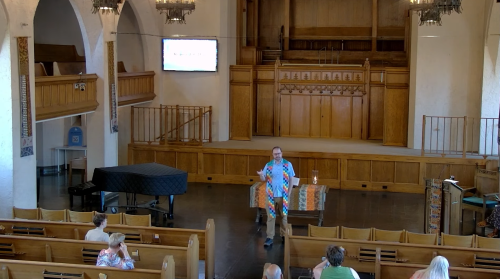
Screengrab as Rev. Cody Sanders speaks about surveillance at University Baptist Church in Minneapolis, Minnesota, on Aug. 16, 2026.
As Sanders noted, government surveillance of houses of worship is unusual but not unprecedented. During the George W. Bush administration, federal agents infiltrated and even bugged mosques. And Donald Trump has said the government should do that to mosques again.
But for Sanders, past examples of the government spying on houses of worship isn’t just something that he learned happened to other churches or sacred sites. He also knows it from another church where he has served. Decades before he served as pastor of Old Cambridge Baptist Church in Massachusetts, the church found itself being spied on by the FBI for its work in the sanctuary movement of the 1980s, an effort by some churches to challenge federal immigration measures by giving sanctuary to individuals at risk of deportation.
Famed Harvard theologian Harvey Cox, a member of the church, wrote a humorous New York Times piece in 1986 describing the church’s response to learning a government informer had been attending the church. While he criticized the government for spying on churches, he also joked that the government didn’t need to work that hard since “the newsletter carries more information than most of our members want to know.”
“What surprised us most was that the FBI thought it would be hard to worm information out of us. Many people think our church’s problem is just the opposite. Since we are Baptists and therefore maybe a little on the zealous side, we are more often accused of telling people too much, Cox added.
So he wrote about how nice it was that the pastor of the church made a point during a time of prayer to, in addition to “remembering the sick and the shut-ins,” also ask “the Lord to bestow a special blessing on our informer.” He added that the informer needs the prayer since “we are an active congregation” and therefore the informer will have to “keep hopping” to record everything.
“We all secretly hope our infiltrator does not get tired and quit,” Cox added. “If he stays around long enough, he’ll learn that when we say our church is a ‘sanctuary,’ we don’t mean just for Salvadoran refugees. Churches are sanctuaries for homeless, lost, and confused people of all kinds, including secret agents. They, too, are welcome to come and pray, listen to the Gospel reading, and belt out ‘Beulah Land’ with us. Who knows, they might even end up getting saved. It wouldn’t be the first time.”
As a public witness,
Brian Kaylor