I feel old. Part of it is that I’m just a few years shy of the big 5-0. Those I know who are decades older than me say, “Oh, you’re still so young.” And relatively speaking, that’s true. But with each birthday comes another episode of my back spasming for no good reason. Or I wake up with a crick in my neck that triggers seven physical therapy sessions. Nevertheless, while aging is a gift not to be taken lightly, the rapid and extreme changes ensuing in society are a more persistent source of my angst. I know Ecclesiastes says there is a time for everything, but that doesn’t mean I want everything taking up my borrowed time.
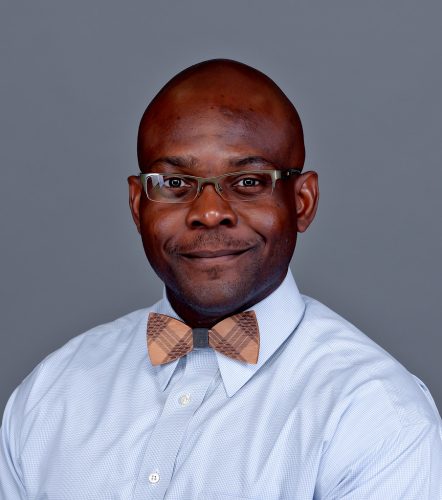
Rev. Dr. James Ellis III
I could do a better job of keeping up with what’s trending, but I must draw the line somewhere, which I think is crucial. If we go along to get along, feeling compelled to master every app or gadget that promises to make life easier, it may be too late before we realize the percentage of what matters most we’ve auctioned off. You can outsource only so much before things — and, more importantly, people — start getting weird.
Y’all pray for me.
I can’t take any more of the hollow compliments and self-help commentary of LinkedIn. It drives me batty. I’m tired of YouTubers marketing themselves as influencers and experts when their only real expertise is in the echo chambers they’ve created, and their influence is wielded thoughtlessly. Have you noticed that for some ungodly reason, everybody and their momma has a podcast now? We’re coming unhinged and are proud of it. Once, a guy zoomed past me in his car, fiddling with his cell phone in one hand and eating a slice of pizza in the other — all while wearing headphones. Do you ever find yourself thinking these days, “Did that really just happen?”
They say age is just a number, but as times, people, and values change, so do the ways we experience growing older.
With new technologies being released every day, we hardly stop to ask whether they are more harmful than helpful. Then again, maybe those questions are being asked — just not by the people who care about the needs of the commoners like you and me. We have unprecedented access to one another, to data, and to all manner of assistance. But are we better for it?
I won’t say we’re devolving, but we are losing ground in areas we once cared enough about to fight valiantly for. Our cognitive abilities, social graces, and fortitude are not what they once were. Maybe it’s just me, but the next time someone has a loud conversation in the middle of a store that should clearly be private, I might just scream. As Anjelah Johnson’s MADtv character, Bon Qui Qui, famously said, “Uh-huh, rude!”
We’re not seeing each other correctly.
Clorox wipes, fast-casual assembly-line restaurants (Cava is the best), and TV streaming services available on any device with WiFi access are fine resources, so long as they don’t turn our brains and abilities to mush, leaving us unable (or unwilling) to perform tasks we may not always want to but need to be able to do ourselves. The University of Chicago has prohibited the use of AI at its Law School and in its Social Sciences Collegiate Division. Kudos to them for reestablishing a traditional, “analog” pedagogical setting. As a seminary professor, AI is also banned in my courses. Shame on us if we’re okay educating clergy who cannot write well, academically or in their ecclesiastical service.
An algorithm can’t discipline, disciple, or feed your kids. And it can’t tend to your spouse. It is only unchecked privilege that has us thinking it’s inconsequential not to know how to use an iron, sweep a floor, shovel snow, change a tire, or balance a checkbook. We are not the Jetsons. And yet, we also must stop being afraid of one another, young and old alike, and start having honest, accurate dialog about how best to build together. The Greatest Generation and Baby Boomers were not selfless, upstanding saints in every iteration, just as not all Gen Z or Gen Alpha folks are faithless airheads. We need one another more than we realize.
Photo by Jonan Steiner on Unsplash
Although there’s plenty wrong with our world today, we’re not experiencing a zombie apocalypse. And while it’s wise to be watchful and on guard, we don’t know whether these are “the last days.” We do know, however, that Jesus will return. When he does, there won’t be a text-message warning or advance notice disclosed through a TikTok dance, and he won’t get stuck in traffic either. He will show up, and everyone will know it.
The gospel doesn’t advance as it should without the hard-won, grounded experience of older people and the optimism and energy of youth. So, yes, we need to teach them, but we also need to learn from them. As precious mentors of mine have succumbed to that “long, long sleep,” I’ve tried to pay forward the grace they showed me. That has meant walking alongside young people who are gifted and gracious, and some who have ghosted me after months or years walking alongside them.
But that’s the cost of catechetical and relational investment for the sake of another, to the glory of God. It isn’t easy, but you eventually accept that it is up to God who plants, waters, and harvests. My work is to be a diligent co-laborer and elder, sowing the good seed of biblical fidelity wherever I go. I recently celebrated the marriage of a young adult my wife and I have known for nearly 10 years, dating back to her college days. We’ve prayed with and for her, spoken the truth in love, and stood in awe of the woman she’s become — not to mention the rare awesomeness of the young man she married. They give me hope.
Responsibly participating in the world and serving one another across generations is not optional if we truly care about fulfilling God’s purposes (Acts 13:36). After all, decay is scheduled to come for all of us. Until then, I’m okay with feeling a bit old, gray hair and all.
James Ellis III is an ordained Baptist pastor leading Maplewood Reformed Church in Holland, Michigan. He also serves as an Assistant Professor of Practical Theology at Winebrenner Theological Seminary. His latest books are In Those Days as Today: Preaching through the Book of Judges and Dysfunction in the Name of Jesus: Confronting the Idol of Pastoral Workaholism.