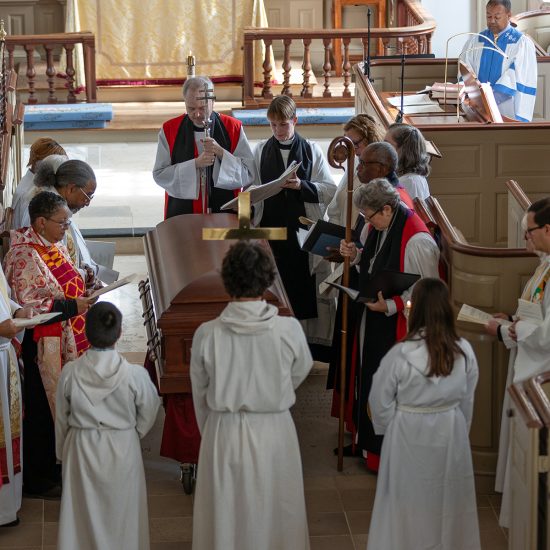
(RNS) — It has been less than a week since the Rev. Sarah Trone Garriott became the U.S. representative-elect for Iowa’s third congressional district, but the minister turned politician — one of several elected to Congress in the midterms — is already focusing on what she plans to do when she gets to Capitol Hill in January.
Supporters carry signs before Sen.-elect James Talarico arrived to speak at an election night event in Austin, Texas, on Nov. 3, 2026. (Eric Gay/Associated Press)
“We have such a great new group of people coming into government,” Garriott told Religion News Service in an interview. “We’re going to be able to do some really wonderful things together.”
She still doesn’t know whether she will mention her reverend title in official congressional press releases — “What do other folks do?” she responded to RNS when asked — but she was quick to outline her legislative priorities: pass bills that could halt President Donald Trump’s tariff policies, end the war in Iran, strengthen the Affordable Care Act, support rural hospitals and invest in child care and education.
“I want to work on policies that are going to make life better for my neighbors,” said Garriott, who is ordained in the Evangelical Lutheran Church in America, a mainline Christian tradition.
Fielding policy questions — and requests — is common for incoming lawmakers, including for the several faith-forward Democrats like Garriott, the Rev. Adam Hamilton and the Rev. Frederick Douglass Haynes III elected last week. And political analysts have long studied the strategies of conservative religious activists, often referred to as the religious right, who oppose abortion and LGBTQ+ rights. But 2027 could mark a new wave of left-leaning religious influence in more ways than one: Religious Democrats may give their ear to more progressive denominations and faith-based organizations — such as the National Baptist Convention, USA, Inc. and Repairers of the Breach — which are outlining their own legislative agendas they hope the new, heavily Democratic Congress will take up.
Taken together, the new lawmakers appear poised to focus on policies to address war, economic inequality, voting rights and healthcare.
Hamilton, a United Methodist megachurch pastor elected as the first Democratic U.S. senator from Kansas in nearly a century, told RNS in an interview that he shared Garriott’s desire to end the war in Iran.
The war, he said, “drove up gasoline prices for the average American about $100 a month.” He added the negative effects were doubly worse for states like his own, which host large agricultural industries.
“Diesel fuel went from roughly $3 a gallon to $6 a gallon in the state of Kansas,” he said. “That was devastating for farmers.”
Also like Garriott, he voiced strident opposition to the president’s tariff policies — “If the president’s going to impose a tariff, he’s going to have to make the case to Congress for that,” he said. In addition to expressing hope for passing immigration reform, he agreed that healthcare is a major issue. He lamented the thousands who have lost health insurance following changes imposed by the Trump administration and a Republican-controlled Congress, such as allowing subsidies related to the ACA to expire.
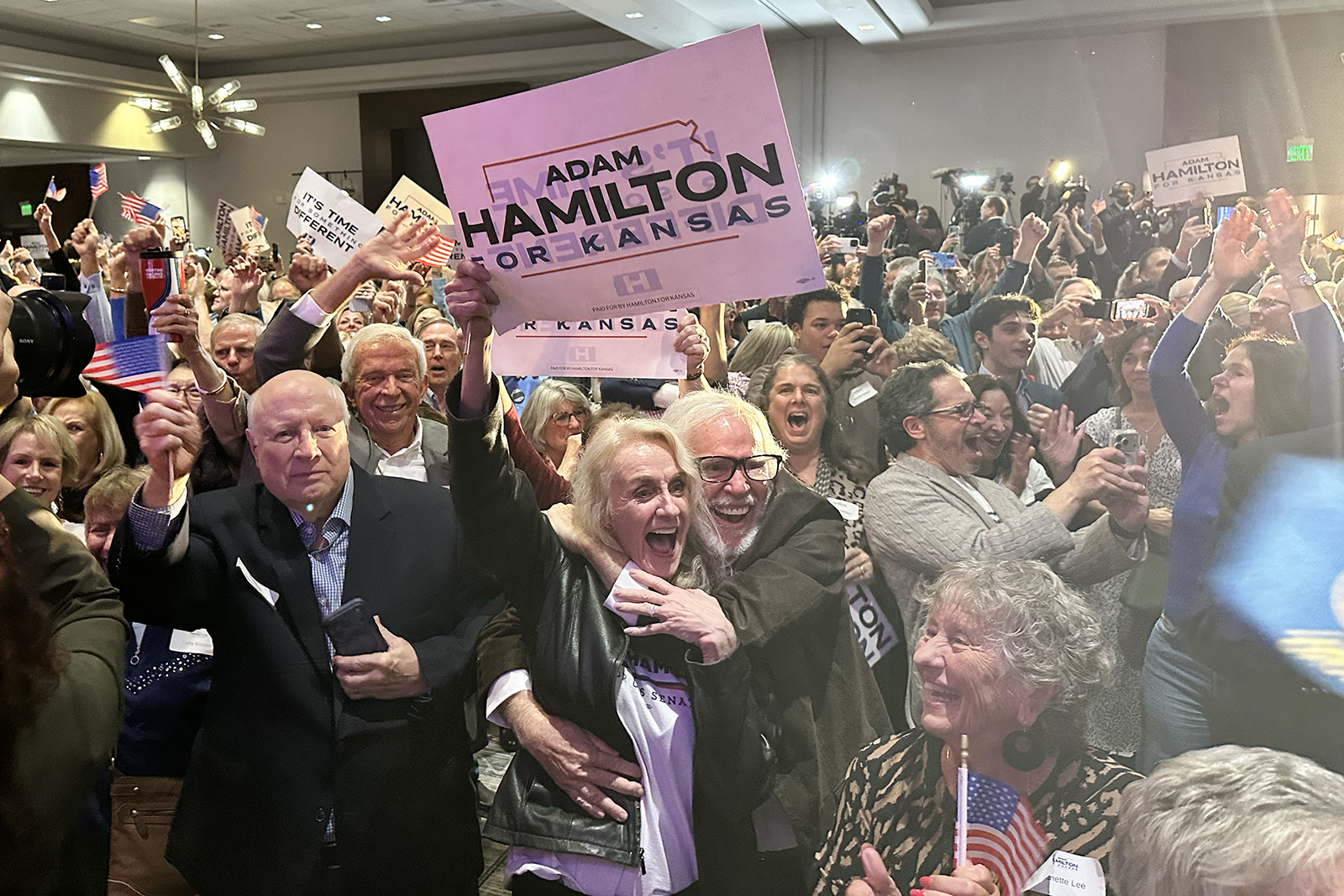
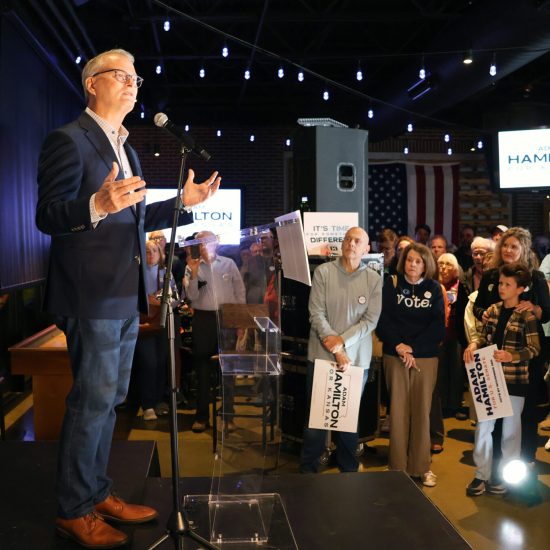
Supporters cheer in celebration of election results announced at an Adam Hamilton watch party on Tuesday, Nov. 3, 2026, in Overland Park, Kansas. (RNS photo/Kit Doyle)
And in the future, Hamilton said, he hopes to push for “true healthcare reform that Republicans and Democrats can stack hands on.”
Among those cheering on the slew of religious Democrats elected to Congress, or at least the policies they might pass, was Bishop William J. Barber II, a longtime faith-based activist. Barber — who has founded and led several organizations, including the Center for Public Theology and Public Policy at Yale Divinity School — has spent years advocating for what he calls a “third reconstruction,” a sweeping policy agenda that pushes back against religious nationalism and works to eliminate poverty, racism, environmental harm, militarism and denial of healthcare.
“For 13 years or more, I’ve been pushing this idea of moral fusion,” Barber said in an interview the day after the election. His goal was to coordinate diverse coalitions, particularly in the South. “We saw that last night,” he said.
Groups Barber worked with led marches to early voting locations throughout the Southeast ahead of Election Day. He said he hopes the lawmakers will prioritize policies that would expand healthcare access, end the war in Iran and push for a “living wage.”
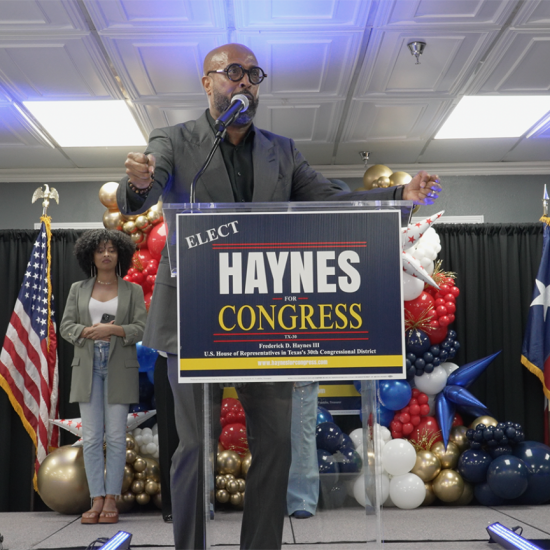
Several of the faith-forward liberals elected on Tuesday have ties to the activist. Texas Senator-elect James Talarico appeared on one of Barber’s podcasts last year. Hamilton had been part of the “prophetic council” outreach effort of Repairers of the Breach, one of Barber’s advocacy organizations, Barber said. The Rev. Frederick Douglass Haynes III, elected to represent Texas’ 30th congressional district, has appeared on advocacy calls with Barber, where the Dallas megachurch pastor pushed support for voting rights and ending the Senate filibuster.

Bishop William J. Barber II speaks in front of the Smithsonian’s National Museum of African American History and Culture on Sept. 15, 2026, in Washington, DC. (RNS photo/Adelle M. Banks)
In an interview with Religion News Service last week, Haynes said he, too, favors a higher federal minimum wage (currently $7.25 an hour for nonexempt employees).
“It keeps people in poverty, whereas a true cost-of-living wage respects the economies of different sectors of the country,” Haynes said.
Haynes added that the election results were “a repudiation of the attacks on voting rights, the attacks on diversity, equity, and inclusion” from the Trump administration. He said he supports constitutional protection of voting rights and the passage of the John Lewis Voting Rights Act.
Before Election Day had concluded, the National Baptist Convention, U.S.A., Inc. — a denomination whose members include Haynes — released a four-page “Working-Class Agenda” for the new congressional majority, calling for, in part: “constitutional voter protection,” including passage of the legislation named for Lewis; expanding the Supreme Court to 13 justices; and rehabilitating “the minority civil service pipeline” — the latter referring to recent cuts in federal government jobs that have been reported to disproportionately affect Black workers.
“Our voting power has been proven in this election,” said the Rev. Boise Kimber, president of the historically Black denomination, in a statement accompanying its agenda. “The Democratic Party is a much different organization without our voting bloc, and we are putting the Democrats on notice that they have to work as hard for our vote as they do for any other constituency.”
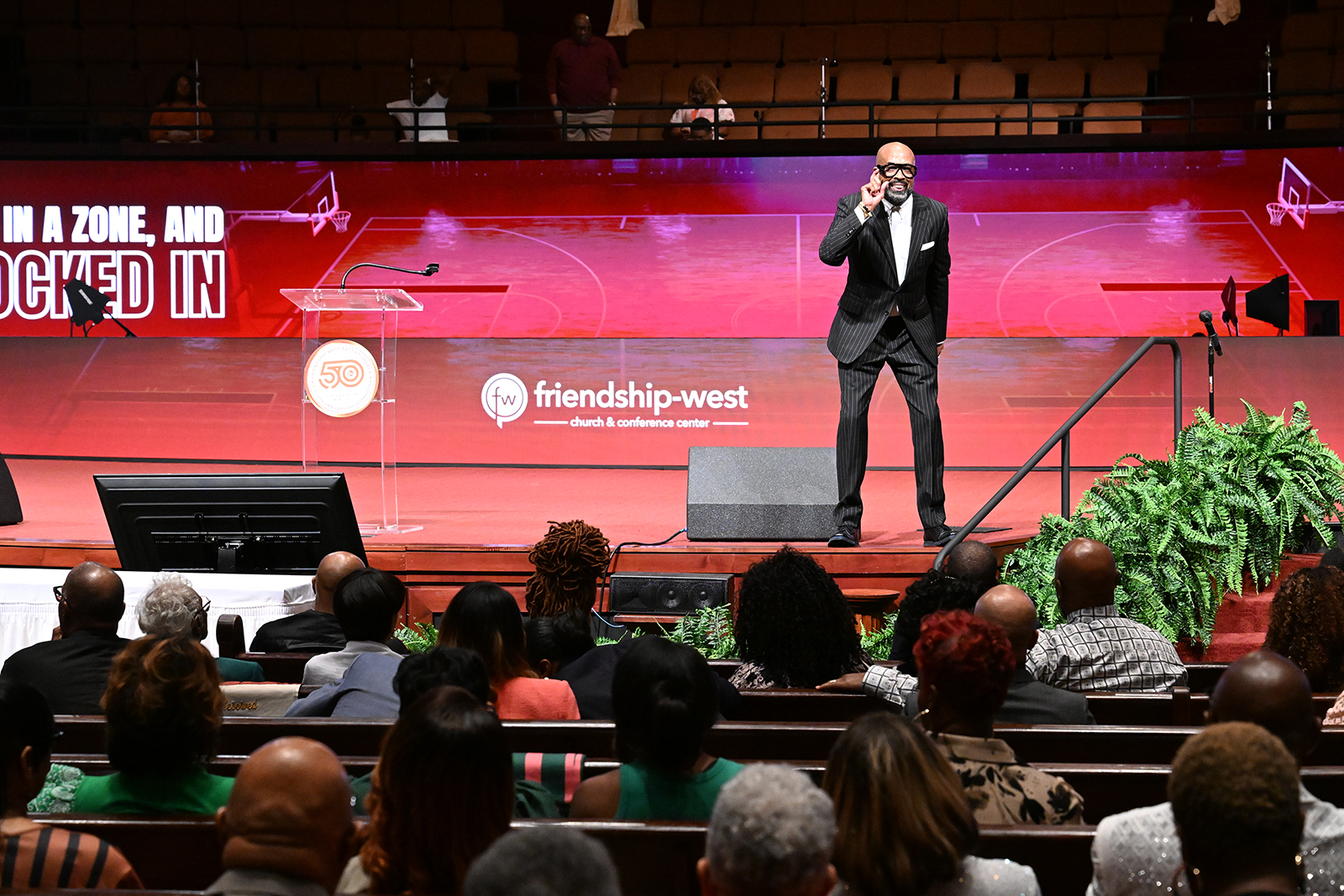
The Rev. Frederick Douglass Haynes III preaches at Friendship-West Baptist Church, Sunday, Nov. 1, 2026, in Dallas, Texas. (Photo courtesy of Friendship-West Baptist Church)
The Secular Coalition for America, an advocacy group that aims to represent views of nonreligious Americans, anticipated the election results may lead to greater support of church-state separation in the country, according to a statement. The coalition has criticized Christian Nationalism in the Trump administration, calling it a narrative that “rewrites history and ignores America’s Founders’ mission to create a secular government” that protects religious freedom.
“The incoming Congress now has an opportunity — and a responsibility — to restore meaningful oversight, challenge policies that undermine religious neutrality, and reaffirm that government must serve all Americans, regardless of their religious beliefs or lack thereof,” the organization said in a statement last week.
Haynes said he and others in “the new coalition of faith leaders that are coming into Congress” respect church-state separation and religious freedom.
“We’re not confining freedom of religion to white Christian Nationalism,” Haynes said. “We believe that whatever your faith expression is, the Constitution allows for that kind of expression, and this is not a theocracy, and we hold that profoundly. And if you do not have a faith expression, you are to be respected.”
Bishop Francine A. Brookins, chair of the African Methodist Episcopal Church’s Commission on Social Action, said her historically Black denomination’s leaders hope the new Congress will work toward helping people in need.
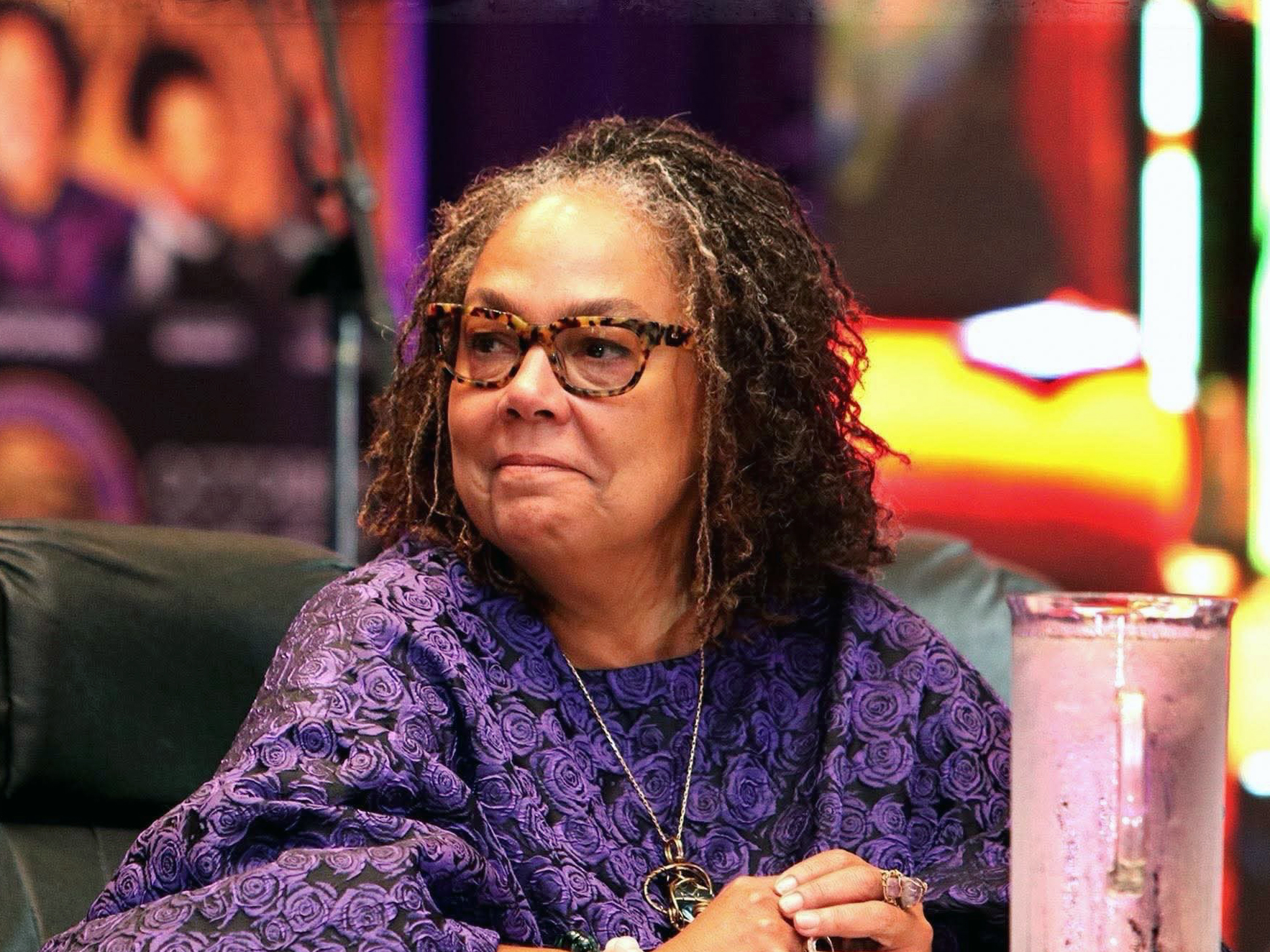
Bishop Francine A. Brookins. (Courtesy photo)
“We want representatives who will represent the people they represent and not represent themselves or their funders,” she said. “We want to make sure that ICE is abolished.” Brookins also reiterated the denomination’s call for the U.S. to suspend aid to Israel over its conduct of the war in Gaza.
The Rev. Willie D. Francois III, second vice president of the Progressive National Baptist Convention, said his historically Black denomination will continue to push for legislation it has championed for years.
“We actually dream of our policy in the tradition of Dr. Martin Luther King Jr. that says, call it democracy or call it democratic socialism, what we know is we have to redistribute the wealth of this country for all God’s children,” Francois said of the civil rights leader who was a member of the denomination.
Its policy aims include a single-payer healthcare system, such as Medicare for all, child care for all, and passing the George Floyd Justice in Policing Act, a federal bill that seeks to ban certain police tactics that often lead to violence, and to increase officer accountability, or a similar police reform measure. Its leaders also seek to enact a federal jobs guarantee in which government funds are used to create jobs with livable wages and benefits, a cause that dates to the Civil Rights Movement.
Haynes is currently co-chair of the denomination’s social justice commission, a role Sen. Raphael Warnock, D-Ga., once held.
“We are under the fullest expectation that Dr. Haynes will be a champion for us in the Congress to see some meaningful movement on these items,” Francois said, acknowledging there may not be bipartisan support for all of them.
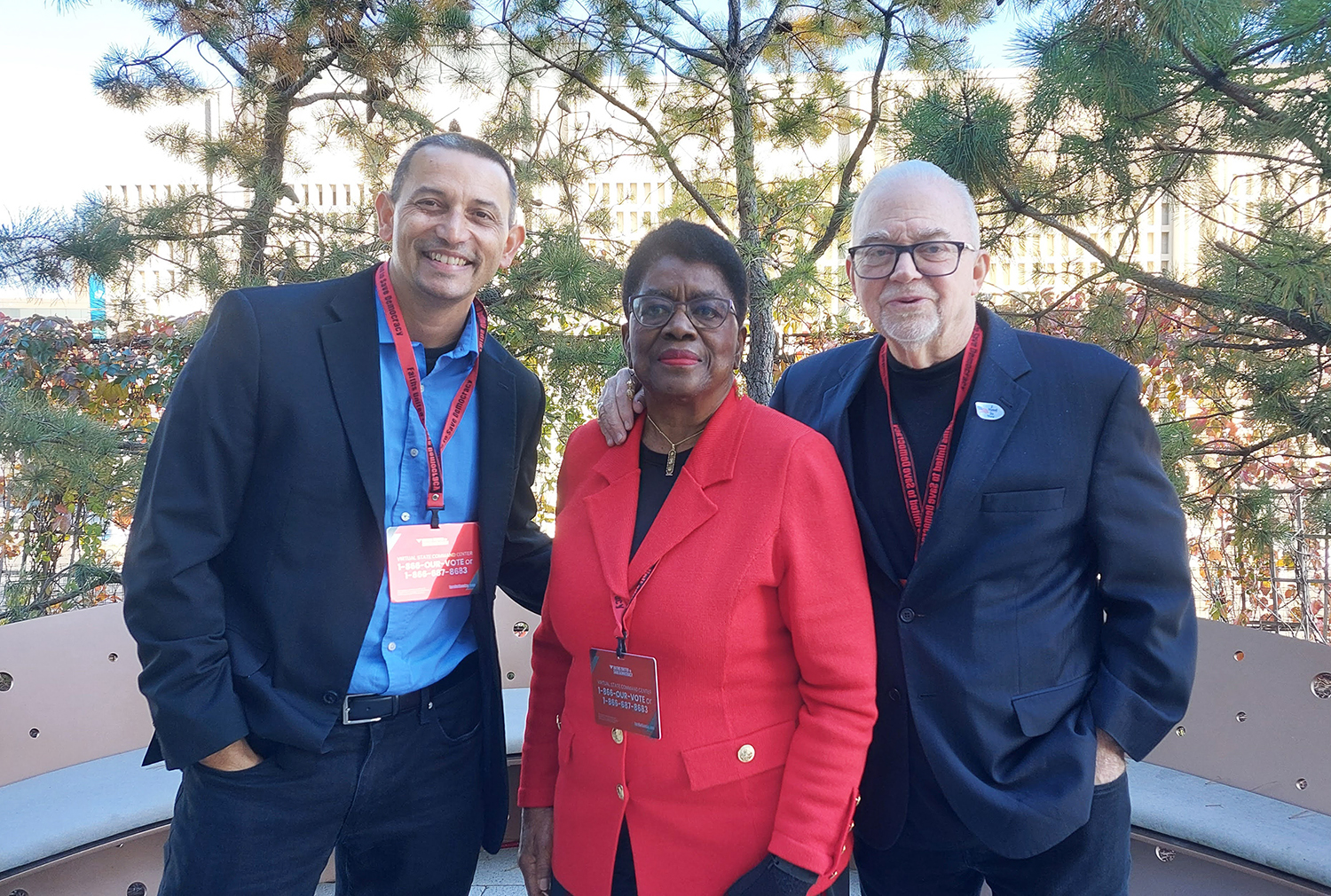
From left, the Revs. Adam Russell Taylor, Barbara Williams-Skinner and Jim Wallis are the three co-conveners of Faiths United to Save Democracy. They worked with volunteers to check in on election activity reported by poll chaplains and peacekeepers around the country on midterm Election Day on Tuesday, Nov. 3, 2026, at Georgetown University Law Center. (RNS photo/Adelle M. Banks)
The Rev. Jim Wallis, co-convener of Faiths United to Save Democracy, a multiracial and interfaith nonpartisan group with roots in Black church voter mobilization, was on calls the day after Election Day with dozens of organizations that included faith leaders listing legislative topics they hope will be addressed, from cuts to the Supplemental Nutrition Assistance Program, which provides food benefits to low-income Americans, to “brutal attacks on immigrants just because of the color of their skin and their accents,” he said.
But Wallis said many of the faith leaders on those calls agreed it was important to be vigilant about the processes occurring between Election Day and Jan. 3, the day scheduled for the swearing-in of new members of Congress. With the Jan. 6, 2021, attack on the U.S. Capitol a recent memory of such a swearing-in ceremony, faith leaders are planning a prayer vigil at the Capitol that day, he said.
“We want to make sure this election season is completed, not just Election Day,” Wallis said. “We’re hoping we’re there to celebrate democracy, but we’re also there if needed to further protect democracy, given what’s happened before.”
In the past, Barber has sometimes struggled to influence politicians once they enter office — even those who praised his activism during their campaigns, like former President Joe Biden.
“I’m very hopeful that these persons of faith, those of the clergy and others, will say that when it comes to public theology and public policy, there has to be a voice and a focus on lifting from the bottom,” he said.