
Sign up to receive full essays in your inbox!

Featured
US Military Base Schools Put New Emphasis on Western Civilization and Christianity
The Department of Defense is introducing a course centered on Western civilization and Christianity this fall in the schools it operates for military families, part of an effort by Defense Secretary Pete Hegseth to redirect the education system toward patriotic values and classical learning.
Department of Homeland Security Spied on Churches in the Twin Cities
A surveillance incident at a Baptist church particularly raises questions since the congregation’s building is covered by a federal injunction blocking warrantless DHS actions there.

What We Can Learn From AI Slop Images Celebrating Pentagon Worship Services
This issue of A Public Witness dives into the weird world of AI-generated social media content that lifts up a distorted view of Christianity.
Church
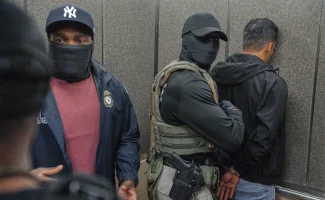
Evangelical Groups Warn Trump’s Deportations Could Leave 1.3M ‘Torn Apart’ From Families
‘What might have been an abstract policy decision that's taking place in Washington now is actually impacting communities,’ said Walter Kim, head of the National Association of Evangelicals.
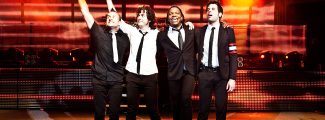
Newsboys Co-Founder Sues Julie Roys, World Vision, and Rival Christian Concert Promoters
In a lawsuit filed in federal court, Wes Campbell, a music promoter and co-founder of the popular Christian band, said rival promoters created false accusations of misconduct for anticompetitive reasons.

New Imaging Uncovers Hidden Text in Ancient Christian Manuscript
The discovery offers insight into how early Christians read and understood Scripture — and provides a point of connection for contemporary Christians.
Nation
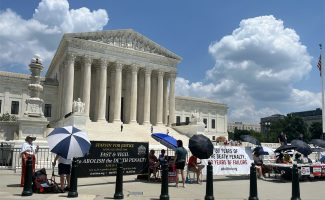
‘God Commands Us Not To Kill’: Faith Leaders Protest 50 Years of Executions
On the anniversary of a Supreme Court ruling reinstating the US death penalty, faith leaders, those affected by murder, and activists organize to call for an end to the death penalty.

The Bible Verses Dividing Washington: How Matthew 25 Became a Political Litmus Test
'He told me that Matthew 25 was about individuals, and not nations,' Sen. Raphael Warnock said, referring to Speaker Mike Johnson. 'The text actually says nations.' Warnock added: “It's a very narrow individualistic faith, and I think it has consequences for the kind of policy you end up with.”

J.D. Vance Quotes Violent ‘Pulp Fiction’ Scene to Explain His Faith Conversion
The first moment of the Quentin Tarantino film highlighted by the vice president during a recent interview occurs just seconds after the Samuel L. Jackson monologue used by Pete Hegseth as a prayer during a worship service at the Pentagon in April.
World

Samaritan’s Purse to Play a Larger Role in Gaza Aid Distribution
The Gaza Humanitarian Foundation is being phased out, said Samaritan's Purse CEO Franklin Graham. Johnnie Moore, the evangelical PR guru who has served as GHF chairman, recently stepped down.

A US Senator Claims ‘Christian Mass Murder’ Is Occurring in Nigeria. The Data Disagrees
U.S. Sen. Ted Cruz has been trying to rally fellow evangelical Christians and urge Congress to designate Nigeria as a violator of religious freedom with unfounded claims.

This Is Why the Story of Abraham Is Coming Up in the Push for Middle East Peace
Anyone trying to build a bridge between faiths is liable to invoke Abraham — revered as a founding figure in Christianity, Islam, and Judaism — as someone they hold in common.
Editorials
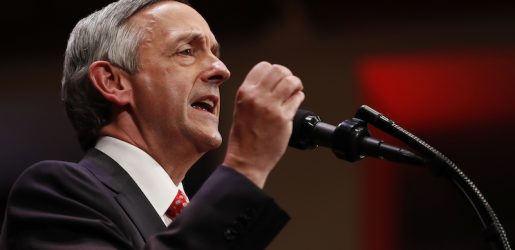
Do Not Conform?
Editor-in-Chief Brian Kaylor reflects on the choice of Robert Jeffress as the keynote preacher for the 2021 Missouri Baptist Pastors’ Conference organized with the theme of Romans 12:2, a passage where Paul warned against conforming to the patterns of this world.
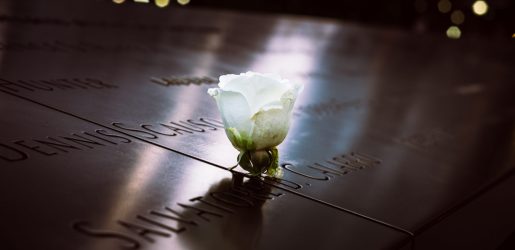
Before Never Forget
Editor-in-Chief Brian Kaylor reflects on the call to “never forget” 9/11, as well as the ways we seem to struggle to even remember or acknowledge deaths today.
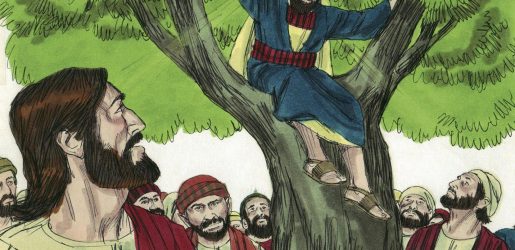
A Zacchaeus Moment for Southwest Baptist
Now that the trustees at Southwest Baptist University dropped their push for new governing documents, Brian Kaylor offers six next steps that leaders of the school and the Missouri Baptist Convention should take.
Word&Way Voices
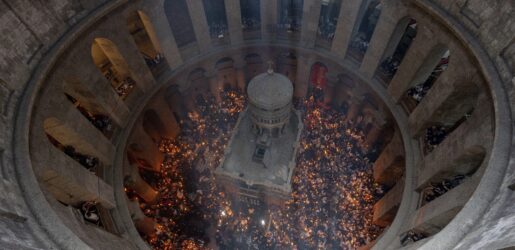
When a Christian Leader’s Visit to His Own Holy Site Becomes News
For decades, Western Christian leaders have avoided visiting the Church of the Holy Sepulcher — the most revered site in all of Christianity. So Vice President JD Vance’s recent visit stood out.
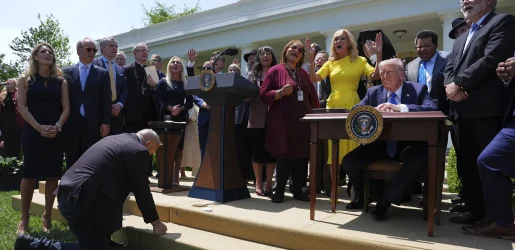
The MAGA Betrayal of Christianity
Contributing writer Rodney Kennedy makes the case that the quest for secular political power has led to a conservative evangelical rejection of the clear teachings of Jesus.
God Is Our Anchor
James Ellis III reflects on how being a preacher these days feels different. It’s unsettling how many people are thoroughly consumed by rage — and we as Christians should know better.
E-Newsletter
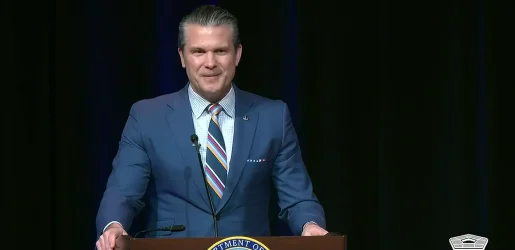
At Pentagon Worship Service, Hegseth Casts Iran Conflict as Violent Holy War Against God’s Enemies
In the first Defense Department service since the start of the Iran war, Pete Hegseth prayed that God would ‘break the teeth’ and kill those ‘who deserve no mercy’ and should be ‘delivered to the eternal damnation prepared for them.’
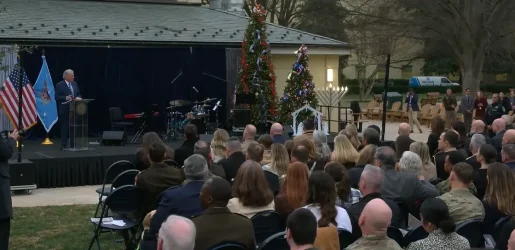
AU Sues Defense, Labor Departments Over Government Worship Services
Americans United for Separation of Church and State filed two lawsuits against the Trump administration today as part of their investigation into government worship services.
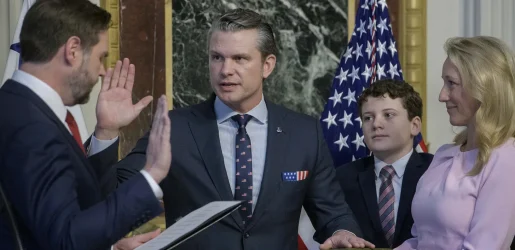
Pete Hegseth’s Crusader Bible
The defense secretary’s tattoos of the Jerusalem Cross and “Deus Vult” are frequently invoked as literal signs of his Christian Nationalism — and rightly so. But the same symbols on his Bible were overlooked until now.
-
Claiming God's Name in Politics, War, & Sports
 This episode of Dangerous Dogma features a conversation between Word&Way Editor Brian Kaylor, Lutheran minister and journalist Angela Denker, and Disciples pastor and author Beau Underwood. The conversation includes discussion about a botched execution in Tennessee, religious issues in political campaigns, and Pete Hegseth's misuse of the Bible. And Beau shows off his White Sox…
 -
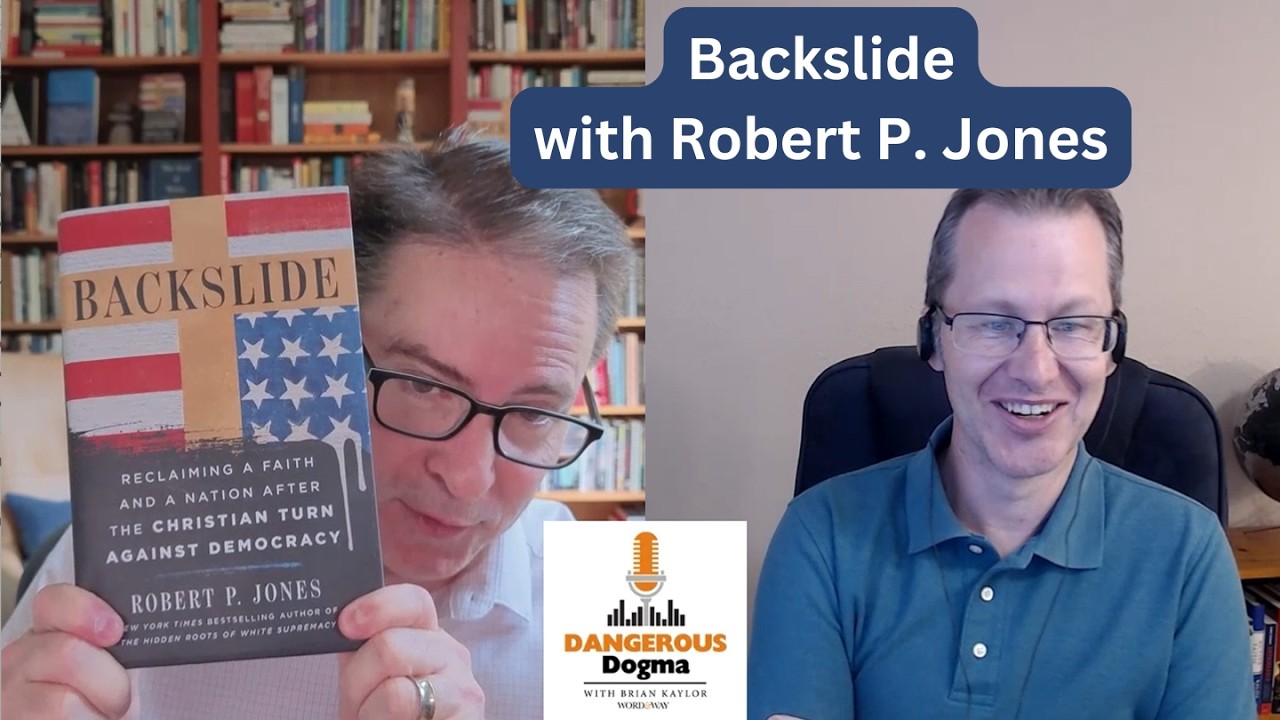
Backslide with Robert P. Jones
This episode of Dangerous Dogma features a conversation between Word&Way Editor Brian Kaylor and Robert P. Jones, author of the forthcoming book Backslide: Reclaiming a Faith and a Nation After the Christian Turn Against Democracy. Jones is also the founder and president of PRRI. He previously appeared on Dangerous Dogma in 2023. You can watch a… -
DHS Spies on Churches & White Sox Honor Pope Leo
This episode of Dangerous Dogma features a conversation between Word&Way Editor Brian Kaylor, Lutheran minister and journalist Angela Denker, and Disciples pastor and author Beau Underwood. The conversation includes discussion about revelations that the Department of Homeland Security has been spying in churches, a controversial golf ad, and a White Sox night celebrating Pope Leo.… -
The State of the Senate, from SC to ME to TX to KS
This episode of Dangerous Dogma features a conversation between Word&Way Editor Brian Kaylor, Lutheran minister and journalist Angela Denker, and Disciples pastor and author Beau Underwood. The conversation includes discussion about the death of Sen. Lindsey Graham as well as issues of faith and morality in Senate races in Maine, Texas, and Kansas. You can… -
Southern Baptists, the Pentagon, & UFC
This episode of Dangerous Dogma features a conversation between Word&Way Editor Brian Kaylor, Lutheran minister and journalist Angela Denker, and Disciples pastor and author Beau Underwood. The conversation includes discussion about the Southern Baptist Convention's push against women in ministry, the Pentagon changing how it codes the faith of military members, and the latest in… -
Southern Baptists, Women in Ministry, & a Billboard
In this episode, Word&Way President Brian Kaylor talks with Meredith Stone, executive director of Baptist Women in Ministry. The conversation includes discussion of efforts in the Southern Baptist Convention to further target women serving in churches and how BWIM is advocating for women (including with a billboard to greet SBC messengers next week in Orlando,… -
Divergent Visions for Rededicating the Nation
This episode of Dangerous Dogma features a conversation between Word&Way Editor Brian Kaylor, Lutheran minister and journalist Angela Denker, and Disciples pastor and author Beau Underwood. The conversation includes discussion about Rededicate 250, gerrymandering, Adam Hamilton's Senate campaign in Kansas, and the MAHA movement. You can watch a video version of the conversation here. Here are a few pieces… -
The Christian Past That Wasn't
In this episode, Word&Way President Brian Kaylor talks with Warren Throckmorton, a retired professor who has spent years debunking false claims by Christian Nationalist pseudo-historian David Barton. Throckmorton is the author of the new book, The Christian Past that Wasn't: Debunking the Christian Nationalist Myths that Hijack History. You can watch a video version of… -
Trump vs. Leo
This episode of Dangerous Dogma features a conversation between Word&Way Editor Brian Kaylor, Lutheran minister and journalist Angela Denker, and Disciples pastor and author Beau Underwood. The conversation includes discussion about President Donald Trump's attacks on Pope Leo XIV, Leo's witness against the Iran war, Trump's AI image of himself as Jesus, and the electoral… -
Fight Like Jesus with Jason Porterfield (Reissue)
In this episode, Word&Way President Brian Kaylor talks with Jason Porterfield about his book Fight Like Jesus: How Jesus Waged Peace. This episode originally aired in 2023, except for a new introduction noting a violent prayer by Pete Hegseth during a recent Pentagon worship service and Palm Sunday comments by Pope Leo XIV. Note: Don't forget…


Books
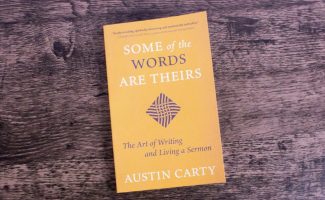
Review: Some of the Words Are Theirs
Longtime pastor Austin Carty makes the case that the power of a sermon is found not in novelty, but in the mandate it gives preachers to collect their thoughts every week and put them down in a succinct, coherent fashion.

Molly Worthen Reveals the Hidden Truths Behind American Charismatic Leaders
In her new book, ‘Spellbound,’ the historian of religion traces the mysterious force that is charisma from the Puritans to Donald Trump.

Review & Giveaway: The Anti-Greed Gospel
Malcolm Foley makes a bold argument about the ways our historical sins continue to reverberate into the present and how the Church is compelled to respond.

Review: Sister, Sinner
Claire Hoffman chronicles the dramatic rise, mysterious disappearance, and near-fall of Aimee Semple McPherson, America’s most famous woman evangelist.