

Sign up to receive full essays in your inbox!

Featured
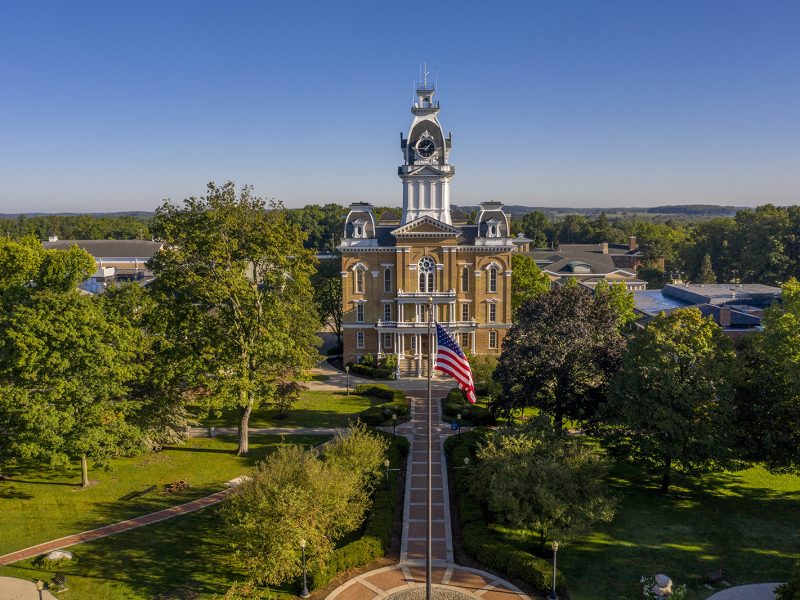
Why Hillsdale? The Christian Liberal Arts School Hosted Erika Kirk for Commencement
Through Freedom 250 initiatives, Hillsdale has been enlisted by the Trump White House to shape narratives about American history.

This Mother’s Day, the Church Cannot Be Silent About Black Maternal Deaths
Across this country, Black women are dying from pregnancy-related causes at nearly three times the rate of White women. These cases are about much more than just numbers.
Hegseth’s War on Pharisees, Journalists, and Reality
Given Pete Hegseth’s insistence on co-opting a biblical term and employing it out of context as an insult against reporters doing their job, this issue of A Public Witness takes a look at the real Pharisees and the lesson the ‘secretary of war’ is missing.
Church

Vote To Bar Churches With Women Pastors Fails Again at SBC Meeting
A vote to abolish the SBC’s public policy arm, known as the Ethics and Religious Liberty Commission, also failed on Wednesday afternoon.

Southern Baptist Delegates at National Meeting Overwhelmingly Call for Banning Same-Sex Marriage
Casting a pall over the gathering is the recent death of one of the most high-profile whistleblowers in the Southern Baptists’ scandal of sexual abuse.

LGBTQ Teens Wanted a Pride Festival in Their Town. How Five Churches Made It Happen.
Five churches organized the event out of a conviction of their faith, but as an invisible network.
Nation
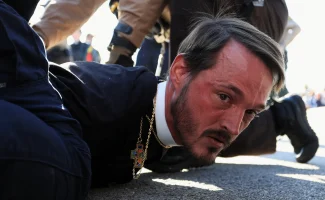
Charges Dropped Against Some Clergy Arrested for Protesting DHS in Chicago
DHS has openly mocked the largely mainline Protestant protesters. A spokesperson referred to a minister as ‘pastor’ in air-quotes, and the agency referred to demonstrators at a faith-led protest as ‘imbecilic morons’ who needed to ‘get a job.’
White Christian Support for Trump Falls but Still Tops That of Americans Overall
A new Pew Research survey found that Trump’s approval ratings have dropped among major religious groups. But White Christians support the president more than other Americans.
Oklahoma Board Rejects Jewish Charter School, Braces for a Court Battle
The same board had supported opening a Catholic charter school in recent years, but a deadlocked U.S. Supreme Court allowed the state Court decision against it to stand.
World
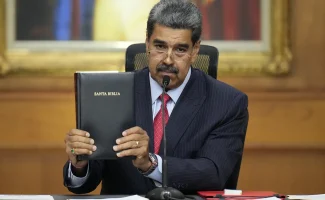
When a Dictator Quotes the Bible
This issue of A Public Witness treks to Latin America to consider the dangers arising from the political co-opting of sacred texts.
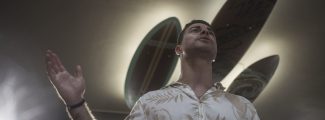
At This Church in Portugal, Parishioners Surf Before They Worship.
Surf Church was established by an ordained Baptist pastor to spread the Gospel in a once-devoutly Catholic country where about half of young people today say they have no religion.
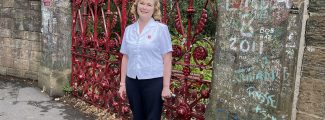
John Lennon’s Inspiration for ‘Strawberry Fields’ Bears New Fruit for Salvation Army
The Salvation Army is exploiting a connection to the Beatles to draw more visitors to fund its mission and encourage people who would never consider stepping inside a church to find out about Christianity.
Editorials
Crying for Justice
Over the weekend, U.S. Special Operations forces trapped terrorist leader Abu Bakr al-Baghdadi, who then killed himself with a suicide blast. The world is safer with al-Baghdadi no longer planning terrorist activities. But that doesn’t mean we should cheer his death.
Justice vs. Authority
(WW) — A recent CNN piece explored how contemporary Christian music largely ignores contemporary moral concerns. But one line in the piece particularly caught my eye — and not in a good way.
Time for Golden Rule Politics
Imagine a world where Christians — both those running for office and those just planning to vote — actually applied the Golden Rule. With that goal in mind, Baptist and other denominational leaders are calling for Christians to act Christlike, even in political conversations.
Word&Way Voices
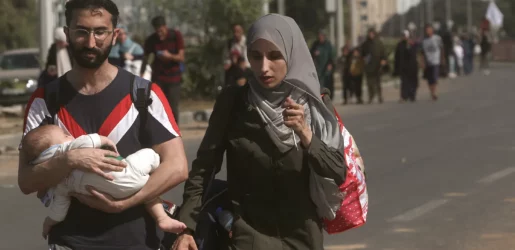
Unsettling Advent 2023, Day 17
Former pastor of Gaza Baptist Church Rev. Hanna Massad writes that we find solace in knowing that, like Mary and Joseph, we have a place of refuge — the “ark of the cross.”
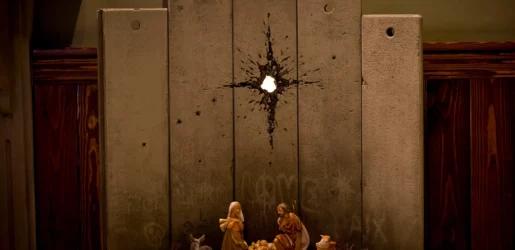
Unsettling Advent 2023, Day 16
Rev. Alex Awad, a retired minister who served as pastor at East Jerusalem Baptist Church and a professor at Bethlehem Bible College, reflects on modern-day Herods and how the Christmas story gives oppressed people around the world hope.
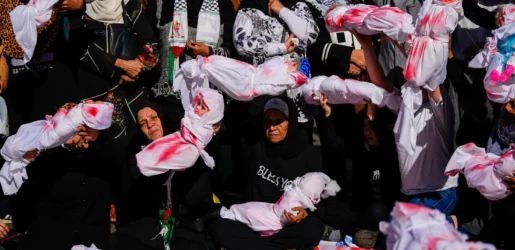
Unsettling Advent 2023, Day 15
Rev. Dr. Mae Elise Cannon, executive director of Churches for Middle East Peace, offers this first entry in our week exploring the theme of Advent during a time of bloodshed in Israel.
E-Newsletter
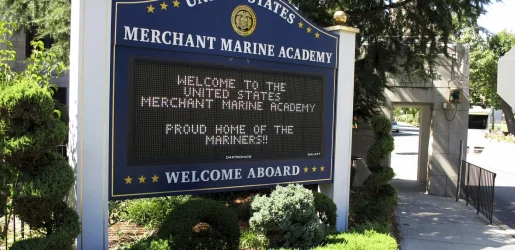
Resurrecting Jesus & Christian Nationalism (From the Basement)
This issue of A Public Witness sails over to the church-state crash in the Department of Transportation to consider the problems with this made-for-TV controversy.
The Bible According to Christian Nationalists
We are excited to announce a new book unpacking seven types of misuses of Scripture by influential preachers and politicians pushing Christian Nationalism today, officially out Oct. 7 from Chalice Press and available for pre-order now.
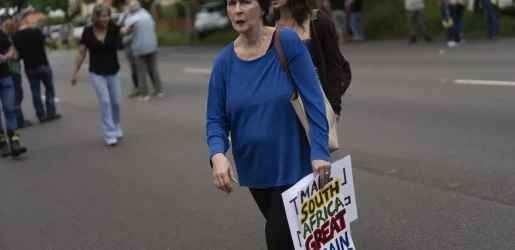
The Only ‘Refugees’ Trump Wants
This issue of A Public Witness looks at what’s happening with U.S. refugee resettlement and the South African Christians pushing back against the apartheid theology propping up the Trump administration.
-
Claiming God's Name in Politics, War, & Sports
 This episode of Dangerous Dogma features a conversation between Word&Way Editor Brian Kaylor, Lutheran minister and journalist Angela Denker, and Disciples pastor and author Beau Underwood. The conversation includes discussion about a botched execution in Tennessee, religious issues in political campaigns, and Pete Hegseth's misuse of the Bible. And Beau shows off his White Sox…
 -
Backslide with Robert P. Jones
This episode of Dangerous Dogma features a conversation between Word&Way Editor Brian Kaylor and Robert P. Jones, author of the forthcoming book Backslide: Reclaiming a Faith and a Nation After the Christian Turn Against Democracy. Jones is also the founder and president of PRRI. He previously appeared on Dangerous Dogma in 2023. You can watch a… -
DHS Spies on Churches & White Sox Honor Pope Leo
This episode of Dangerous Dogma features a conversation between Word&Way Editor Brian Kaylor, Lutheran minister and journalist Angela Denker, and Disciples pastor and author Beau Underwood. The conversation includes discussion about revelations that the Department of Homeland Security has been spying in churches, a controversial golf ad, and a White Sox night celebrating Pope Leo.… -
The State of the Senate, from SC to ME to TX to KS
This episode of Dangerous Dogma features a conversation between Word&Way Editor Brian Kaylor, Lutheran minister and journalist Angela Denker, and Disciples pastor and author Beau Underwood. The conversation includes discussion about the death of Sen. Lindsey Graham as well as issues of faith and morality in Senate races in Maine, Texas, and Kansas. You can… -
Southern Baptists, the Pentagon, & UFC
This episode of Dangerous Dogma features a conversation between Word&Way Editor Brian Kaylor, Lutheran minister and journalist Angela Denker, and Disciples pastor and author Beau Underwood. The conversation includes discussion about the Southern Baptist Convention's push against women in ministry, the Pentagon changing how it codes the faith of military members, and the latest in… -
Southern Baptists, Women in Ministry, & a Billboard
In this episode, Word&Way President Brian Kaylor talks with Meredith Stone, executive director of Baptist Women in Ministry. The conversation includes discussion of efforts in the Southern Baptist Convention to further target women serving in churches and how BWIM is advocating for women (including with a billboard to greet SBC messengers next week in Orlando,… -
Divergent Visions for Rededicating the Nation
This episode of Dangerous Dogma features a conversation between Word&Way Editor Brian Kaylor, Lutheran minister and journalist Angela Denker, and Disciples pastor and author Beau Underwood. The conversation includes discussion about Rededicate 250, gerrymandering, Adam Hamilton's Senate campaign in Kansas, and the MAHA movement. You can watch a video version of the conversation here. Here are a few pieces… -
The Christian Past That Wasn't
In this episode, Word&Way President Brian Kaylor talks with Warren Throckmorton, a retired professor who has spent years debunking false claims by Christian Nationalist pseudo-historian David Barton. Throckmorton is the author of the new book, The Christian Past that Wasn't: Debunking the Christian Nationalist Myths that Hijack History. You can watch a video version of… -
Trump vs. Leo
This episode of Dangerous Dogma features a conversation between Word&Way Editor Brian Kaylor, Lutheran minister and journalist Angela Denker, and Disciples pastor and author Beau Underwood. The conversation includes discussion about President Donald Trump's attacks on Pope Leo XIV, Leo's witness against the Iran war, Trump's AI image of himself as Jesus, and the electoral… -
Fight Like Jesus with Jason Porterfield (Reissue)
In this episode, Word&Way President Brian Kaylor talks with Jason Porterfield about his book Fight Like Jesus: How Jesus Waged Peace. This episode originally aired in 2023, except for a new introduction noting a violent prayer by Pete Hegseth during a recent Pentagon worship service and Palm Sunday comments by Pope Leo XIV. Note: Don't forget…


Books
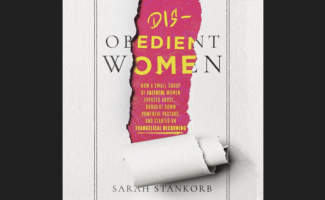
Review: Disobedient Women
In "Disobedient Women: How a Small Group of Faithful Women Exposed Abuse, Brought Down Powerful Pastors, and Ignited an Evangelical Reckoning," journalist Sarah Stankorb outlines how access to the internet allowed women to begin dismantling patriarchal authority.

Review: After Botham
In "After Botham: Healing From My Brother's Murder by a Police Officer," Allisa Charles-Findley challenges us to listen to the cries of those who have experienced grief and to puts forth a call to join the struggle for justice.

Review: Eucharist and Unity
In "Eucharist and Unity: A Theological Memoir," Keith Watkins offers a personal angle on the interrelated themes of ecumenism, modern American religious history, practical theology, and communion.
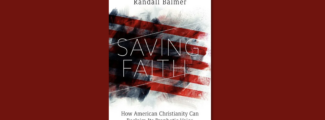
Review: Saving Faith
In "Saving Faith: How American Christianity Can Reclaim Its Prophetic Voice," Randall Balmer argues that any attempt to arrest the decline of Christianity in America must first reckon with the past.