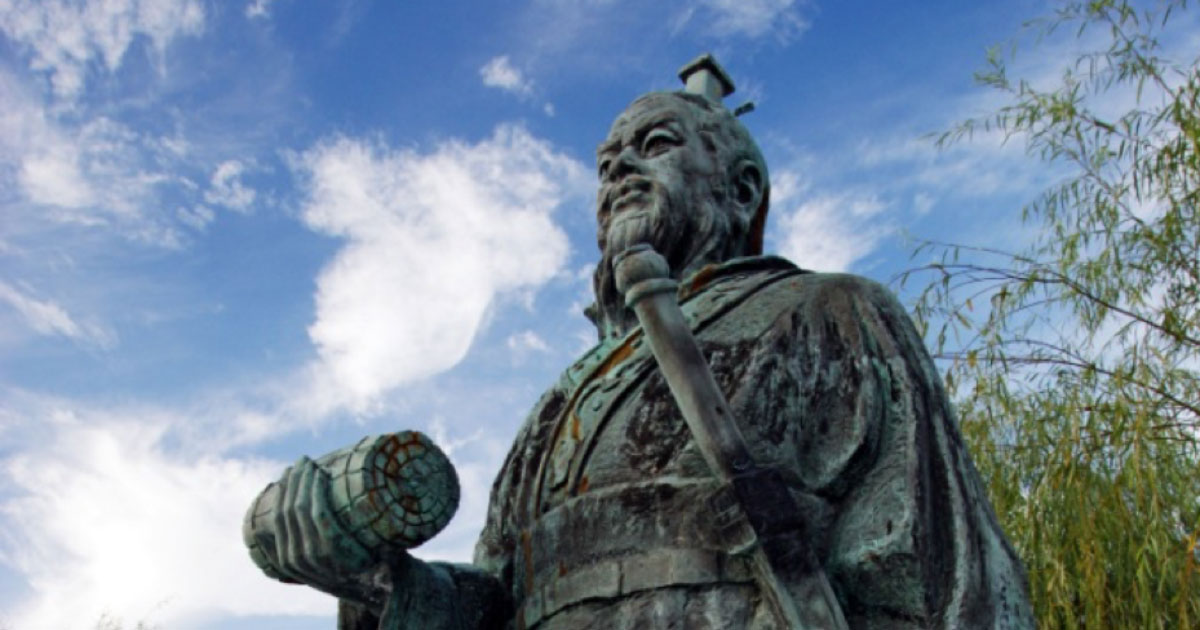
I can’t tell if President Donald Trump governs from The Art of the Deal or The Art of War.
Rodney Kennedy
Tony Schwarz was the ghostwriter for Trump’s The Art of the Deal. “I wrote The Art of the Deal,” claimed Schwartz. “Donald Trump read it.” The book deals with lessons in negotiating big deals and makes much of Trump as the biggest, baddest deal maker in the world. The Art of War, by General Sun Tzu, was originally a manual for military leaders waging war. The irony here is that America’s corporate class is obsessed with The Art of War. The book has a second life as a guidebook for navigating the far less lethal (but equally cutthroat) world of business.
Testimony from Trump’s staffers suggests he doesn’t read. He’s not a book guy — in fact, some advisers say they don’t recall seeing him read one or even talking about one beyond his own, The Art of the Deal. And, as he told us, he’s not one for long reports or detailed briefings. One page usually suffices. Bullet points are even better. But he does consume — often in huge doses — lots of traditional media.
Trump is a television guy, a creature of television. By all accounts, he couldn’t live without television. He watches stories about himself, sending feedback to journalists, calling TV shows, and insulting late night comedians.
Elaine Godfrey says Trump watches about five hours of TV per day. MSNBC reported he turns to TV for foreign policy guidance. The idea of a FOX News host making decisions about the war in Iran is not far-fetched. “Secretary of War” Pete Hegseth was previously a FOX News personality. The foghorns at FOX News have Trump’s number on speed dial.
The Art of the Deal
The president’s recent social media posts suggest he is paying no attention to his own advice.
For example, in The Art of the Deal, there’s a passage applicable to Trump’s war with Iran: “The worst thing you can possibly do in a deal is seem desperate to make it. That makes the other guy smell blood, and then you’re dead.” His relationship with Iran has been an unending tirade of threats made and threats retracted. He declares deadlines and changes them. He sounds and smells desperate.
His attempt to make the case of Iran being an imminent threat is particularly desperate. There’s simply no evidence for the claim. His threats related to the Strait of Hormuz are increasingly desperate because Iran is walking away with total control of the Strait. And his regime change theme has blown up in his face. If he bombs the civilian targets he threatens to destroy, all hope of regime change evaporates. The people of Iran will know Trump is waging war against them, not on their behalf.
Trump keeps repeating, “This is about to wrap up,” “we’re winning,” “well, the Strait is going to open” — all desperate wish projections.
What really feels like desperation now is President Trump going to war on a “feeling” he had. David French observes, “And I hate to keep harping on this, but it just really matters. The original sin here, of not articulating a coherent plan, not going to Congress, not rallying the American people — democracies that go into war without public support do not fight those wars well, effectively, etc. That’s what he did. He just yanked all of us in. And it is costing us every day.”
Nothing says “desperate” like distractions. Trump keeps repeating his personal fantasies about our superior military winning, degrading Iran’s military capacity, blowing up all targets, and achieving all objectives, but the war doesn’t end.
The Art of War
Written over two thousand years ago, The Art of War offers insights into tactics and planning for war. American corporate executives have been tearing through the pages of The Art of War like book club members on the night before the book club meets.
Statue of Sun Tzu in Yurihama, Tottori, Japan. Source: 663highland/CC BY SA 3.0
Sun Tzu says, “The MORAL LAW causes the people to be in complete accord with their ruler, so that they will follow him regardless of their lives, undismayed by any danger.” He continues, “The general that hearkens to my counsel and acts upon it, will conquer — let such a one be retained in command! The general that hearkens not to my counsel nor acts upon it, will suffer defeat — let such a one be dismissed!”
The principles for winning a war:
- Know Yourself, Know Your Enemy
- Victory Without Fighting
- Deception and Maneuvering
- Adaptability and Flexibility
- Know Your Terrain
- Discipline and Order
- No Prolonged Warfare
General Tzu writes about the strategy of winning wars. As Jamelle Bouie says, “I’m not sure that anyone in the White House understands what strategic thinking is. I think that all of their thinking happens exclusively at the level of tactics. So exclusively at the level of, ‘What is the specific thing we can do to an opponent to try to attain a very narrow objective?’ Not so much, ‘What are our broad goals that will establish a new status quo going forward?’”
President Trump is trapped between war and making deals. His war against Iran, like his entire presidency, is an exercise in demolition. He is simply blowing things up. Trump is a demolition expert, not a deal maker. He has taken a wrecking ball to American democracy, visualized by the destruction of the East Wing of the “People’s House” and his “bombs away” approach to Iran.
Even MAGA is slowly learning Trump is not a savior; he is a deconstructive demolisher. He is not happy unless he is blowing stuff up. His most recent threat makes it clear he is looking for more targets, more stuff to blow up. This is neither a strategy for war nor for diplomacy.
And America is trapped between war and diplomacy by a desperate, scared, and inept president.
Rodney Kennedy has his M.Div. from New Orleans Theological Seminary and his Ph.D. in Rhetoric from Louisiana State University. The pastor of 7 Southern Baptist churches over the course of 20 years, he pastored the First Baptist Church of Dayton, Ohio — which is an American Baptist Church — for 13 years. He is currently professor of homiletics at Palmer Theological Seminary, and interim pastor of Emmanuel Friedens Federated Church, Schenectady, New York. His eighth book, Dancing with Metaphors in the Pulpit, is out now from Cascade Books.