DALLAS (RNS) — Hundreds of members of Highland Park United Methodist Church crowded into an auditorium Wednesday (Aug. 26) for a congregational meeting to better understand why the denomination to which it has belonged for 110 years has now sued them in court.
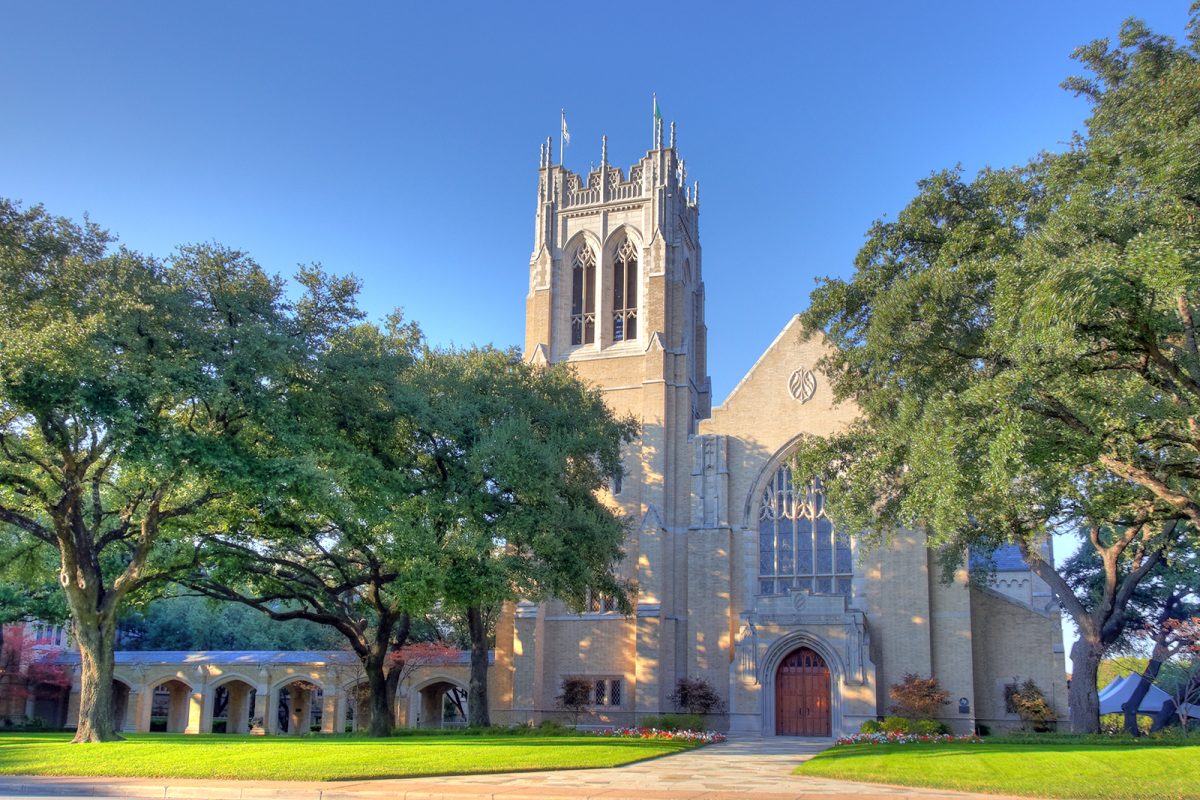
Highland Park United Methodist Church in Dallas. (Courtesy photo)
It was the first opportunity for the church’s senior minister, Matt Tuggle, and members of the church council to explain why the church in Dallas’ tony University Park neighborhood changed its governing documents four years ago to essentially cut off legal ties to the United Methodist Church.
During the mostly polite and occasionally tense one-hour meeting in the cavernous contemporary worship auditorium, Tuggle repeatedly claimed the church — the denomination’s largest U.S. congregation by membership — wants to remain United Methodist but changed its bylaws during a period of uncertainty with the denomination. Church leaders declined RNS reporters’ questions. Members leaving the building also did not want to talk.
Two years after a schism led 7,600 churches to leave the United Methodist fold, its reverberations are now being felt in a battle between one of its most elite churches — the home church of former President George W. Bush — and the denomination.
While equality for LGBTQ+ members was the defining issue of the schism, the latest fight has less to do with theology and more with church governance and control.
Earlier this month, the denomination’s regional governing body, called the Horizon Texas Conference, sued Highland Park over changes the church made to its governing documents in 2022.
Those changes removed “United Methodist” from the church’s legal name and gave the church council authority to make broad decisions typically made by the denomination.
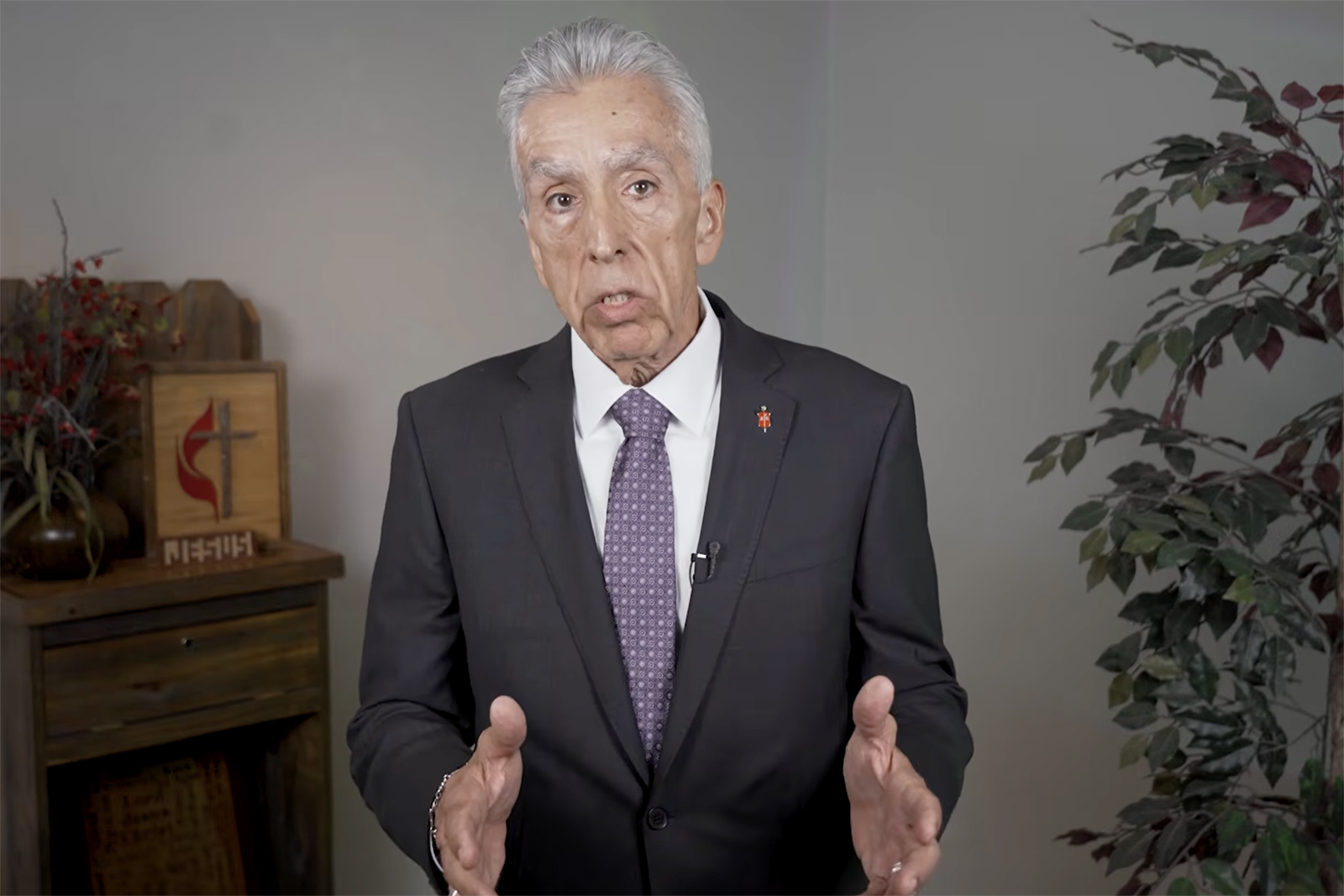
Bishop Ruben Saenz Jr. addresses the Highland Park United Methodist Church congregation in a video released Wednesday, Aug. 26, 2026. (Video screen grab)
The conference, led by Bishop Ruben Saenz Jr., asked the church to restore its governing documents so they are in keeping with the denominational rulebook, the Book of Discipline. According to Saenz, after months of negotiations, the church declined.
“We invited Highland Park’s pastoral and church council leadership into conversation and sought a resolution, but we were never presented with a proposal that restored Highland Park’s governing documents to alignment with the Book of Discipline,” Saenz said in a five-minute video released Wednesday, in which he explained why he sued the church.
The battle appears to be a replay of the denomination’s fight with Southern Methodist University, settled earlier this year. In that case, SMU, which was birthed by the Methodists with a gift of 133 acres back in 1911, changed its articles of incorporation to distance itself from The United Methodist Church. In 2019, the denomination’s South Central Jurisdictional Conference sued, alleging the university’s board exceeded its authority by unilaterally changing its articles of incorporation to remove its connection to the denomination. The two parties ultimately settled, and the university revised its governing documents.
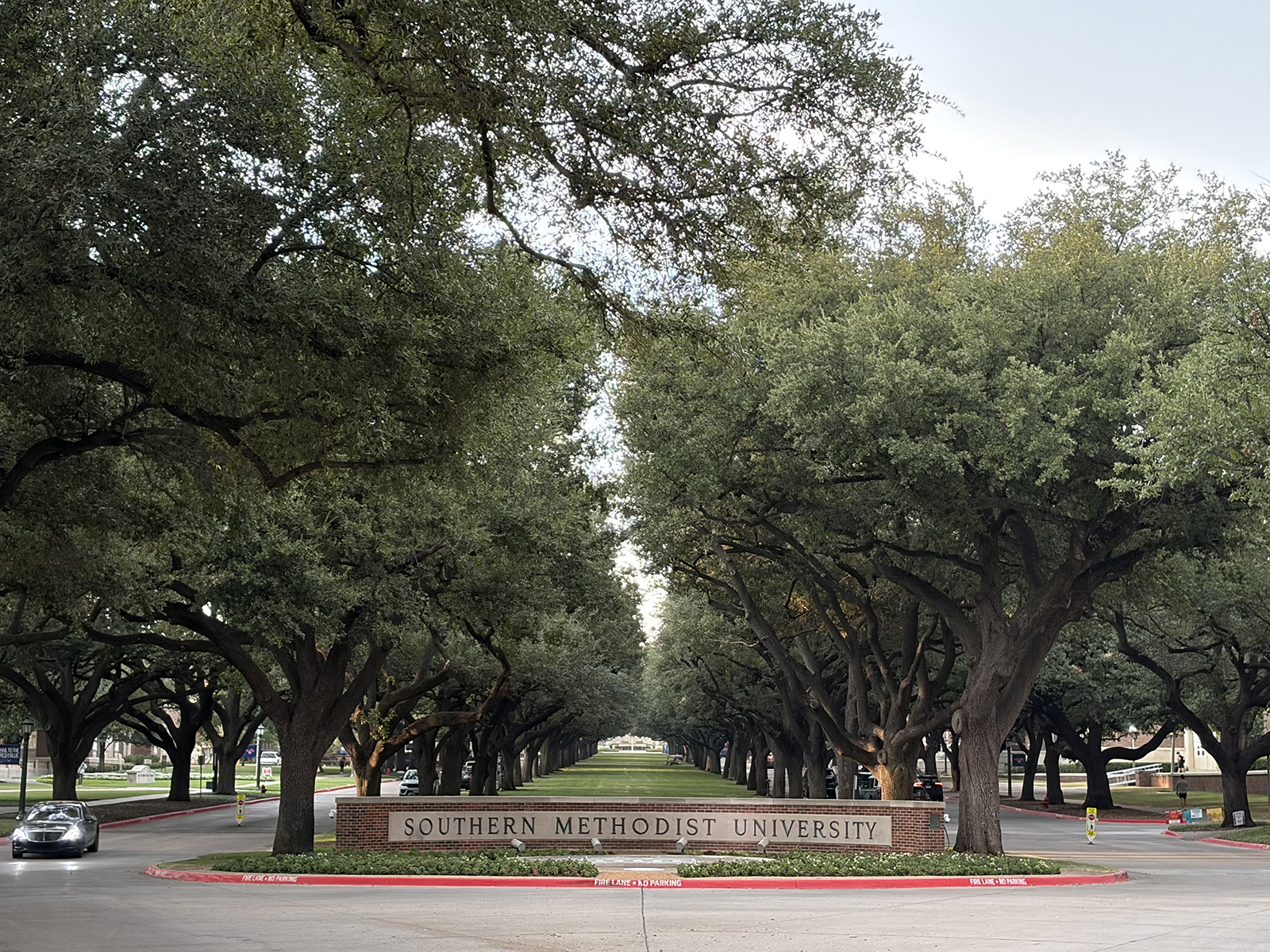
An entrance to Southern Methodist University, next to Highland Park United Methodist Church, in Dallas. (RNS photo/Ellie Ashby)
Highland Park, whose parking lot abuts SMU’s Perkins School of Theology, issued a strongly worded statement last week. Leaders said they were blindsided by the lawsuit, which they called “unwarranted and unjust.” In light of the suit, the church said it “no longer recognizes ecclesiastical authority of the bishop and conference.”
Because of its size and prominence, Highland Park has been granted various accommodations by the conference. While denominational rules, for example, dictate that the local bishop appoints clergy, Highland Park has for years chosen its own senior pastor, with the bishop essentially rubber stamping its choice. Likewise, the congregation no longer holds all-church votes. The church council votes on all major decisions.
“For a long time, churches like Highland Park have seen themselves as different,” said Lovett Weems, a professor of church leadership and a consultant to the Lewis Center for Church Leadership at Wesley Theological Seminary in Washington, D.C. “The way it’s worked in the past is that bishops tend to honor their preferences, and, likewise, the churches support the bishops well.”
Large, wealthy churches like Highland Park, with its more than 15,000 members, contribute an enormous amount of money to the denomination, what United Methodists call an apportionment. Over the past four years, the church said it gave $12 million to the denomination and countless hours of service. It has also helped launch 41 United Methodist churches in the region and many other ministries.
At Wednesday’s meeting church leaders told members they were committed to the denomination but had moved to insulate the church from a denomination undergoing a major upheaval.
Between 2019 and 2023, the United Methodist Church allowed churches to leave the denomination with their property for reasons of conscience over LGBTQ+ inclusion.
While some churches did, in fact, leave over theological issues related to sexuality, many other churches left because they had an opportunity to break away and take their property with them. In this, they were part of a trend: churches that have chosen to become nondenominational, free of any outside oversight. (In 2024, the denomination lifted all restrictions on the ordination and marriage of LGBTQ+ people)
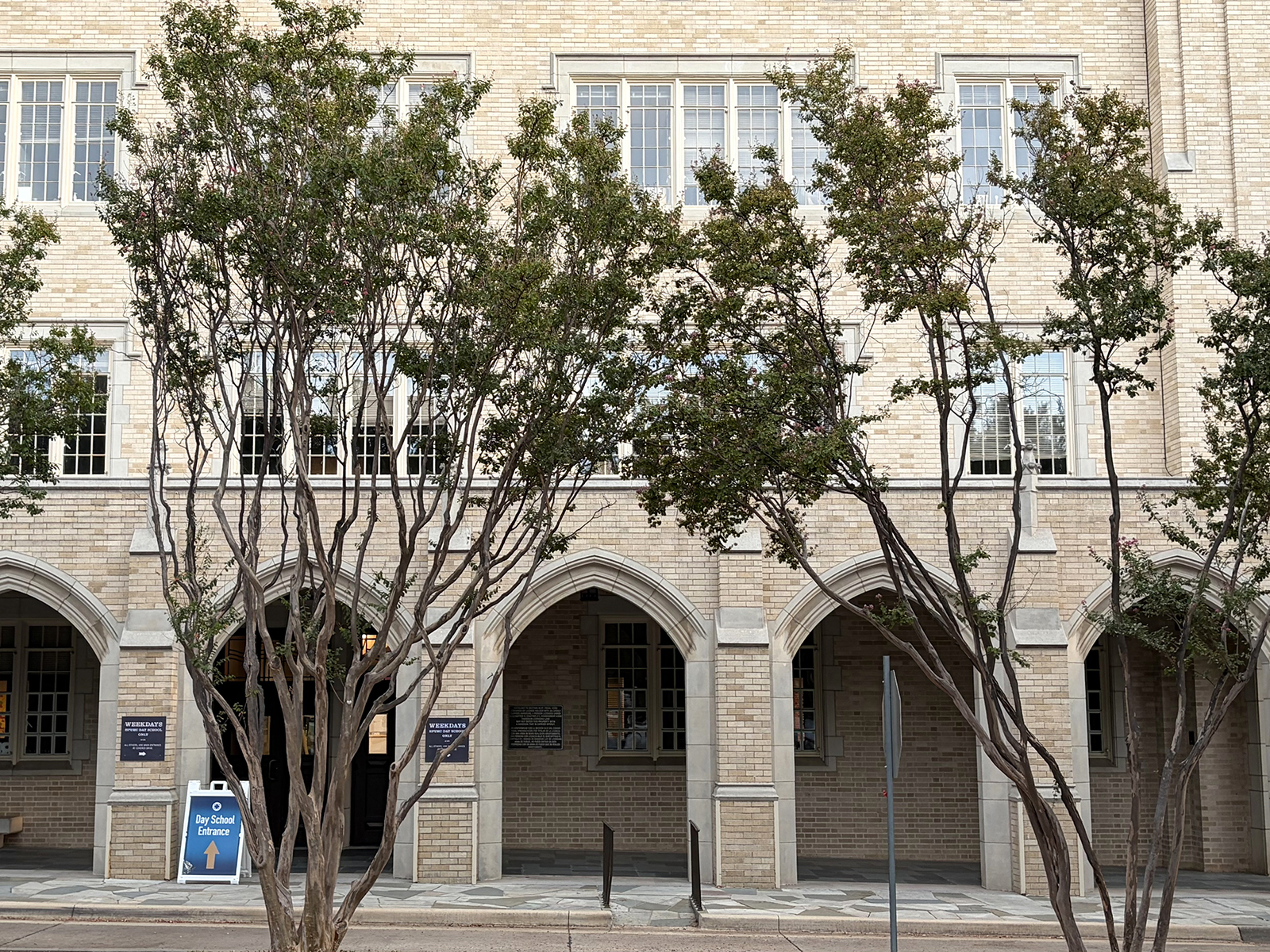
Highland Park United Methodist Church on Wednesday, Aug. 26, 2026, in Dallas. (RNS photo/Ellie Ashby)
Of the 7,600 churches that split off from the United Methodist Church, half chose to affiliate with the Global Methodist Church, the theologically conservative alternative. Many others chose the nondenominational path.
“Denominationalism has been in decline for many decades,” said Scott Thumma, a sociologist of religion who studies megachurches. “That weakening denominational hold increases as size (of the church) increases.”
Many megachurches, as well as denomination-affiliated universities, want to chart their own course, independent of the denomination. In this sense, said Thumma, Highland Park’s move has little to do with the schism. These megachurches just don’t need the denomination as much as smaller churches.
“Whatever the denomination, whether it’s United Methodist or Presbyterian or Southern Baptist, the denomination really needs those larger congregations far more than the church needs the denomination,” Thumma said.
Still, many members of Highland Park take pride in their United Methodist Church’s identity and in their long Wesleyan heritage. (John and Charles Wesley, the 18th century Protestant reformers, founded Methodism).
“There are many members there, and I can’t put a number on how many, who really value being a part of the Methodist denomination,” said Eric Folkerth, pastor of Kessler Park United Methodist Church in Dallas and a former associate pastor at Highland Park. “I think if there is a group that wants to leave, they understand that there is a very large group that does not want to leave.”
Now it will be up to the Dallas County District Court to decide. The church said it will hold additional town hall meetings. Many outsiders said a final resolution could take years.