

MAGA Told Us We Were Getting Louis IX. We Got Louis XIV Instead.
Evangelicals have turned to various historical figures in an attempt to depict President Donald Trump as a fine Christian man. But the “Sun King” might be the best fit.
Those Far From God, and Those Who Are Heard
There is a way to interpret Scripture that leaves a person almost permanently reassured — difficult passages become instruments for identifying enemies rather than mirrors for examining the soul. But the Bible consistently resists that reading.

Read It Yourself
For the second entry in our series on religion and AI, a biblical scholar and ethicist unpacks how technological advances are influencing how her students might choose bullet-pointed information over learning to seek and love the truth.
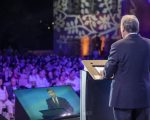
Michael Youssef’s ‘Christ Our Hope’ Campaign Starts in Amman, Jordan
Youssef discussed his 52 years of ministry, Christians in the Middle East, and preparation for a major commemoration in 2030: the 2,000th anniversary of the baptism of Jesus at Bethany Beyond the Jordan.
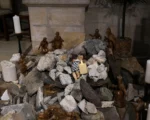
Eulogies Do Not Save the Living
Real solidarity with the Palestinian church asks us to choose between institutional comfort and the kind of justice the gospel actually demands, the disruptive kind, the kind that costs something — as the Church of England recently discovered.

A Guide to Understanding the Biblical Showdown in Texas
Rodney Kennedy writes about religious issues and character matters in the the U.S. Senate race in Texas between Democrat James Talarico and Republican Ken Paxton.

A Town Full of Churches: What Happens When Institutions Fail to Address Addiction?
Across rural America, the same pattern repeats: high church density, persistent poverty, substance abuse crises, and the absence of systems capable of addressing problems at scale. Why do individual Christians often appear more effective than the organizations built in Christianity’s name?

Challenging Trump’s Efforts to Whitewash Our History
Education should open minds to facts, science, and our history — not close doors to them. Regressive-thinking adults prefer to hide facts and truth from students, as exhibited in the recent order from President Trump adding warning signs to the Smithsonian’s National Museum of American History.

Susannah Crockford Traces How Protestant Themes Frame Discourse Around Climate Change
The anthropologist discusses her new book, why many Western countries are having trouble responding to climate issues, and how theological motifs relate to fossil fuels and artificial intelligence.

Not Your Mother’s ‘Little House’
A new Netflix series captures the edginess of Laura Ingalls Wilder’s books while also reconsidering the narrative in the face of frontier America’s actual history.