In August 2010, I traveled with twenty New Yorkers to KwaZulu-Natal, South Africa, on a mission trip, spending ten days serving in a Christian-run orphanage that cared for more than a hundred children. Many had been born with HIV, and nearly all had lost parents to the AIDS epidemic ravaging the region.

Christina Ray Stanton
That trip — and those children — reshaped my worldview. The bonds we formed left an imprint I couldn’t shake, compelling me to keep fighting for their future, and for the futures of children like them around the world. As the years have passed, my path has circled back to that same battle — one that endures to this day, now cast in sharp relief by World AIDS Day 2025.
Before the trip, I had my doubts. It was the first mission I’d launched in my new role as Short-Term Missions Director at Redeemer Presbyterian Church (founded by Dr. Timothy Keller), and I worried whether our presence would help or simply get in the way. But the moment we arrived, those fears vanished. The children didn’t see strangers; they reached for our hands. Their needs were universal: affection, safety, opportunity, belonging.
Our days were full. The optometrist, dentist, and doctor in our group provided healthcare, and we also funded infrastructure repairs, including a new plumbing system, and bought computers to help with schoolwork. We pooled resources to take the children on outings — to a water park, a movie theater, an animal sanctuary — experiences many had never had.
I met Nkululeko, born HIV-positive and rescued from an abusive home by a neighbor who brought him and his siblings to the orphanage. I met Tebogo, who had lost both parents to AIDS and whose brother was murdered, leaving her and her younger siblings alone and starving until a teacher found them and led them to the orphanage. Nomfundo had been entrusted to the orphanage by her aunt after robbers stripped their home bare.
Back in New York, their faces stayed with me. We sent teams regularly, deepening relationships and expanding to other youth homes. In 2017, I founded Loving All Nations to sustain the work. Through it, I’ve watched those same children grow — not just survive, but flourish.
I was proud to play even a small role and prouder still that my country once led the global fight against AIDS. The success of U.S. policies could clearly be seen in South Africa. Although the country continues to have the world’s highest number of people (more than 8 million) living with HIV, countless lives have been saved through USAID and PEPFAR, the President’s Emergency Plan for AIDS Relief. The cornerstone of the global AIDS response for more than two decades, PEPFAR efforts extended deep into South Africa, providing testing, treatment, and the infrastructure to sustain hope. Just three years ago, PEPFAR even pledged to help end the pandemic by 2030.
But in January 2025, decades of progress began to unravel when the U.S. government froze most foreign aid, which some international development experts estimated has gutted more than 80% of global health and development programs. The dismantling of USAID followed, and clinics and outreach programs supported by PEPFAR reduced staff and cut back testing and lab services, causing mass treatment interruptions. Many PEPFAR partners were forced to close entirely.
According to the Center for Global Development, 2.3 million people on “lifesaving treatment” for HIV were directly affected, half of them in South Africa. Further, that country’s PEPFAR’s HIV budget was slashed by 17%, and 8,000 of its 15,000 supported healthcare workers were laid off.
The timing came shortly after the approval of a new injectable treatment called lenacapavir, a breakthrough that promised to transform HIV prevention by offering protection against the virus for up to six months. But without the ability to distribute the drug widely in Africa and other global markets, the advance became a painful symbol of a breakthrough that seems just out of reach for many of the world’s populations who have suffered the most from AIDS.
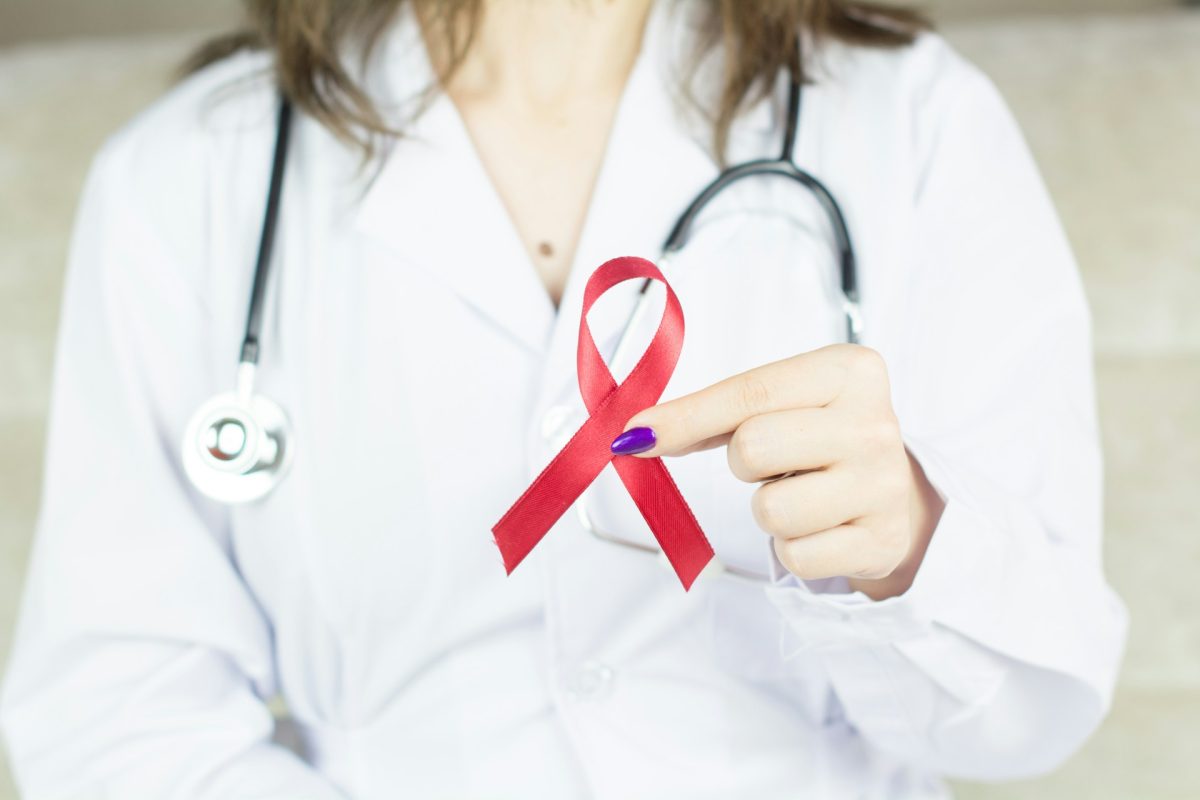
Photo by Bermix Studio on Unsplash
And damage to HIV research and treatment has not been limited to international aid. Federal government actions have wiped out nearly 200 HIV-focused grants (totaling more than $200 million) at U.S. institutions in the past year. The loss of a $2 million HIV grant at Meharry Medical College in Nashville illustrates how programs with decades of proven impact could vanish overnight.
Meanwhile, many of the leaders at the National Institutes of Health (NIH) and the National Institute of Allergy and Infectious Diseases (NIAID) — the very agencies that helped transform HIV from a fatal disease into a manageable condition — have been fired or reassigned. The departures of veteran researchers such as Clifford Lane, who had devoted 45 years of his life to HIV research, represent not just lost expertise but the erosion of a legacy built on compassion and perseverance.
UNAIDS warns that permanent cuts to PEPFAR funding could result in 6.6 million additional HIV infections by 2029, including 660,000 among children. AIDS-related deaths could rise by 4.2 million, and three million more children could be orphaned. These numbers aren’t abstract to me. When I hear them, I see the faces of Nkululeko, Tebogo, and Nomfundo, and I know that the futures of children like them depend on the world choosing to care.
Observed each December 1 since 1988, World AIDS Day reminds us that the epidemic is far from over. In 2024, 630,000 people died from AIDS-related illnesses, while 1.3 million became newly infected. This year’s theme, “Overcoming Disruption, Transforming the AIDS Response,” captures both the urgency of the moment and the need for renewed advocacy.
This year, the fight against AIDS grew even more complicated. The State Department barred employees from promoting or commemorating World AIDS Day, citing a new policy against messaging on “commemorative observances.” A government spokesman defended the move, saying that “an awareness day” is ineffective and that “President Trump is working directly with foreign governments to save lives.” But the irony runs deep. World AIDS Day was established by the World Health Organization, an institution the United States withdrew from under one of Trump’s first executive orders. Now, the nation that once led the global fight against AIDS has stepped back from even acknowledging it. For a disease that still afflicts more than 40 million people worldwide and has claimed over 44 million lives, silence isn’t neutrality. Silence equals death.
We all have a role to play. We can contact elected officials to register our concerns with current policies, support front-line organizations that provide testing, treatment, and outreach, fight stigma, and demand policies that protect people living with HIV. In the U.S., the HIV/AIDS Bureau (which administers the Ryan White HIV/AIDS Program) and New York’s Housing Works remain lifelines for the millions of Americans who are living with HIV/AIDS. Globally, the Global Fund, AVAC, and the World Health Organization continue the vital work of prevention and care.
“This year, we are standing in the dangerous reality of cuts to Medicaid and PEPFAR funding, as well as a Republican proposal to slash $2 billion from prevention and care,” says Charles King, CEO of Housing Works, a New York City organization that advocates for care, social justice, and an end to homelessness. “On December 1, as we remember those we’ve lost, we’re reminded that AIDS is ongoing. We will continue the fight until we end AIDS for everyone — through access to lifesaving treatment, prevention, and support.”
Still, there are glimmers of hope. Thanks to the intervention of Global Fund, lenacapavir should become available in South Africa and eight other countries next year. “The new drug will be accessible, affordable, and locally produced,” says Dr. Aaron Motsoaledi, South Africa’s Minister of Health.
Such breakthroughs give me hope that other kids in South Africa will follow in the footsteps of many of my young friends I met in 2010, who are now grown and thriving. Tebogo earned a degree in English. Nomfundo works independently and supports herself. Nkululeko is completing his medical residency.
In 2010, one of our volunteers gave Nkululeko a toy stethoscope, and he still remembers that gift vividly. “It meant a lot to see all the volunteers take time out of their lives to come and be with us and love on the ones suffering the most,” he told me recently. “It inspired me to do the same. I wouldn’t be here if others hadn’t shown up. Now I get to serve others.”
PEPFAR insists that eradicating AIDS by 2030 remains possible, but only if governments and global partners recommit to funding, close the gaps, and uplift the most vulnerable communities.
The progress we’ve made is real. So is the risk that we will lose it. It will take all of us — standing in the gap — to make sure we don’t.
Christina Ray Stanton is the award-winning author of Out of the Shadow of 9-11: An Inspiring Tale of Escape and Transformation and Faith in the Face of COVID-19: A Survivor’s Tale. You can find more of her work at christinaraystanton.com.