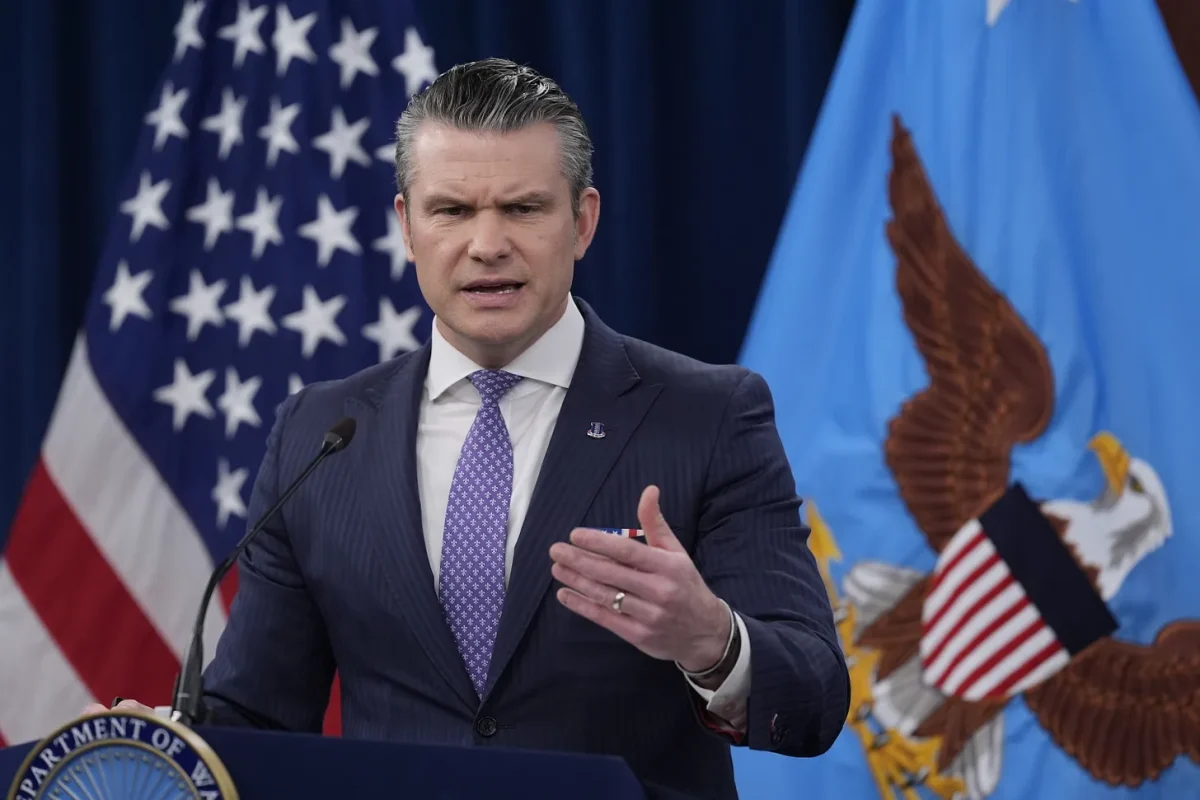
Pete Hegseth, who likes to call himself the “secretary of war,” recently sparked numerous headlines for offering a violent prayer during the monthly Christian worship service at the Pentagon in March. As I watched the service live, I immediately noticed the prayer borrowed quite a bit of biblical language. I alluded to that in my report that broke the news about the prayer.
As other news outlets started covering the prayer, Greg Sargent of The New Republic reached out to learn more about it and where it may have come from. I mentioned that the prayer worked in a lot of biblical verses from various places in the Old Testament, though without citation. For instance, the first sentence starts by quoting Psalm 144:1 and then jumps into Jeremiah 50:3. I quipped that the prayer was basically “a Mad Libs mashup of biblical violence.” That’s the line he used in his excellent piece reflecting on the danger of Hegseth’s rhetoric and theology. My line was also repeated elsewhere, like in The Atlantic. And host Brooke Gladstone of On the Media mentioned the line during a conversation with me on the show that aired on public radio stations over the weekend.
As I thought about the prayer more, I realized there’s something important about that aspect of mashing together unrelated biblical texts. So I decided to annotate the prayer to note the various parts that borrowed from verses.
Some passages used were particularly obvious. Like the start from Psalm 144, which Hegseth previously read at the January Pentagon service (saying it was what he prayed through while planning the Venezuela military operation that month) and during a March press conference about the Iran war. Later in the prayer, Proverbs 28:1 appeared, which is a verse used last year in a propaganda video by the Department of Homeland Security to justify their militarized violence. Other shorter biblical phrases also popped out — like “break the teeth of the ungodly,” which is an idea that’s popular in Christian Nationalist circles.
However, there are also a number of phrases that bounce around in Christian sermons and prayers and therefore might not have been intended as a callback to a specific passage. We don’t know for sure since Hegseth said he borrowed this prayer. According to him, a military chaplain prayed it for the forces that led the Venezuela mission in January. And now, Hegseth offered it as a prayer for U.S. military personnel fighting against Iran. So I only counted phrases of at least four words. That means some other allusions might not be noted. For instance, at the end, the prayer is offered with “bold confidence,” which might be, at least subconsciously, drawn from Ephesians 3:12.
It’s also possible I missed something if the author of the prayer rewrote a verse beyond it being obvious. The prayer does, for example, change Psalm 144:1 from the singular to the plural, but it’s still clear that the passage is being deliberately used. The tenses of other verses were changed to make them not about something done in the past but a request for future action. There also doesn’t appear to be a consistent translation used.
Even with those limitations, I still marked about half of the words in the prayer as borrowed from biblical passages. The most popular book by far was Psalms, with at least six different psalms used. Jeremiah was the next most-used book, with multiple verses from the same chapter but sprinkled throughout the prayer. Other lines came from Job, Proverbs, Isaiah, and Revelation.

At first glance, this might look like a highly biblical prayer. After all, at least half of the words are drawn from various verses. However, once we recognize the Mad Libs mashup approach, we can understand how the various verses have been taken out of context to the point that this isn’t really a biblical prayer. So this issue of A Public Witness considers how the chaplain who authored the prayer and the secretary of defense who appropriated it for himself performed violence against Scripture to justify violence against people.
Gerrymandering the Bible
There are multiple problems with the way the Bible is used in the violent prayer offered by a military chaplain and then Hegseth. As the color coding shows, verses and phrases are drawn from various texts, mixing together wisdom literature with prophetic literature and from different time periods and religious-political situations. There’s no effort to actually engage with any passage within its context. Instead, they are stripped of their specific meaning and treated as universal promises that can be named and claimed today by anyone.
I won’t walk through all of the passages, as each one really deserves its own sermon. But let’s quickly look at a couple to see the problems with the ways these texts are misused.
The rest of this piece is only available to paid subscribers of the Word&Way newsletter A Public Witness. Subscribe today to read this essay and all previous issues and receive future ones in your inbox.