For years I have watched American and Western progressive Christian media do a very good job of lamenting the tragedies of my homeland from a safe distance. They offer prayers, speeches, posts, and some meetings for peace from their comfortable offices and pulpits. I believe these prayers are sincere. I do not doubt the faith or hearts of those who offer them. But grief changes nothing on the ground by itself. Empathy alone has never protected a church or a home from being destroyed. Sentiment has never stopped the erasure of my people, especially Palestinian Christians whose roots in this land reach back to the first days of Christianity itself.
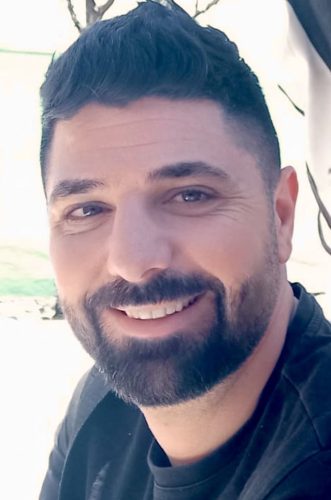
Jack Nassar
I am part of that community. This is not a theory for me. This is not a piece of news about something happening far away on the other side of the world. If we take the gospel seriously, our theology must move from comfortable observation into real, costly action. Watching is not witness.
In July 2026, the Church of England’s General Synod took a step that most churches are too afraid to take. They faced real pressure and smear campaigns. The U.K. Chief Rabbi and the Board of Deputies of British Jews have publicly urged Synod members to reject the motion. But the Synod voted 253 to 47 to hear the Kairos Palestine documents, our own testimony as Palestinian Christians about what the Israeli occupation continues to do to us to this day.
The motion was first written to “receive” the documents. Under pressure, it was changed to “hear” them instead, and the Archbishop of Canterbury made the distinction clear herself. Hearing does not mean endorsing every word. It does mean taking our testimony seriously enough to act on it.
The motion calls for solidarity with Palestinian Christians and their fellow Palestinians engaged in nonviolent resistance. It also calls for the Church to review its investment policies in light of the International Court of Justice advisory opinion, while rejecting both anti-Jewish and anti-Muslim hatred. None of this was easy. All of it passed.
When I read the vote count, I was in a café drinking Arabic coffee with some friends. I sat distracted by it for a long time. Not because the number itself was large. But because, for once, a body that owed us nothing chose to listen to us. And not only to listen, but to leave the door open for action.
This changes something important. It changes the perception that the Christian West had written us off, useful only as pawns for its own political and strategic purposes. It moves the church from theological discussion, lecturing, being politically correct, and caring about someone else’s feelings, into something real that can be measured.
And it puts a hard question to progressive Christians, to the media, to organizations and advocacy groups, and to church structures on the other side of the Atlantic: If a major global denomination can move from talk into action, why are the rest of us still circling the same conversation year after year after year? I ask this as someone who has waited a very long time for an honest and frank answer. Because what is faith without action?
And then I watched what happened next. It took a few moments after the motion to boil over on social media and even create “The Declaration Against Kairos II,” which was signed by hundreds of pastors and theologians, mostly Americans and British, to denounce the Palestinian Christian voice, calling it antisemitic and accusing it of excusing terrorism against Jews. But 78 years of occupation, two years of genocide, and thousands of attacks on Christian clergy, churches, schools, properties, and homes — including the non-stop Israeli settler terrorism against Taybeh, the last Christian village left in the West Bank — didn’t get them to issue even a prayer for their fellow Christians!
It is easy, and it costs nothing, to critique Christian Nationalism, Christian Zionism, and dispensationalism from a university office or a well-funded suburban sanctuary. Writing a column against the religious right’s use, abuse, and misuse of Scripture can feel like courage. But for Christians who are living under occupation, it is not the kind of courage that changes what happens on the ground.
I have written many of these columns myself, and I know very well the difference between writing about a wound and living inside one. I know it because I have watched Palestinian friends pack their luggage and leave. One of my Christian colleagues recently left for Australia to join his family. He was the last member of his family still living in Palestine. Now they are all gone.
Real solidarity with the Palestinian church cannot be shaped into something safe enough for a Sunday morning curriculum. It asks you to choose between institutional comfort and the kind of justice the gospel actually demands, the disruptive kind, the kind that costs something. When a community spends all its energy protecting nuance and avoiding tension, that caution can become a wall against ever taking real action.
The Church of England showed that a major denomination can look past political pressure and hear the cry of a people still suffering under occupation in this moment. To match what they did, American Christians and congregations have to stop treating prayer as the finish line.
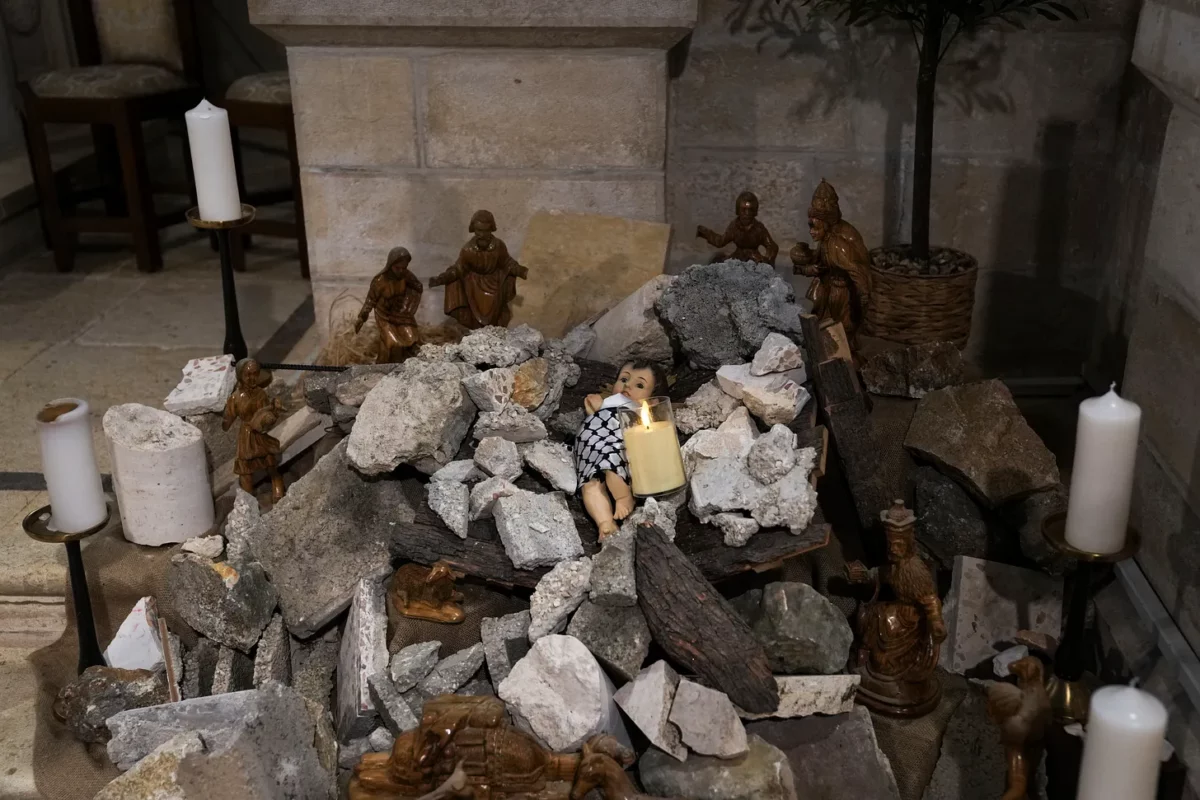
A nativity scene inside the Evangelical Lutheran Church in the West Bank town of Bethlehem with a figure symbolizing baby Jesus lying amid the rubble of Gaza on Dec. 10, 2023. (Mahmoud Illean/Associated Press)
Start by putting the Kairos Palestine documents in front of your own people, in Sunday school, in small groups, and in seminary classrooms. Do not treat them simply as another academic perspective. Read them as testimony from believers who share your faith and have paid a price to write them.
I am not going to ask you for only the typical and standard things that you always hear from us, such as pray for us or to use whatever influence your church has with members of Congress and the Senate to ask whether American foreign policy and aid are truly reflecting Christian values, human dignity, justice, and accountability, as well as international law, and to keep asking after the news cycle moves elsewhere. Or to look hard at where your own institution’s money goes, and if any part of it quietly supports the machinery of oppression and occupation, to say so, and not let the meeting end until someone answers for it.
As that is never enough, nor has it worked very well, it must be taken to the next level: build something real with a Palestinian congregation. Not a single mission trip that photographs our suffering and moves on, but a relationship between your school and ours, your hospital and ours, your university and ours, your Bible college and ours, your youth group and ours, your choir and ours. Something that survives past the trip home.
And most important, move past charity into a real business partnership. We need to create real and decent jobs. We need livelihoods. We need economies strong enough that a family can stay on the land where their faith was born, instead of boarding a plane for the last time, carrying two thousand years of Christian history in one single suitcase. Invest in Palestinian Christian businesses. Help build something we can actually stand on. This is what keeps us here, in this land, to this day.
Are progressive congregations willing to look at their own behavior the way they ask others to? Are they ready to move past prayer and speeches and support real mechanisms of accountability, the way the Church of England just did? If progressive theology only mourns the suffering of Palestinian Christians while protecting its own comfort, that is not discipleship. It is a well-written eulogy for a church that is not dead yet, and eulogies do not save the living.
I did not write this piece to be mourned. I wrote it because I still believe you will act, and because I believe you can be part of keeping Christianity alive and vibrant in the land where it all began. The Church of England took the heat and opened a door. What will the rest of the church do with it, now that it is open?
Jack Nassar is a Palestinian Christian writer whose work focuses on the Palestinian-Israeli conflict, Palestinian Christianity, Christian Zionism, and Arab and Middle Eastern Christianity. He is founding the Mawadda Palestine Institute, which works to promote social cohesion and interfaith dialogue in Palestine, and his writing has appeared in Church Times, Premier Christianity, The Catholic Herald, Baptist News Global, and Baptist Standard. He can be reached at jacknassar@aol.com.