

Sign up to receive full essays in your inbox!

Featured
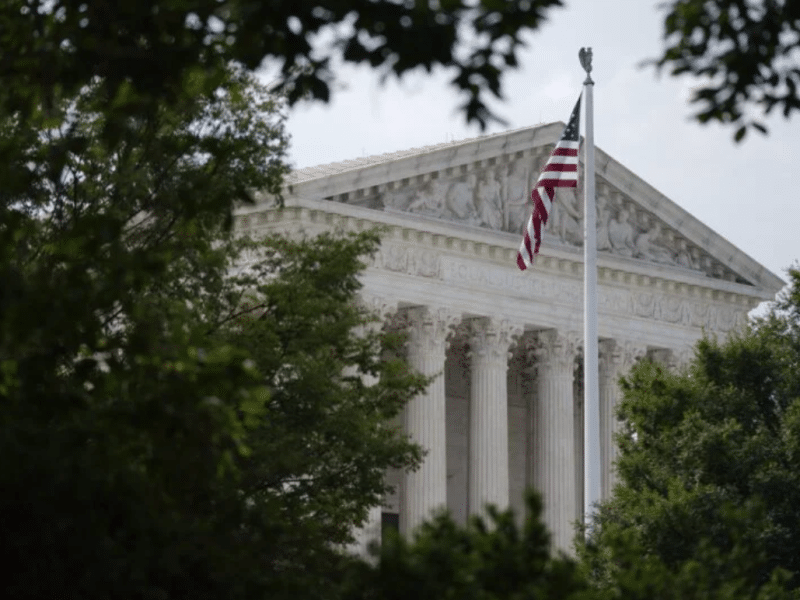
As Supreme Court Clears Way to Deport Haitians and Syrians, Faith Leaders Grieve, Prepare for What’s Next
The Supreme Court ruled that the Trump administration can end temporary protected status for Haiti and Syria, leaving hundreds of thousands vulnerable to deportation.
Monthly Pentagon Worship Service Features Catholics for First Time
Jonathan Morris, a former priest and current Fox News commentator, and Washington Nationals pitcher Trevor Williams led the service in Pete Hegseth’s absence.
Review: The Book of Love
Drawing from personal experience, theological insight, and psychological depth, Richard Beck challenges the fear-based, legalistic interpretations that have long dominated many Christian traditions.
Church
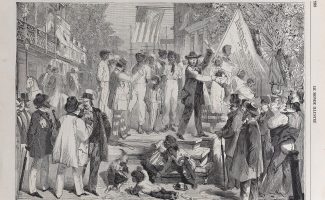
Four Years After Promising $10M for Racial Reparations, Virginia’s Episcopalians Have Little to Show
'I felt like we were kind of misled as a task force in terms of level (of) engagement,' said one member of a reparations task force of the diocese's efforts.
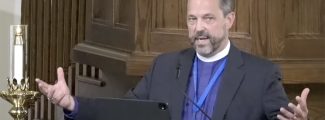
Leader of Conservative Anglican Denomination Takes Leave While Facing Misconduct Claims
ACNA Archbishop Steve Wood allegedly engaged in sexual harassment, bullied staff members, and plagiarized sermons.

‘Exvangelical’ Women Are Leaving Their Churches. But Is It Decline or Renewal?
Dissenting former evangelical Christian women are forging a path different from those who have left the church in the decades-long decline in institutional faith.
Nation
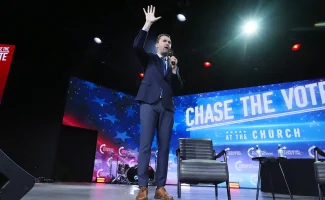
States Eulogize Charlie Kirk With New Laws Promoting Religion and Free Speech
A new Kansas law will allow college students to sue their schools for free-speech violations. In Tennessee, a new law will encourage teachers and professors to include ‘the positive impacts of religion’ in American history courses.
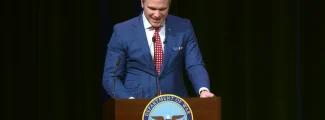
Hegseth Borrows Violent Prayer From ‘Pulp Fiction’ to Bless Iran War at April Pentagon Worship Service
Pete Hegseth, who likes to call himself ‘secretary of war,’ read a prayer during the latest government worship service that echoes a scene written by Quentin Tarantino calling for ‘great vengeance and furious anger.’

Turning Point USA’s High School Push in GOP States Meets Free Speech and Religion Concerns
The Republican administrations of Nebraska, Arkansas, Texas, Oklahoma, Montana, Florida, Tennessee, and Indiana have each announced partnerships with Turning Point USA to promote school chapters in every high school.
World
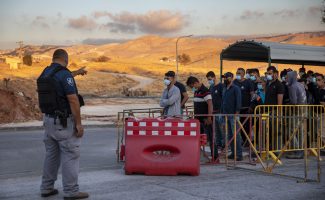
Trump Renamed the Gulf of Mexico. Pro-Israel Christian Groups Hope the West Bank Is Next.
Pro-Israel evangelicals and some members of Congress want to use the biblical names Judea and Samaria for what is now known as the West Bank.
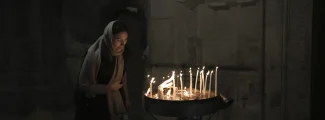
Jerusalem Christian Leaders Denounce Trump’s Plan to Take Over Gaza
Adding to the many voices in the U.S. and around the world criticizing President Trump’s proposal, the patriarchs and heads of the churches in Jerusalem issued a powerful joint statement on Friday.

Canadian Christian Leader Urges Americans to Rebuke Trump’s Attacks on Canada
In light of President Trump’s imperialistic rhetoric and the potential negative consequences for both nations, Rev. Jean-Daniel Ó Donncada, the national pastor for the Christian Church (Disciples of Christ) in Canada, released an open letter.
Editorials
Stop Being Political
Editor Brian Kaylor reflects on the claim that preachers or other Christians should stop being so political. Looking at biblical examples, he argues that living out our faith means being political (but that does not mean one must be partisan).
Reading the Bible Like Enslavers
Editor Brian Kaylor considers a common thread between two recent controversies at Baptist schools, and what this can teach us about how we read and interpret the Bible today.

Worship is Protest
Editor Brian Kaylor argues that too often we miss the political implications of worship because we’ve privatized our religious practices and compartmentalized our faith. But worship is inherently a protest.
Word&Way Voices
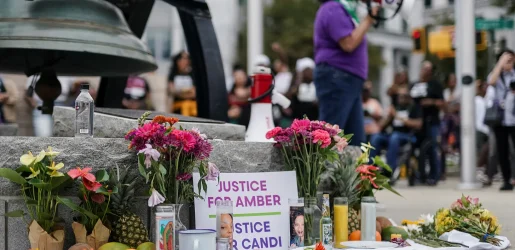
Unsettling Advent 2024, Day 10
Exploring Advent in a time of dangerous pregnancies, Angela Parker reflects on Black mothers dying preventable deaths.

Unsettling Advent 2024, Day 9
Exploring Advent in a time of dangerous pregnancies, Angela Denker reflects on how pregnancy is both incredibly vulnerable and incredibly powerful.
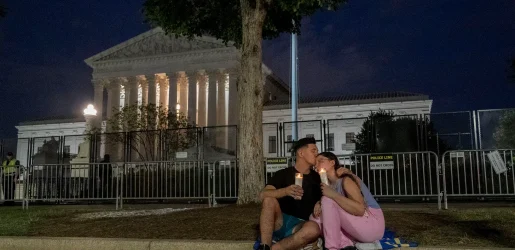
Unsettling Advent 2024, Day 8
For our first devotional on Advent in a time of dangerous pregnancies, Susan M. Shaw reflects on how John and Jesus’s births did not come without cost to the women who carried and bore them.
E-Newsletter
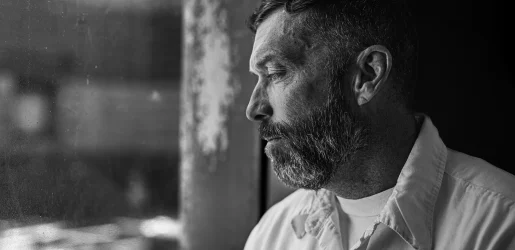
Missouri Blocks Spiritual Advisor Request for Prison Pastor’s Execution
With the execution of Lance Shockley approaching, this issue of A Public Witness unpacks the debate over his religious freedom rights for his final moments.
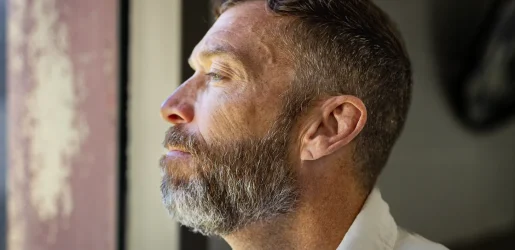
The Impending Execution of a Prison Pastor
This issue of A Public Witness looks at Lance Shockley’s extensive history of Christian leadership while in prison, as well as the role restorative justice should play in our criminal legal system.

Reading the Bible in Ways That Challenge White Supremacy and Patriarchy
Some Christians today argue that empathy is wrong, even calling it a sin and unbiblical. For Angela Parker, associate professor of New Testament and Greek at the McAfee School of Theology at Mercer University, this idea is absurd.
-
Claiming God's Name in Politics, War, & Sports
 This episode of Dangerous Dogma features a conversation between Word&Way Editor Brian Kaylor, Lutheran minister and journalist Angela Denker, and Disciples pastor and author Beau Underwood. The conversation includes discussion about a botched execution in Tennessee, religious issues in political campaigns, and Pete Hegseth's misuse of the Bible. And Beau shows off his White Sox…
 -
Backslide with Robert P. Jones
This episode of Dangerous Dogma features a conversation between Word&Way Editor Brian Kaylor and Robert P. Jones, author of the forthcoming book Backslide: Reclaiming a Faith and a Nation After the Christian Turn Against Democracy. Jones is also the founder and president of PRRI. He previously appeared on Dangerous Dogma in 2023. You can watch a… -
DHS Spies on Churches & White Sox Honor Pope Leo
This episode of Dangerous Dogma features a conversation between Word&Way Editor Brian Kaylor, Lutheran minister and journalist Angela Denker, and Disciples pastor and author Beau Underwood. The conversation includes discussion about revelations that the Department of Homeland Security has been spying in churches, a controversial golf ad, and a White Sox night celebrating Pope Leo.… -
The State of the Senate, from SC to ME to TX to KS
This episode of Dangerous Dogma features a conversation between Word&Way Editor Brian Kaylor, Lutheran minister and journalist Angela Denker, and Disciples pastor and author Beau Underwood. The conversation includes discussion about the death of Sen. Lindsey Graham as well as issues of faith and morality in Senate races in Maine, Texas, and Kansas. You can… -
Southern Baptists, the Pentagon, & UFC
This episode of Dangerous Dogma features a conversation between Word&Way Editor Brian Kaylor, Lutheran minister and journalist Angela Denker, and Disciples pastor and author Beau Underwood. The conversation includes discussion about the Southern Baptist Convention's push against women in ministry, the Pentagon changing how it codes the faith of military members, and the latest in… -
Southern Baptists, Women in Ministry, & a Billboard
In this episode, Word&Way President Brian Kaylor talks with Meredith Stone, executive director of Baptist Women in Ministry. The conversation includes discussion of efforts in the Southern Baptist Convention to further target women serving in churches and how BWIM is advocating for women (including with a billboard to greet SBC messengers next week in Orlando,… -
Divergent Visions for Rededicating the Nation
This episode of Dangerous Dogma features a conversation between Word&Way Editor Brian Kaylor, Lutheran minister and journalist Angela Denker, and Disciples pastor and author Beau Underwood. The conversation includes discussion about Rededicate 250, gerrymandering, Adam Hamilton's Senate campaign in Kansas, and the MAHA movement. You can watch a video version of the conversation here. Here are a few pieces… -
The Christian Past That Wasn't
In this episode, Word&Way President Brian Kaylor talks with Warren Throckmorton, a retired professor who has spent years debunking false claims by Christian Nationalist pseudo-historian David Barton. Throckmorton is the author of the new book, The Christian Past that Wasn't: Debunking the Christian Nationalist Myths that Hijack History. You can watch a video version of… -
Trump vs. Leo
This episode of Dangerous Dogma features a conversation between Word&Way Editor Brian Kaylor, Lutheran minister and journalist Angela Denker, and Disciples pastor and author Beau Underwood. The conversation includes discussion about President Donald Trump's attacks on Pope Leo XIV, Leo's witness against the Iran war, Trump's AI image of himself as Jesus, and the electoral… -
Fight Like Jesus with Jason Porterfield (Reissue)
In this episode, Word&Way President Brian Kaylor talks with Jason Porterfield about his book Fight Like Jesus: How Jesus Waged Peace. This episode originally aired in 2023, except for a new introduction noting a violent prayer by Pete Hegseth during a recent Pentagon worship service and Palm Sunday comments by Pope Leo XIV. Note: Don't forget…


Books
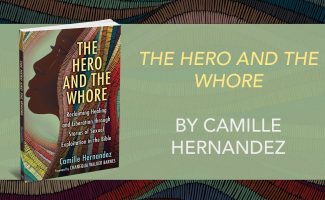
Review: The Hero and the Whore
In “The Hero and the Whore: Reclaiming Healing and Liberation Through the Stories of Sexual Exploitation in the Bible,” trauma-informed educator and minister Camille Hernandez dives deep into the Bible’s stories of abuse.

Review: Hope Restored
In “Hope Restored: Biblical Imagination Against Empire,” Walter Brueggemann points us toward understanding hope not as easy optimism but as an honest facing of the unjust structures that human beings have created and a call to lean into Scripture for

Review: The Widening of God’s Mercy
In “The Widening of God’s Mercy: Sexuality Within the Biblical Story,” Christopher B. and Richard B. Hays — son and father — take us on a journey through the Bible, helping us gain a better perspective on God and LGBTQ+
Review & Giveaway: The Contemporary Black Church
Sociologist Jason Shelton’s new book explains what has happened — and is happening — in ways that call for revising how we perceive the Black Church as an institution and social force.