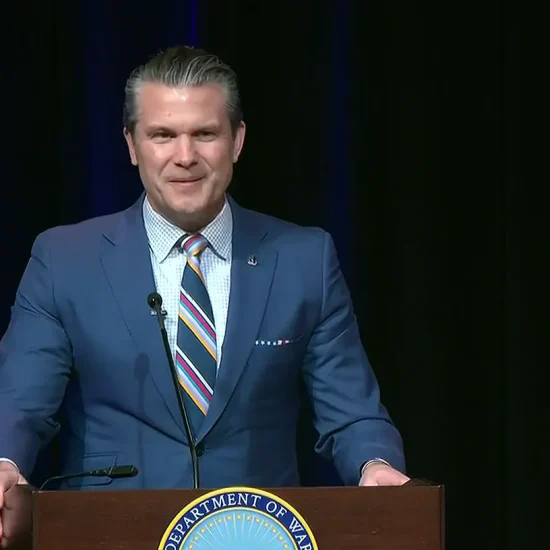
A controversial new leader in Washington, D.C., organizes worship services in a federal building, hosts the services, picks preachers to speak, invites staff and special guests to attend, and claims to do it to advance religion. That could describe Secretary of War Pete Hegseth, whose
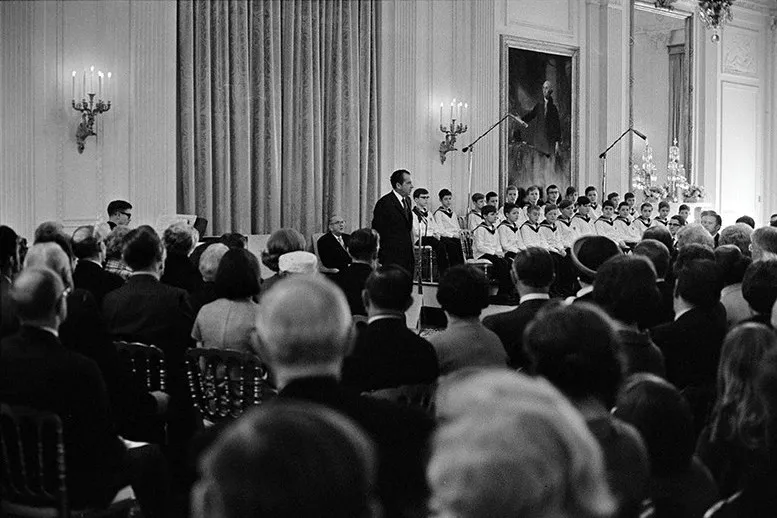
President Richard Nixon stands out among U.S. presidents. He’s the only one to resign the office in disgrace. He’s also the only one to regularly organize and lead church services inside the White House.
Started with the assistance of evangelist Billy Graham, Nixon’s services allowed him to shape church under his control. Decades later, echoes of this project are emerging at the Pentagon and the Department of Labor (with other agencies to perhaps be added to the list this year).
Hegseth has hosted seven monthly Christian worship services since May and promises to continue them this year. The most recent one featured evangelist Franklin Graham, son of Billy, heralding a “God of war” ahead of U.S. military strikes on Nigeria and Venezuela. The other monthly preachers, many with connections to Hegseth, have all come from the rightwing patriarchal slice of evangelicalism that Hegseth professes. In addition to the preachers, other special guests have attended the services, including Labor Secretary Lori Chavez-DeRemer, Agriculture Secretary Brooke Rollins, and former U.S. Rep. Dave Brat (now dean of the Liberty University School of Business). Inspired by the effort, Chavez-DeRemer in December started her own monthly prayer service for employees during work hours.
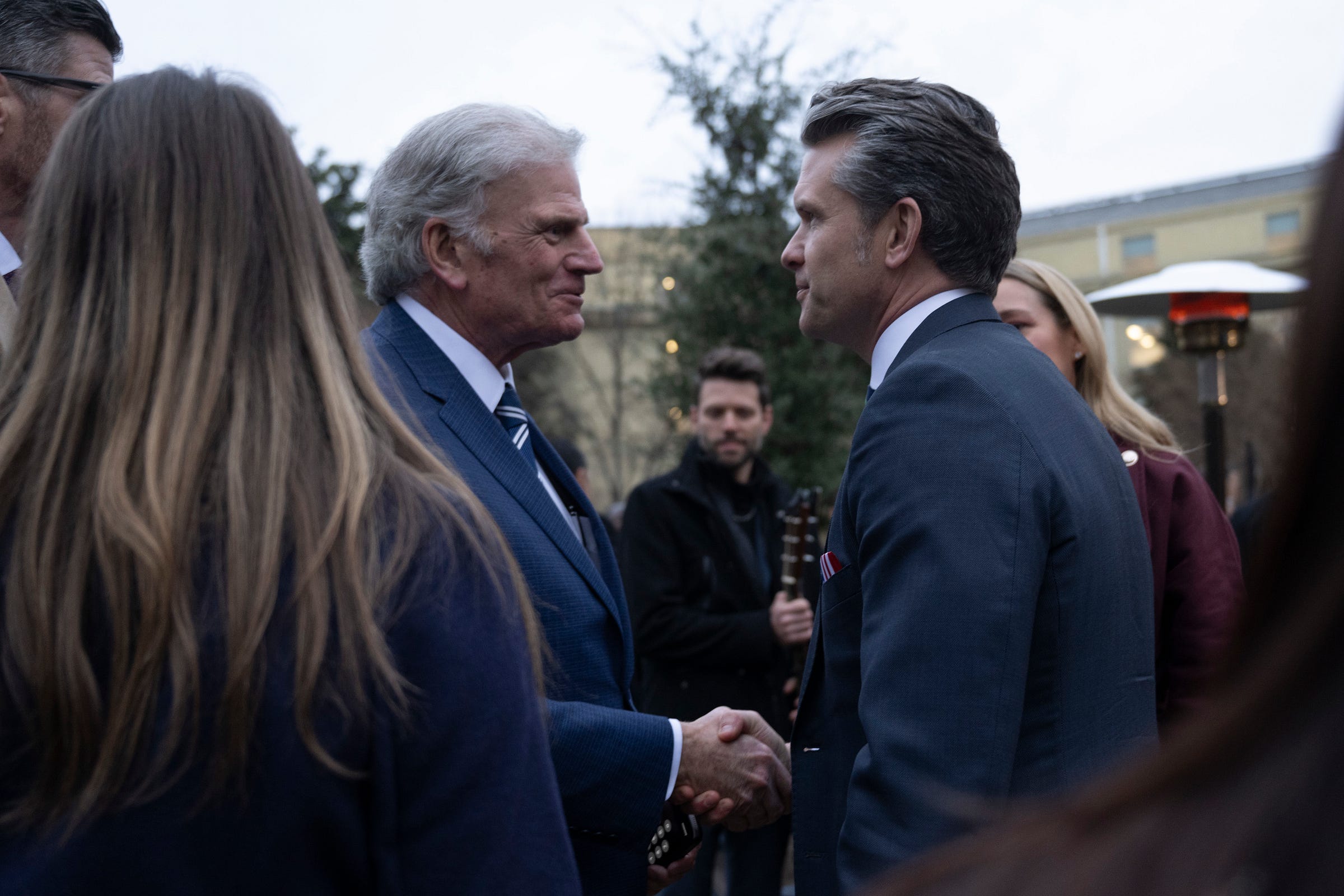
Evangelist Franklin Graham (left) shakes hands with Secretary of War Pete Hegseth during the Pentagon’s Christmas worship service on Dec. 17, 2025. (Navy Petty Officer 1st Class Alexander Kubitza, DOW/Public Domain)
With the growth of these worship services by leaders in a Christian Nationalist administration, it’s worth revisiting the most significant previous effort to craft worship services inside the federal government. So this issue of A Public Witness looks back at the church of Nixon and the dangers of state-run services.
All Hail the Power
Holding worship services in the White House wasn’t a sign of Nixon’s piety. The man who later shocked the nation with his profanity and vulgarity on his secret Oval Office tapes was more concerned with his image and power.
“Nixon didn’t like church,” historian and journalist Daniel Silliman noted in his excellent book, One Lost Soul: Richard Nixon’s Search for Salvation. “Most of his adult life he avoided church if he could. He never joined a congregation. He never gave significant time to a church. He went long stretches without attending any service of any kind, and when he had had to go, he generally treated it like an unpleasant chore.”
So why hold services in the White House? Because then he could control church. Nixon feared that if he attended services somewhere as president, journalists and others might judge him — like watching to see if he knew the words to a hymn or kept his eyes closed during a prayer. And he especially feared a pastor might use the sermon to publicly chastise him. So he tried a different approach.
“He crafted a church that could only commend him, and never condemn. It could bestow respect, never criticize,” Silliman wrote. “He took control of religion in his life so it wouldn’t hurt him. He made it safe. Made it his own.”

The rest of this piece is only available to paid subscribers of the Word&Way newsletter A Public Witness. Subscribe today to read this essay and all previous issues and receive future ones in your inbox.