Right before Jesus taught his disciples a sample prayer, he gave them a couple of general pointers about how to pray — and how not to. Such as praying at home instead of out in public to be seen. But some Christians want to skip over that part and use the Lord’s Prayer as a public protest slogan against the religious liberty rights of others. Yes, people have been angrily shouting the Lord’s Prayer as an attempt to drown out other people.
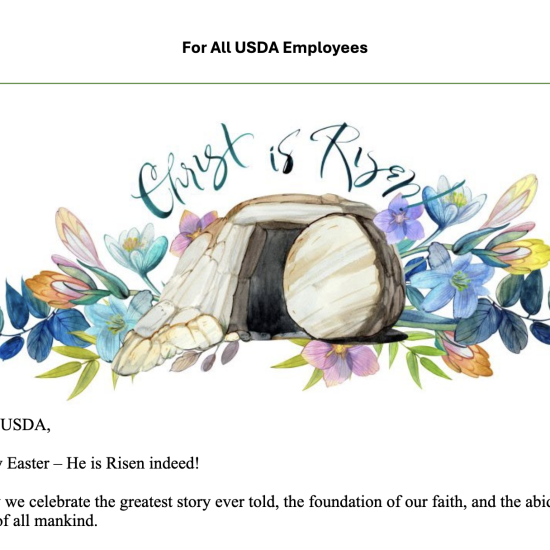
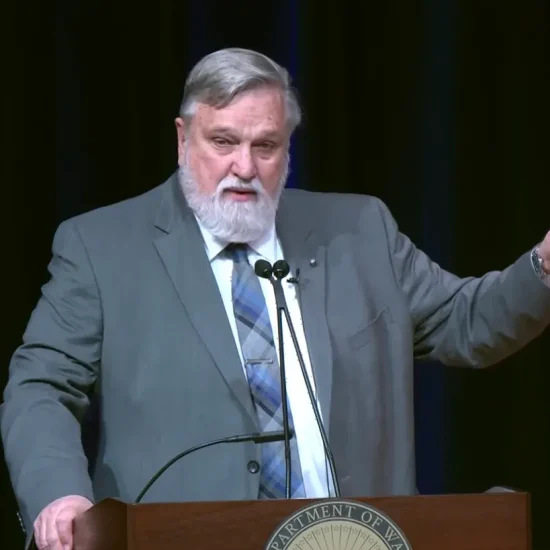
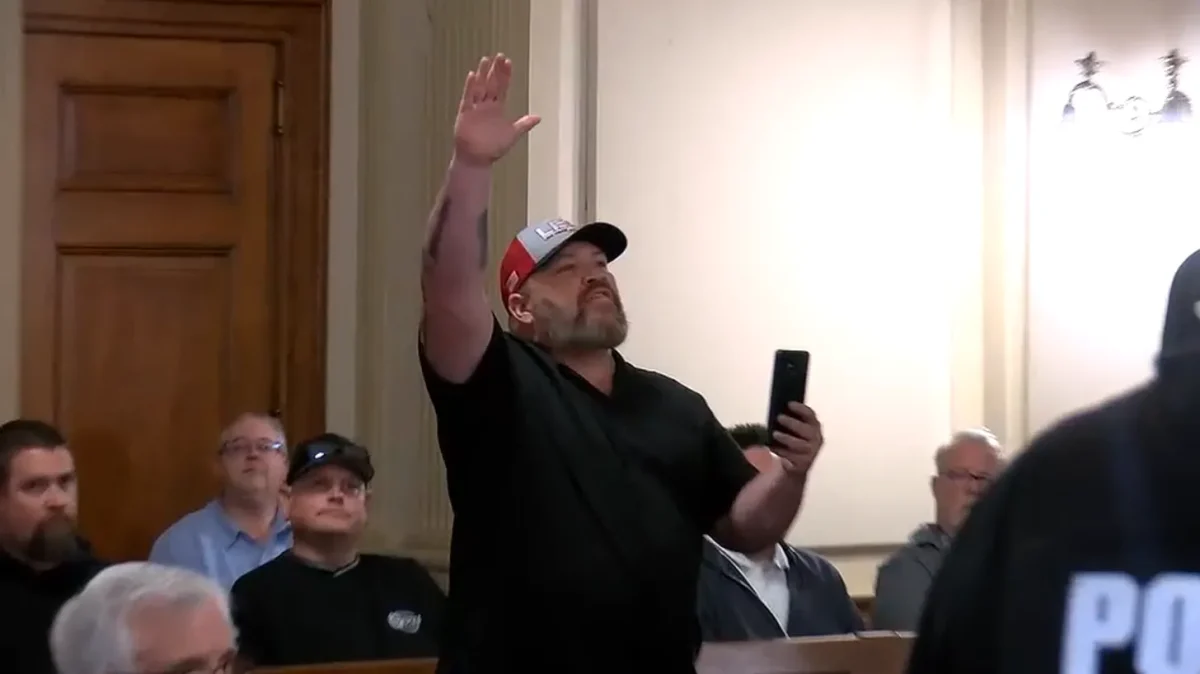
Like during a “Christian Crusader March” in Dearborn, Michigan, in August. The rally was led by Jake Lang (an insurrectionist who was charged with attacking police officers on Jan. 6, 2021, but then pardoned by President Donald Trump) and Lorenzo Sewell (a rightwing pastor who has prayed at Trump events and at worship services held in the headquarters building of the U.S. Department of Agriculture). On the way into a city council meeting to spew anti-Muslim rhetoric, Lang shouted to the crowd, “Jesus is our King,” “America is for Christians,” and the words of the Lord’s Prayer.
This weaponizing of the most famous prayer in the Christian faith has also shown up elsewhere in recent weeks, including at city council meetings in Iowa and Florida. In those moments, the words Jesus taught us became not a prayer about submitting to God but a demand that the government submit to an extreme version of Christianity.
Just like when Christian Nationalists co-opt the Bible to justify their quest for power, the misuse of a sacred prayer must not be overlooked or condoned. So this issue of A Public Witness treks to two recent city council meetings in addition to a couple of other protest moments to unpack a profane and hateful way to use the Lord’s Prayer.
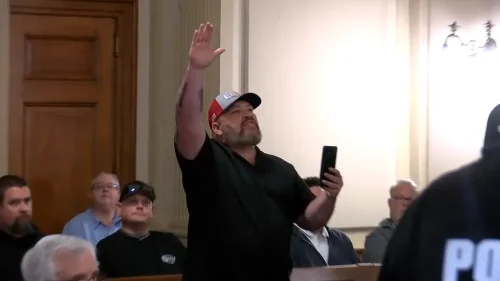
Screengrab as a protester shouts the Lord’s Prayer during a city council meeting in Ottumwa, Iowa, on Nov. 3, 2026.
Heckler’s Veto
Last month, I wrote about “Hail Satan” prayers at the start of city council meetings in Battleground, Washington, and Ottumwa, Iowa. The latter particularly sparked controversy as it went viral on social media after a large rightwing account highlighted it. In both cases, Christian Nationalists had pushed to create a policy to open their local government meetings with prayers, thus creating the opportunity for others to pray as well. Rather than accepting a diversity of prayers — or, better yet, deciding it would be best to just skip prayers at government meetings — some people are protesting the prayers they don’t like.
The rest of this piece is only available to paid subscribers of the Word&Way newsletter A Public Witness. Subscribe today to read this essay and all previous issues and receive future ones in your inbox.