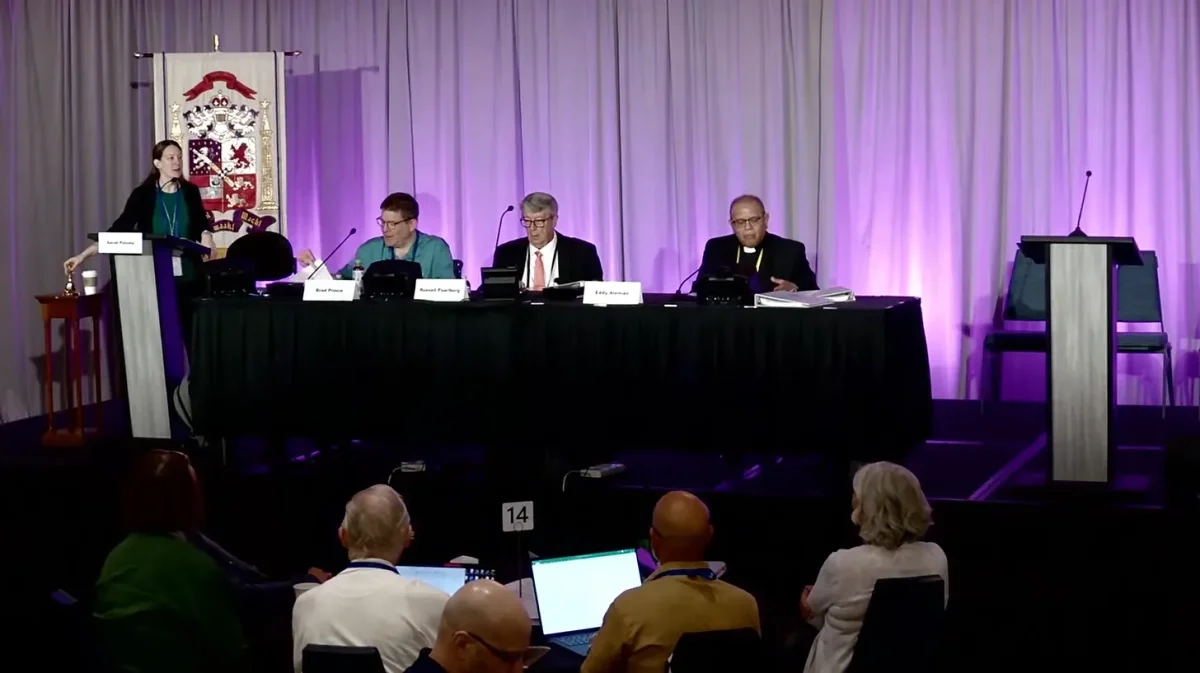
On Friday (June 12), the general synod of the Reformed Church in America voted to condemn Christian Nationalism, declaring that the ideology “represents a false church, fundamentally distorting the gospel.” The move by the historic mainline Protestant denomination makes it the latest group to speak out against Christian Nationalism, with regional United Methodist bodies and two Presbyterian denominations among those also addressing the issue this summer.
The RCA traces its roots to the founding of a Dutch Reformed congregation in New York City in 1628, a congregation that expanded to various church buildings and continues today in four Collegiate churches in the city. One of them, Marble Collegiate Church, was led for decades by Norman Vincent Peale, the author of The Power of Positive Thinking and the pastor who had a significant influence on both Richard Nixon and Donald Trump as they attended the church. A branch of the Dutch Reformed Church until 1819, the American group adopted the Reformed Church in America name in 1867 and is now headquartered in Grand Rapids, Michigan.
Meeting for its general synod in Nashville, Tennessee, the RCA statement on Christian Nationalism passed with 96% approval as they called “on all Christians to renounce this error and work for justice, wholeness, and peace for all.”
“We have a necessary voice in the public debate but, as Christ’s body, gathered around Word and sacrament, we must not conflate national identity with God’s reign, lest we mute our prophetic voice and replace discipleship to Jesus Christ with political ambition,” the statement explains. “We belong to Jesus Christ, not to anyone or anything else. We are called to influence the public square through persuasion rather than coercion, to work for unity among all people and nations, to reconcile everyone, and to stand in God’s Spirit without the corrupting influence of temporal power.”
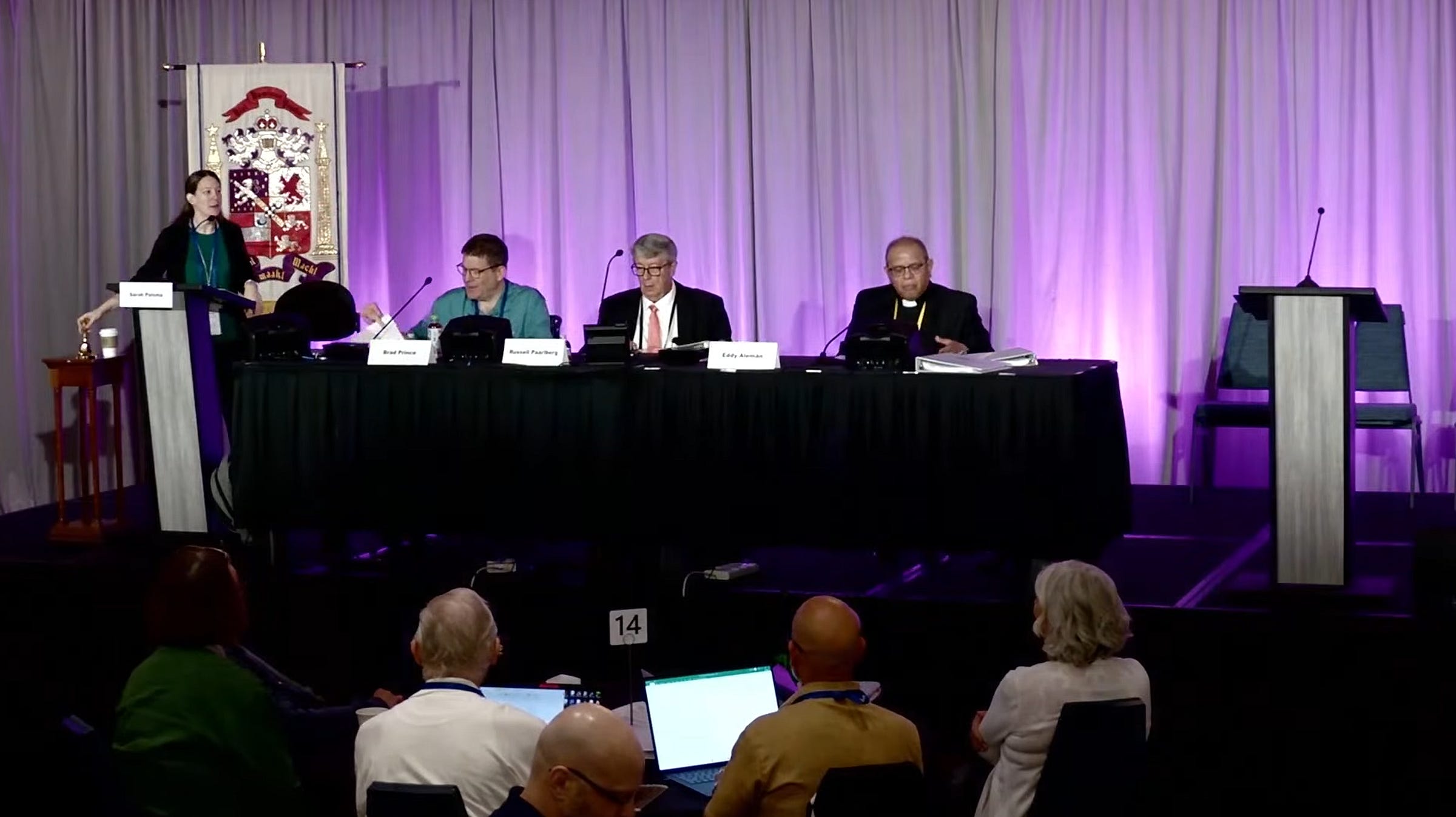
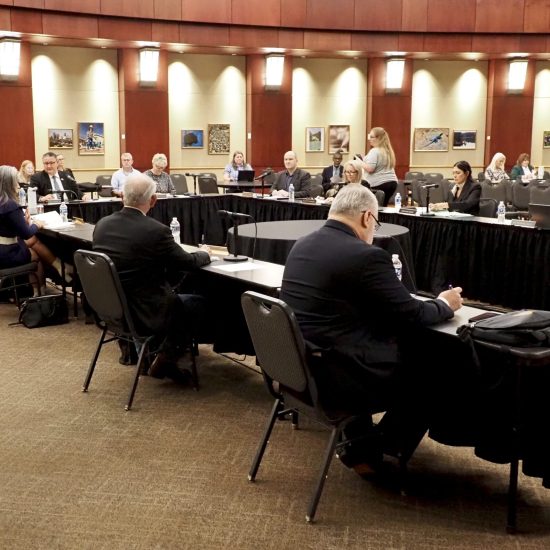
Screengrab of the annual meeting of the general synod of the Reformed Church in America in Nashville, Tennessee, on June 12, 2026.
Although the RCA is a small mainline denomination — with fewer than 600 congregations — it’s still important when a group decides to speak collectively and publicly against Christian Nationalism. And while their statement unfortunately does not acknowledge any complicity, it’s still good for mainline Protestants to address this ideology since, as Beau Underwood and I documented in Baptizing America, mainline Protestants helped build Christian Nationalism (and that’s why we especially urged denominations and churches to learn about and repent of their own ways in pushing it).
The RCA is not alone. We’ve previously covered other denominational statements, including those by the Christian Church (Disciples of Christ) in 2023, the Evangelical Lutheran Church in America in 2024, the Episcopal Church in 2024, the United Methodist Church’s General Board of Church and Society in 2024, and the Baptist World Alliance in 2024 (as I led the resolutions committee).
Other denominational bodies have also been working on resolutions and reports this summer to tackle Christian Nationalism, including both the Presbyterian Church (U.S.A.) and the Presbyterian Church in America, as well as various regional bodies of the United Methodist Church. So this issue of A Public Witness looks at how these groups are speaking out against what the RCA rightly called a distortion of the gospel.
Presbyterians In, Not Of, America
The two largest Presbyterian bodies in the United States have significant differences. The largest, the Presbyterian Church (U.S.A.), is a mainline denomination with more liberal positions. The other, the Presbyterian Church in America, is an evangelical group that’s much more conservative. But both are reckoning with Christian Nationalism.

The rest of this piece is only available to paid subscribers of the Word&Way newsletter A Public Witness. Subscribe today to read this essay and all previous issues and receive future ones in your inbox.