“This Department of Justice will not tolerate a weaponized bureaucracy that chills First Amendment activity.”
That’s what U.S. Attorney General Todd Blanche declared on Aug. 27. The next day, his department defended the bureaucracy of the Department of Homeland Security for spying on churches, insisting there were no First Amendment protections in the case for the congregations (including a Baptist church covered by a federal injunction).
Why a disconnect exists between his claim about stopping “a weaponized bureaucracy that chills First Amendment activity” and defending spying on churches was answered in the next sentence of his statement: “Our working group’s efforts to investigate weaponization under the previous administration will continue.”
While the DOJ attempts to accuse the Biden administration of an anti-Catholic bias for monitoring two rightwing priests, the DOJ is defending secretly spying on Lutheran, Baptist, Episcopal, and Unitarian Universalist churches — including recording in a church sanctuary and staking out a church’s building on Sundays.
The DOJ’s inconsistent attitude about the sanctity of church buildings showed up in court filings this week in the case of 38 individuals charged after a protest at a Southern Baptist church in St. Paul, Minnesota, where one of the pastors is also a local ICE leader. Meanwhile, denominational groups — that in February won an injunction protecting their congregations from warrantless DHS enforcement actions — filed a response on Sept. 1 to DHS’s arguments over whether DHS should be held in contempt for repeatedly surveilling a church covered by the injunction. The religious groups (which include American Baptist Churches USA, Alliance of Baptists, Metropolitan Community Churches, and several regional synods of the Evangelical Lutheran Church in America) are requesting a judge to force DHS to turn over documents about any surveillance at other protected churches and create new procedures to prevent additional incidents.
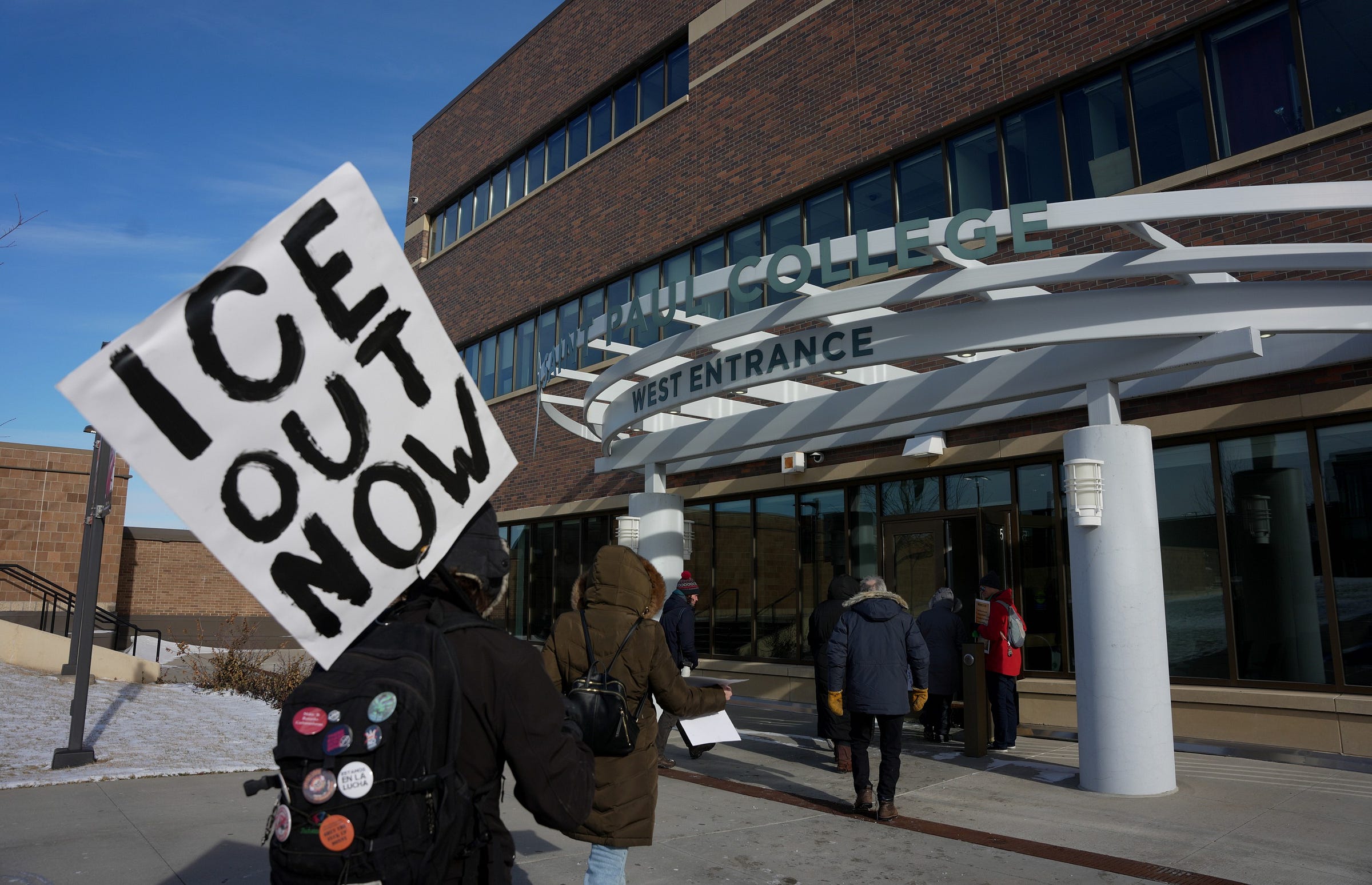
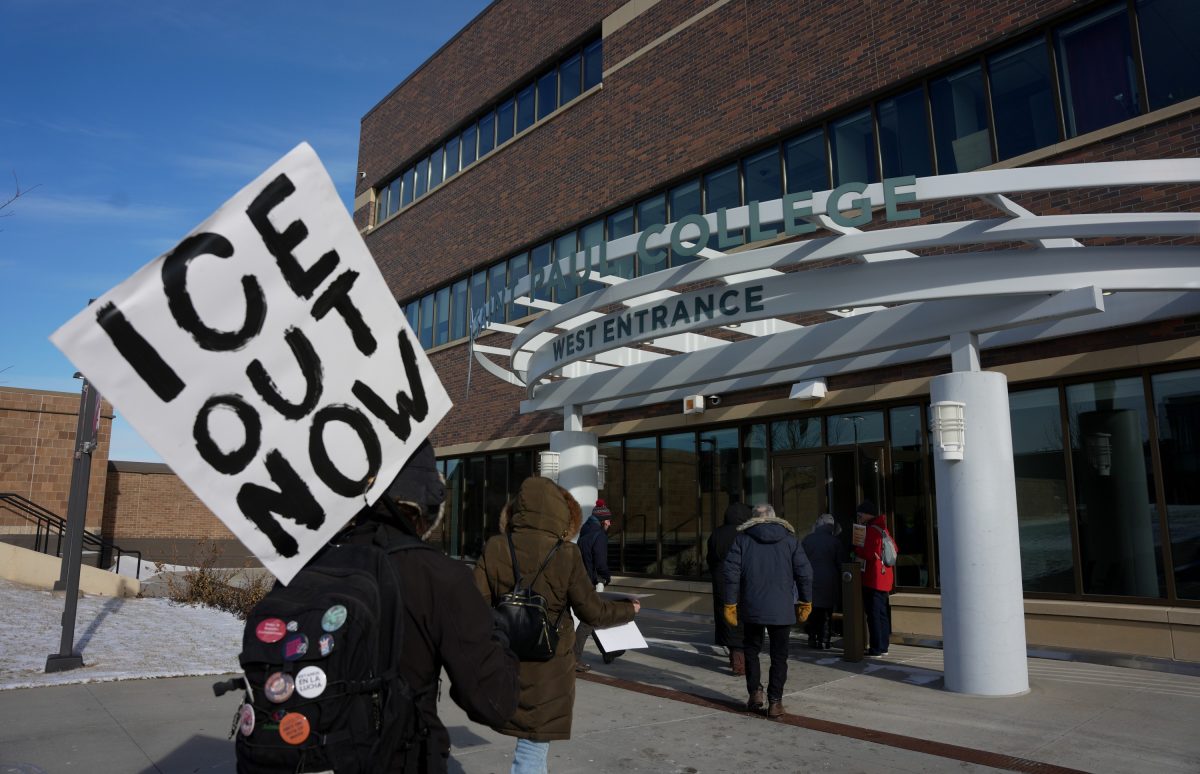
People arrive for a rally in St. Paul, Minnesota, on Jan. 19, 2026. (Angelina Katsanis/Associated Press)
As debates swirl about DHS and DOJ actions in federal courtrooms in Minnesota and Massachusetts, this issue of A Public Witness unpacks the newest developments from the DOJ’s new “weaponization” report, the church protest case in Minnesota, and this week’s filing from denominational groups in the injunction case in Massachusetts.
‘Zero Tolerance’
Even as multiple denominations accuse the DHS and DOJ of actions they insist violated their First Amendment rights, the DOJ claims it is ending the so-called “anti-Christian bias” of the Biden administration. Unlike the recent actions by DHS agents, the recently released DOJ report does not document an incident of federal agents secretly entering a church. The report covers a controversial investigation by the FBI Field Office in Richmond, Virginia, into the potential connections between “racially or ethnically motivated violent extremists” and “radical-traditionalist Catholic ideology.”
As the FBI investigated an individual for violent actions and discovered threatening religious rhetoric in his writings, they discovered he attended a church affiliated with “a nonmainstream Catholic group.” The group in question is the Society of St. Pius X–Marian Corps, which is a breakaway group from the Society of St. Pius X, which is itself a breakaway group from the Roman Catholic Church. Earlier this year, Pope Leo XIV excommunicated all members of the SSPX.
The new DOJ report describes how FBI agents in 2022 and 2023 interviewed two SSPX-MC priests about the target of their investigation since he called himself a “radical traditional Catholic Clerical Fascist.” Additionally, agents investigated the backgrounds of the priests, looked at publicly available sermons, and surveilled one of the priests.
The rest of this piece is only available to paid subscribers of the Word&Way newsletter A Public Witness. Subscribe today to read this essay and all previous issues and receive future ones in your inbox.