NOTE: This is adapted from remarks by Rev. Nathan L. Taylor, executive director of the Virginia Baptist Historical Society, delivered during an Oct. 4, 2026, ceremony at the Historic Polegreen Church in Hanover, Virginia, commemorating the 1776 Dissenters’ Petition of Ten Thousand Names.
In a day before the United States, when we had a king in Virginia, our forebears were responding to an awakening. They were risking persecution at the hands of the authorities, at the hands of fellow Christians who used the power of the government to control those with whom they did not agree. Not only were Baptist ministers put in jail for preaching without a license, but Baptist laypersons were persecuted on multiple levels, being fined for not attending worship, having dissenter prayer meetings broken up violently, and worse. You see, one’s British subjecthood was implied in those infant baptisms at the Established Church.
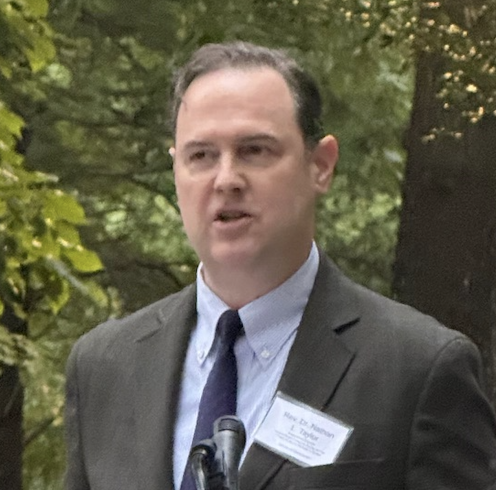
Rev. Nathan L. Taylor
And so, for those faithful Baptists who might refuse to take their children to be baptized by a church they didn’t believe in, who said, “I want to reserve for my child freedom of conscience — the right to choose faith for themselves,” their very patriotism as Englishmen might be called into question. In listening to God rather than to what they saw as a flawed church backed by those in power, they became suspect. And so, by the late 1760s and 1770s, more than 40 Baptist ministers were imprisoned in the horrid colonial jails across Virginia, where, confounding their captors, they preached through the bars anyway.
Of course, churches sprang up in those places where the Baptists preached from jail. Their numbers continued to grow. Thomas Jefferson left us his observation, writing around 1781 in Notes on the State of Virginia: “The Anglicans retained full possession of the country about a century. Other opinions began then to creep in, and the great care of the government to support their own church, having begotten an equal degree of indolence in its clergy, two-thirds of the people had become dissenters at the commencement of the present revolution.” While two-thirds is certainly an exaggeration, it gives us his perception at the time.
Likewise, James Madison knew the plight of the dissenters, remarking to his friend, William Bradford Jr. in January of 1774: “That diabolical Hell conceived principle of persecution rages…This vexes me the most of any thing whatever. There are at this time in the adjacent County not less than 5 or 6 well-meaning men in close Gaol for publishing their religious Sentiments which in the main are very orthodox.” Of course, these were Baptists over in Culpeper, the county that may have imprisoned more of them than any other. The lock and key of that jail are perhaps the most precious artifacts preserved by the Virginia Baptist Historical Society. Eventually, Culpeper Baptist Church was built on the site of the jail, and the congregation remains a growing, vibrant church not far from that location today.
There were several threads of Baptist origins coming together in those days. At the risk of oversimplification, there were Regular Baptists coming from the North and Separate Baptists coming back into Virginia from the South. Church historians have described them as “Order vs. Ardor.” The Regular Baptists, while zealous in their own way, were more Calvinistic and focused on church order, while the Separate Baptists were passionate preachers who were more concerned with “the immediate teachings of the Spirit,” than with fine points of doctrine. Although they eventually would unite, it was the General Association of Separate Baptists in Virginia who were at the leading edge of the petition movement for full religious liberty in October of 1776.
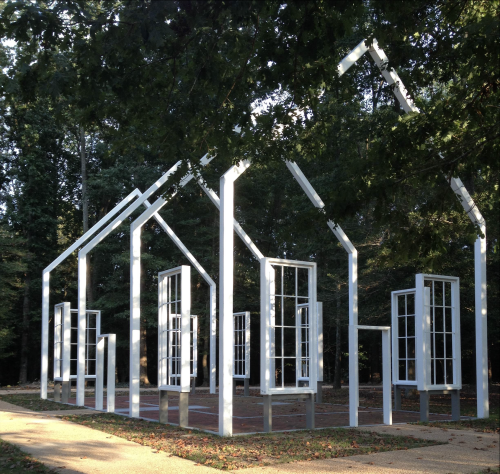
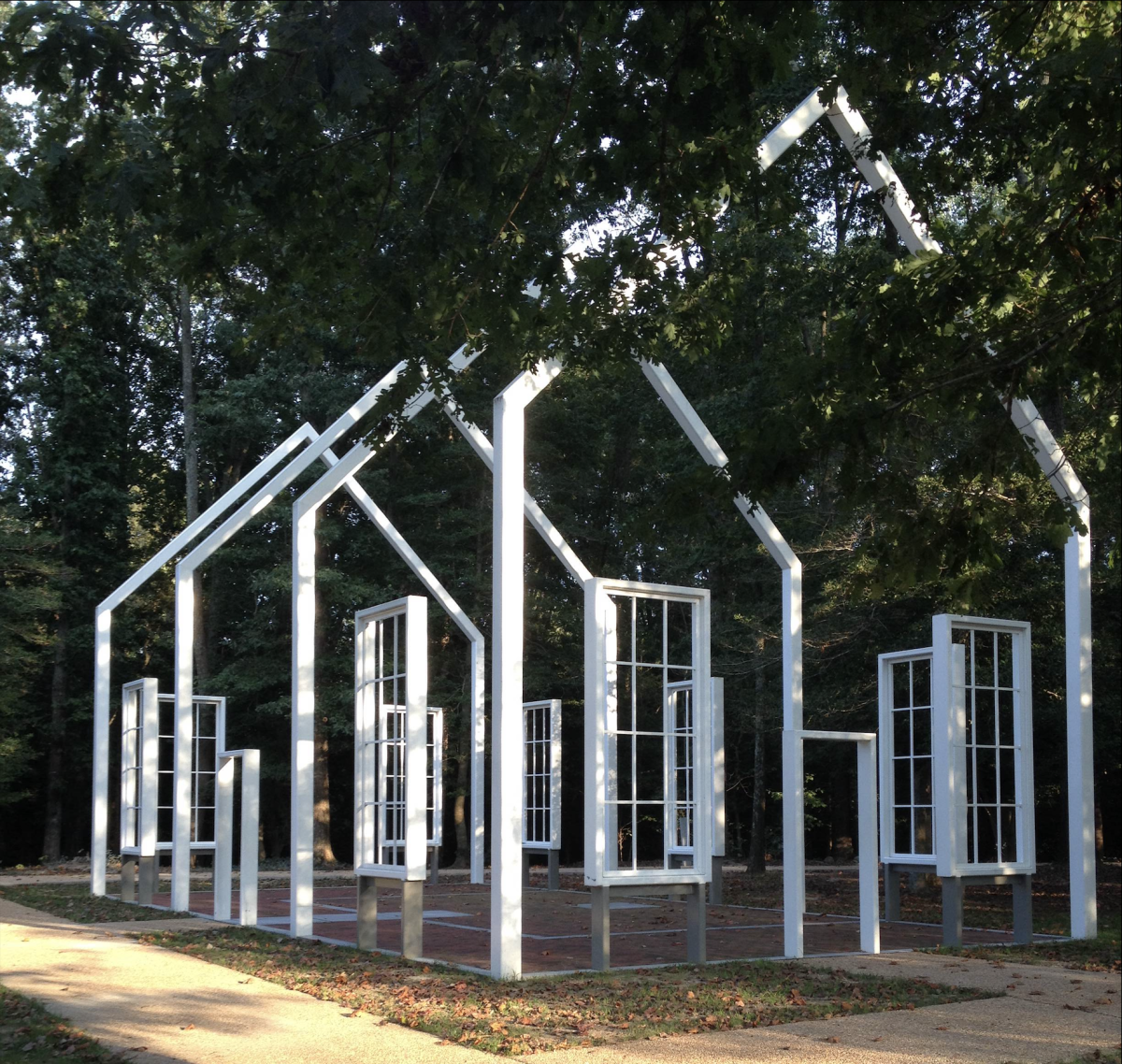
The Polegreen Church, also known as the Hanover Meeting House (and locally as the “ghost church”), is the site of what is possibly the first non-Anglican church in Virginia. An open-air design showing the historic structure’s former dimensions has been erected at the site after the Confederate army burned it down during the Civil War. (cropped from a photo by Nickmorgan2, CC BY-SA 3.0)
Yet, why was it necessary? Why were the Baptist dissenters the recipients of such violent hostility from an unholy alliance of church and state? What about the Act of Toleration? Didn’t the earlier work of leading Presbyterian minister Samuel Davies, proving the application of the law in Virginia and the right to dissenter meetinghouses, clear all of this up?
First, we must remember that the 1689 law was an Act of Toleration for Protestant Dissenters. And so it was exactly that … for Protestants. Not for Catholics. Not for the wide panoply of the world’s religions, and not for skeptics, like Jefferson and his developing Unitarian views. In other words, “No Trinity, no toleration.” Thus, under such a regime, the government (or symbolically, “Caesar” in New Testament language) got to decide whose faith was legitimate and whose was not, what they could do, and when and where they were allowed to do it.
Over time, in response, a spectrum of dissenters developed. We might think of it as those who, like the Presbyterians and to a degree the Regular Baptists, trended toward exercising dissent within the law as much as was possible (who would bother to apply for the licenses); and those like the Separate Baptists, who objected to the licensure requirements and the very idea that any human authority had the right to come between them and the lordship of Christ and the mission to which he was calling them. And so, when push came to shove, they would rather go to jail and preach through the bars than disobey God.
We know very well what they thought about the toleration system. We see it in the language of the Oct. 16, 1776, Ten Thousand Names Petition.
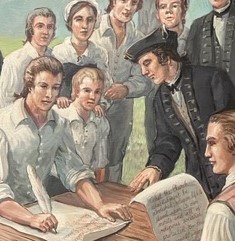
Sidney E. King, Signing of Petitions (1990), detail. Copyright, Virginia Baptist Historical Society. Courtesy, VBHS.
We see it in the words of Rev. John Leland, a New England Baptist who became active in Virginia for the next part of the disestablishment struggle, who made his views plain: “The liberty that I contend for, is more than toleration. The very idea of toleration is despicable; it supposes that some have a pre-eminence above the rest, to grant indulgence; whereas, all should be equally free, Jews, Turks, Pagans and Christians.” He didn’t mince words, stating further, “No national Church can, in its organization, be the Gospel Church … The notion of a Christian commonwealth should be exploded forever.” I would encourage you to read the whole passage, but we get the picture.
Interestingly, as a New Englander sojourning in Virginia, Leland was friends with Isaac Backus, who helped American Baptists recover the story of the founder of Rhode Island and the First Baptist Church in America, Roger Williams, who had declared in the 1600s that “whole nations are no churches under the gospel.” Or as Baptist historian Bill Leonard paraphrases him: “There are no Christian nations, only Christian people, bound to Christ, not by citizenship but by faith.”
Do you see a theme? The bold Virginia Baptists stood in a line of continuity with their movement going back to the beginning, not to mention their persecuted forebears in England.
Interestingly, while the Virginia Baptists and Presbyterians had their differences and would have a few more in the years ahead, their convictions as voiced in the petition movement were perhaps more aligned than ever, in the fall of 1776. Note the brilliance of the language calling for full disestablishment in the Memorial of the Hanover Presbytery, the petition dated Oct. 24, following soon after the Oct. 16 Dissenters’ Petition:
“… Neither can it be made appear that the Gospel needs … such civil aid. We rather conceive that when our Blessed Saviour declares his kingdom is not of this world, he renounced all dependence upon State Power; and as his weapons are spiritual, and were only designed to have influence upon the judgment & heart of man, we are persuaded that if mankind were left in the quiet possession of their unalienable religious privileges, Christianity, as in the days of the Apostles, would continue to prevail and flourish in the greatest purity, by its own native excellence, and under the all-disposing providence of God.”
In other words, in the Dissenter vision for a new reality, the last thing they wanted was assistance from the government in doing the Lord’s work, as if the Lord Jesus needed propping up from Caesar. They had a lot more faith than that.
The Baptist petitions overall did not emerge out of a vacuum but were the outcome of a prayerful meeting of the Separate Association held at DuPuy’s Meetinghouse in Powhatan in August 1775, during which they resolved to circulate petitions more than a year before the moment that we remember today. What a moment it must have been, when those early representatives of the Separate Baptist Association submitted the massive petition to young delegates like Jefferson and Madison.
While is difficult to know unequivocally which of the appointees were present in Williamsburg on or around Oct. 16, 1776, we do have an interesting letter from Jeremiah Moore to Jefferson, writing many years later, in which he recalled: “the part you took against the Religious Establishment when I had the honour with others of putting a petition into your hands Signed by 10,000 — Subscribers praying the disolution of those Tyrannical Chains Still lives in my memory — and has Sometimes afforded me pleasure in being able to Say without doubt that you were a friend to religious liberty.”
Of course, poignantly, through all of this, we must ever recognize that this earth-changing movement for religious freedom, even in its recognition of all faiths and none, remained a sort of “freedom for some,” as long as Virginians of color, especially African American and Indigenous communities, still struggled for freedom in all of its forms in the wake of the unfinished Revolution of 1776. Thus, we acknowledge the incomplete fulfillment of such promises and the open-ended nature of the quest for religious freedom, while recalling such critical gateways that coalesced with future moments of courage, through the sacrifice of so many, pressing forward in each generation.
May all of us endeavor to keep faith free for the future, for those of all faiths, and even none, that genuine faith may always thrive, even when we may disagree. We are going to need one another, brothers and sisters.