APPOMATTOX, Virginia (RNS) — The sign on the edge of Appomattox announces the rural county of 17,000 is the site “where our nation reunited.” But just down the road on an October afternoon, a bitter confrontation over religion, LGBTQ+ rights and the future of the public library exposed divisions in this historic community.
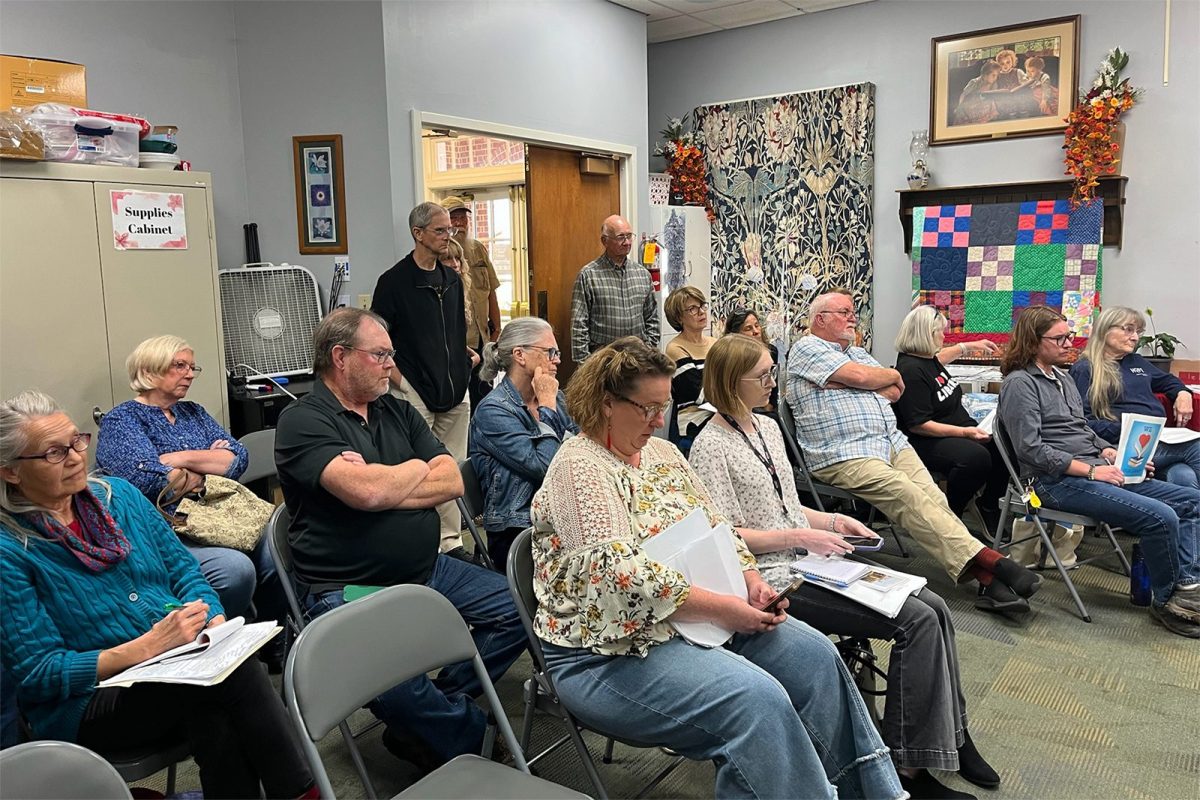
People attend a meeting of the J. Robert Jamerson Memorial Library board on Oct. 6, 2026, in Appomattox, Va. (RNS photo/Aleja Hertzler-McCain)
“You’re a wolf in sheep’s clothing,” said Martha Charte, a retired library employee, pointing at the Rev. Paul Michael Raymond, the new library board chair. Members of Raymond’s congregation, Reformed Bible Church, stood guard by the door of a small meeting room of the J. Robert Jamerson Memorial Library — one of them with two handguns visible on his hips.
Over 150 years after Confederate General Robert E. Lee surrendered to the Union forces in Appomattox in what many Americans remember as the end of the Civil War, the county is embroiled in another conflict — the culture wars over the role of faith in government and LGBTQ+ people in public life.
In the past five years, clashes over the availability of books containing LGBTQ+ content across the U.S. have accelerated. Conservative Christians have channeled their efforts to move beyond book banning to pursue more sophisticated strategies to achieve their goals, such as changes to library funding and governance. In some cases, they’ve flirted with closing their local library altogether.
But in Appomattox, as with other such conflicts across the country, Christians also have led efforts to defend the local library. “We need to defend the reputation of Jesus Christ,” said the Rev. Ruth Perry, a United Methodist minister who lives in Appomattox and pastors two churches nearly an hour’s drive east. Perry said that it was important to oppose the dehumanization of “my LGBTQ neighbors.”
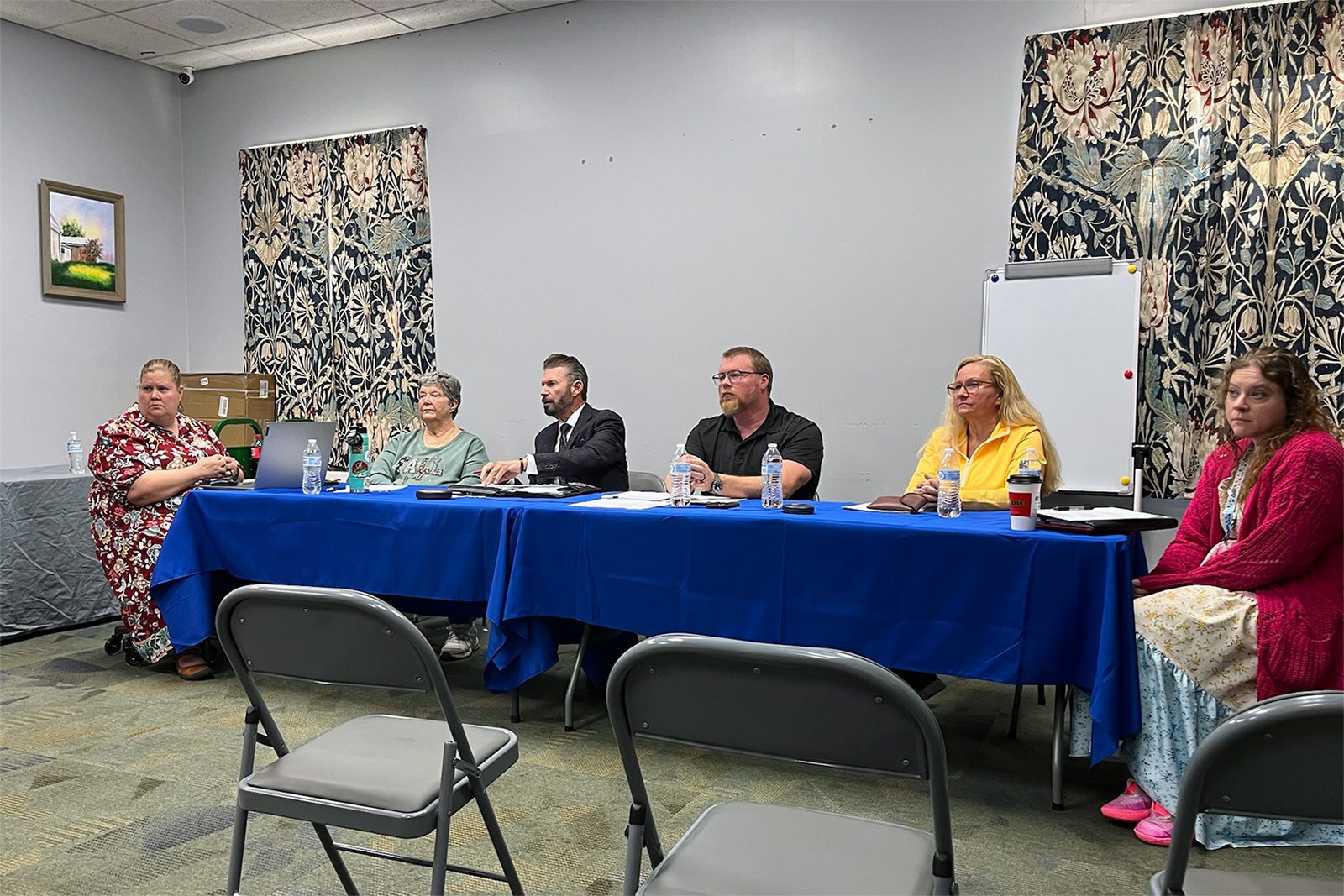
Members of the J. Robert Jamerson Memorial Library staff and board listen to a comment during the board meeting Oct. 6, 2026, in Appomattox, Va. From left to right: Cindy Scheu, Susan Williams, the Rev. Paul Michael Raymond, Neil Selz, Amanda Scott and Jenny Deaner. (RNS photo/Aleja Hertzler-McCain)
After vocal opposition at the Oct. 6 meeting, which had been scheduled to proceed without public comment, the library’s board passed new bylaws that allow it to refuse to comply with state funding requirements, potentially putting some of the library’s resources at risk. Last year, the state provided over 30% of the library’s budget and is projected to cover 20% this year.
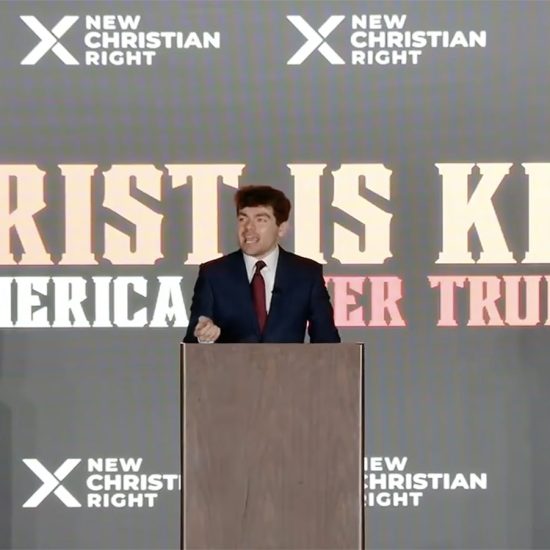
“We’ve been gaslit,” said Raymond, who is described on the website of The New Geneva Leadership Academy as a motivational speaker who “gets the listener zealous to carry out the dominion mandate in their own communities.” The academy is an educational program run out of Raymond’s church that features courses like political theology and Christian history.
He said the bylaw changes are just to “take on a more active oversight position.”
“We’re not looking to ban books. We’re not looking to censor books. We’re not looking to discriminate,” Raymond said.
Library funding becomes a battleground
John Chrastka, the executive director at EveryLibrary, an organization helping grassroots groups oppose book banning and fight for library funding, called the proposed bylaw changes “highly irregular.” Potentially risking a portion of the library’s funding formula is “irresponsible,” he added.
But while the changes to the bylaws might be unusual, religious conflict over a library is not, Chrastka said. “ The culture war has come to libraries in the last couple years,” he said.
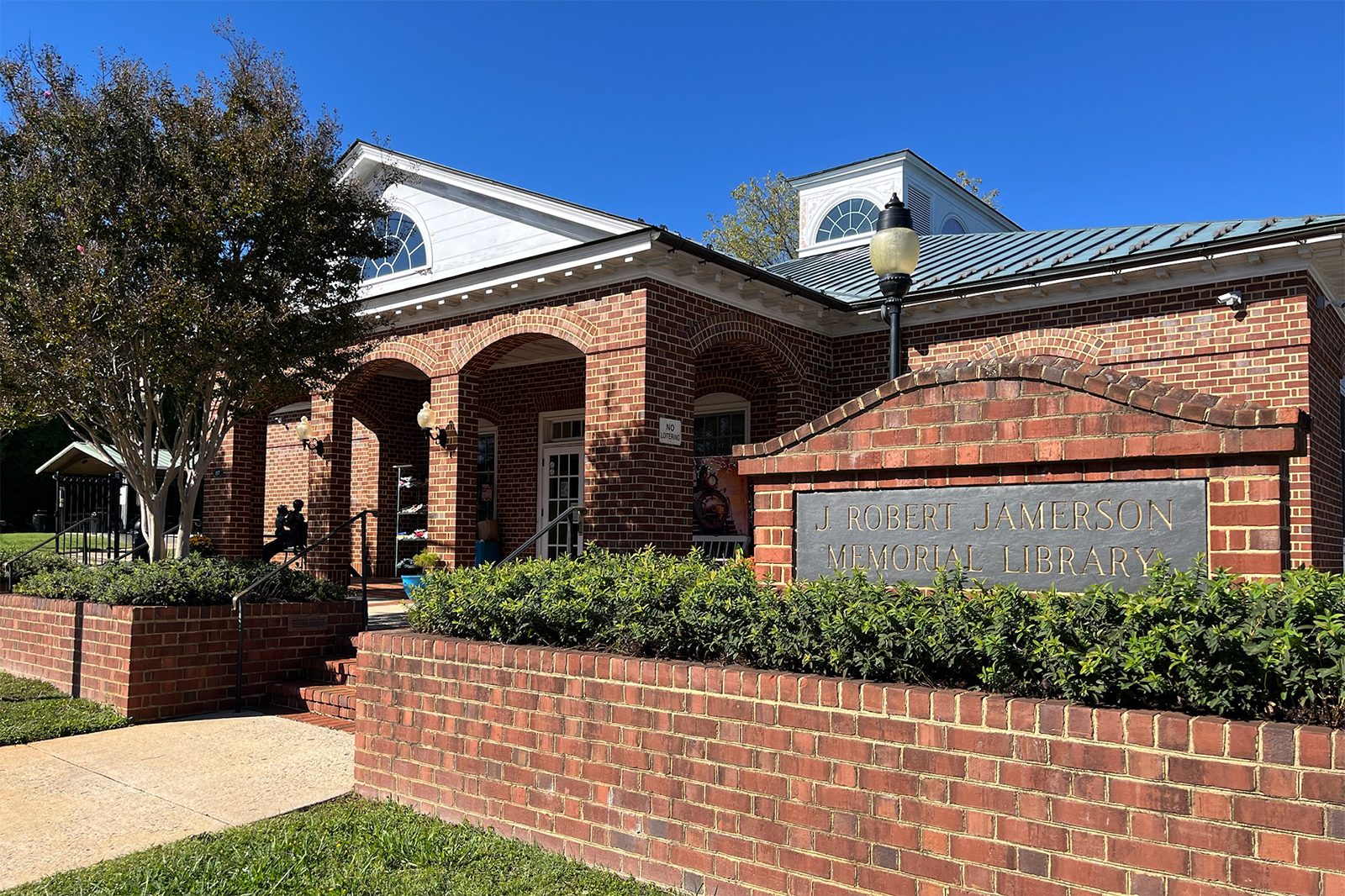
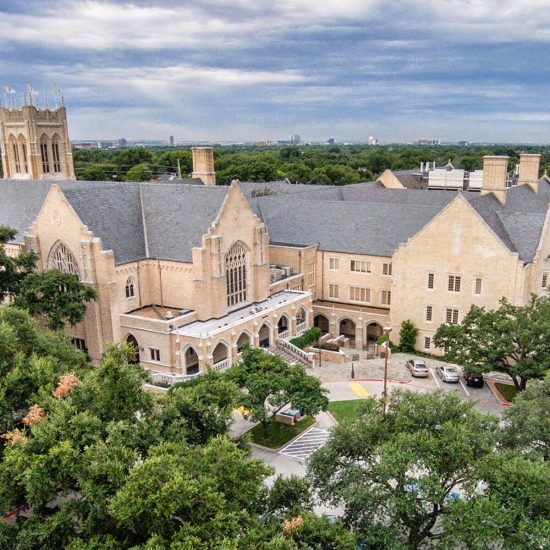
The J. Robert Jamerson Memorial Library on Oct. 6, 2026, in Appomattox, Va. (RNS photo/Aleja Hertzler-McCain)
Since 2022, religious groups have driven campaigns targeting library funding and access in western Michigan; southern Illinois; Ridgeland, Mississippi; St. Marys, Kansas; Pella, Iowa; and Front Royal, Virginia, often related to LGBTQ+ inclusion.
Some campaigns have been successful, like in St. Marys — where the library director pulled books with LGBTQ+ content from the youth section after city commissioners threatened the library’s lease.
In other cases, voters ultimately rejected attempts to cut library funding or rework library governance. But those victories aren’t always clear cut — in Jamestown Charter Township, Michigan, librarians adopted a new policy for labeling book content and still faced two years where voters withheld funding. A ballot measure for funding was successful this year.
But faith groups also have been part of resistance to efforts to limit or eliminate books with LGBTQ+ themes from libraries. Amelia Aldred, a staffer at the American Library Association who works on their campaign, Faith for Libraries, a joint effort of the ALA, the Interfaith Alliance and the Association for Rural and Small Libraries, noted that 60 Arkansas faith leaders earlier this year opposed new restrictions on books available to children under 16 and that pastors spoke against censorship at state legislature hearings.
“ Censorship is a threat on the First Amendment, including the freedom of religion,” Aldred said.
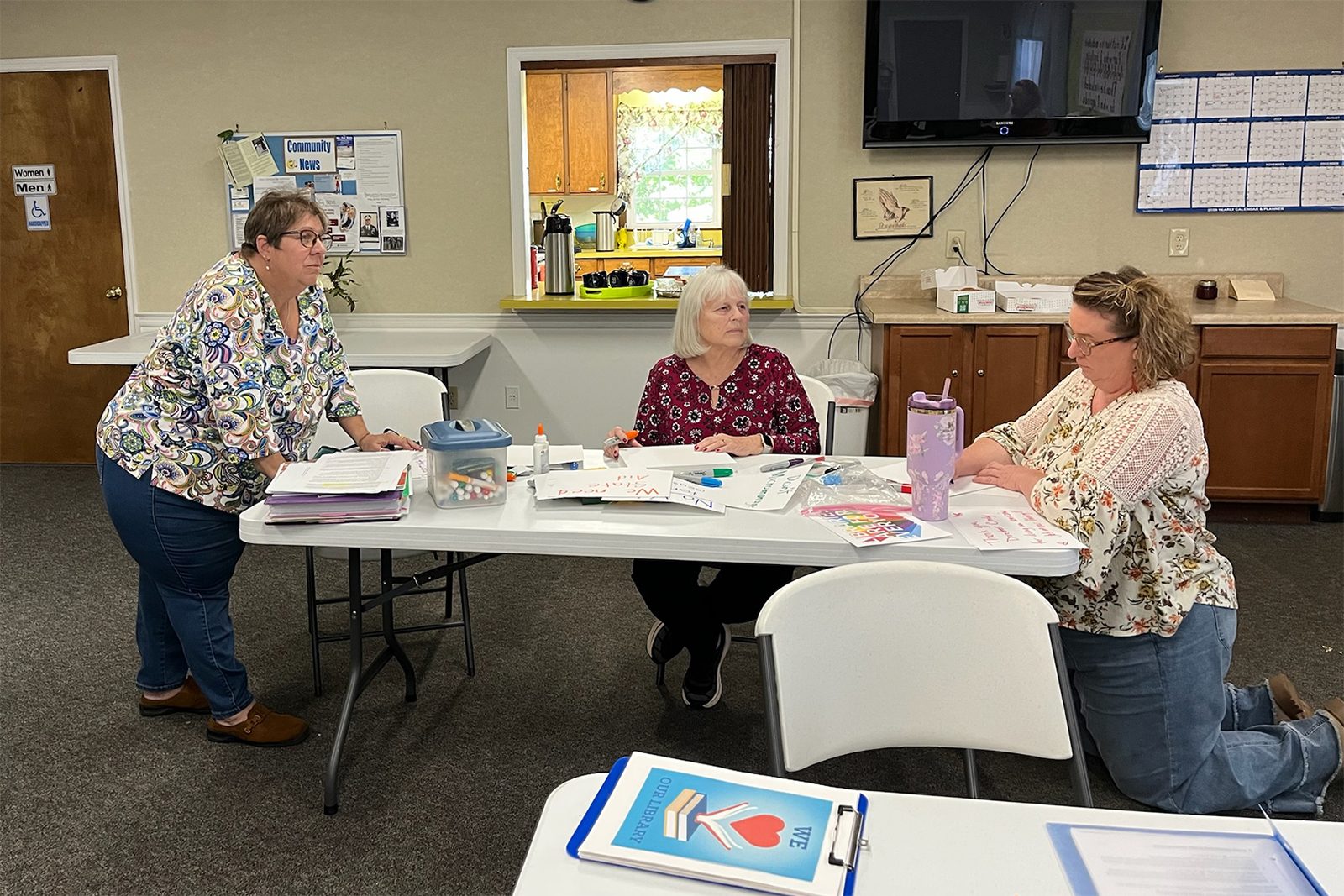
Martha Charte, from left, Evelyn Ford and the Rev. Ruth Perry meet at St. Anne’s Episcopal Church, Oct. 6, 2026, in Appomattox, Va. (RNS photo/Aleja Hertzler-McCain)
In Appomattox before the October library board meeting, a group of Christians met at St. Anne’s Episcopal Church to discuss their opposition to the bylaw changes and create signs to carry at the meeting.
They were members of Episcopal, Methodist, Presbyterian, and Baptist churches, and they did not all agree on LGBTQ+ inclusion. But they were united behind one idea: As former library board member Evelyn Ford said, “ The library is not a place for your specific beliefs to be elevated over others.”
Pride month display ignites dispute
In June, months before Raymond introduced the bylaw changes in Appomattox, three of five members of the county board of supervisors had invoked their religious beliefs in complaints about a Pride Month display, according to emails reviewed by RNS. All three cited their Christian faith.
“It doesn’t matter how many people believe homosexuality isn’t a sin, or that there’s more than two genders, or that there’s many paths to Heaven, because the Bible is God’s perfect Word, and it says otherwise,” wrote Ken Wolfskill, a member of Raymond’s church, in an email reviewed by RNS to library director Cindy Scheu and the library board. “When God established His morality, it has not changed, and does not depend on the civil law of a given society,” Wolfskill wrote, adding a series of Bible verse citations.
Trevor Hipps, another board of supervisors member, wrote in an email to Scheu and the library board, “I too share the same interests and Christian convictions as my constituents and would also not want my children in the library.”
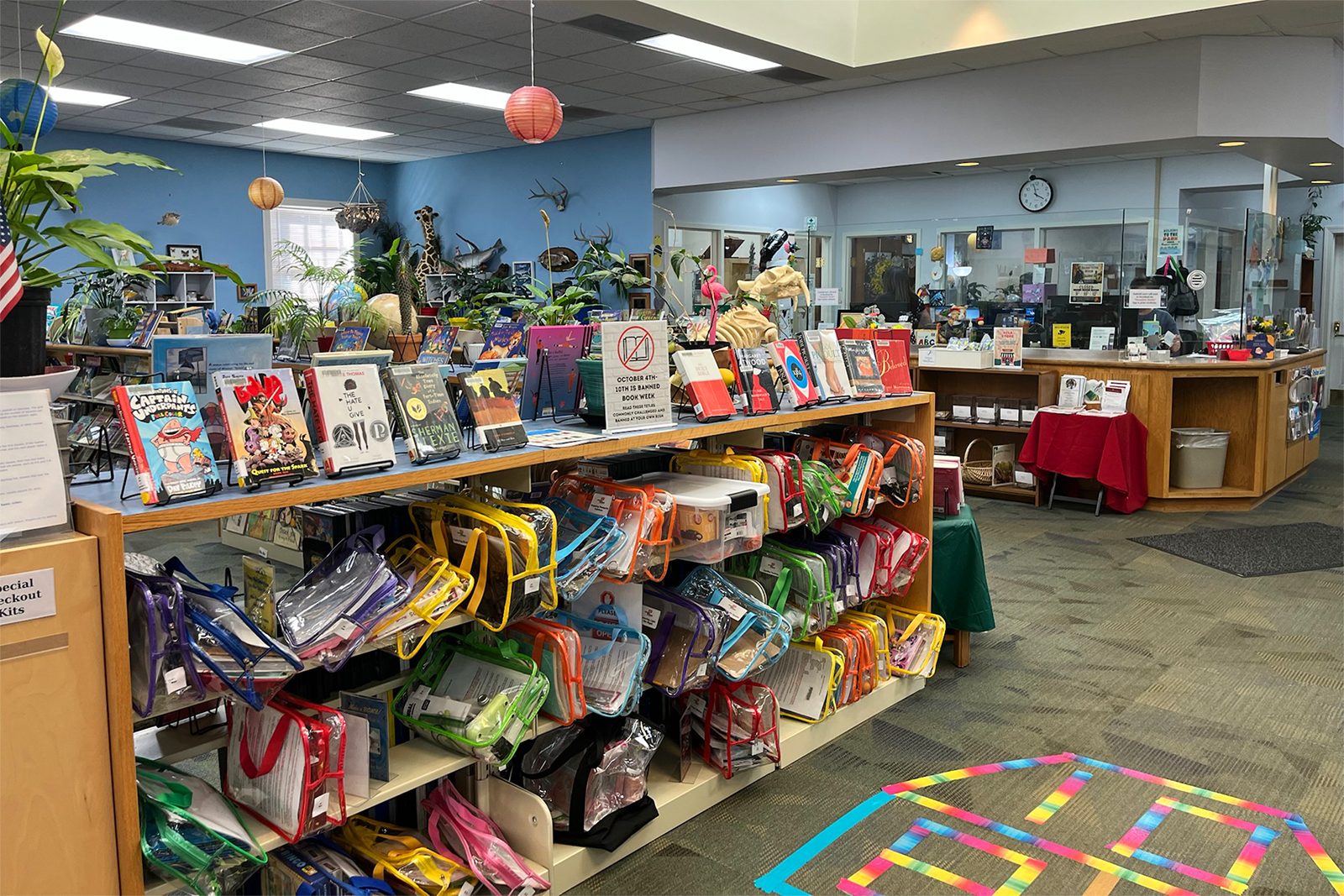
The J. Robert Jamerson Memorial Library on Oct. 6, 2026, in Appomattox, Va. (RNS photo/Aleja Hertzler-McCain)
John Hinkle, the board of supervisors’ chair, wrote, “In 2023 the Appomattox community spoke loud and clear that promotion of the LBGT life style was not consistent with our Biblical beliefs and our library should not be promoting it.”
Wolfskill, Hipps and Hinkle did not respond to requests for comment.
For his part, Raymond told RNS that his decision to serve on the board was not motivated by concerns about the Pride month display. “We just want to be more interactive with the library,” he said.
In July, Raymond and Amanda Chase Scott, a former state senator who ran for governor last year, were voted onto the library board. At her first meeting in August, Scott raised the idea of eliminating the library’s funding.
“We either have to have LGBTQ grooming materials in our libraries in a conservative community that does not want that and to receive state funding or we have to defund and completely eliminate all funding from the library to avoid all of us being sued,” she said during the meeting.
In an interview, Scott said that her comments about defunding the library raised alarm because they were “taken out of context.”
“ I believe that there’s a workaround. I don’t believe that we need to defund the library,” she told RNS, adding that she supports a referendum on state funding.
Scott, who identifies as an evangelical Christian, also said that she did not want to remove certain kinds of books from the library but instead wanted to address the books displayed in areas “accessible to very young children.”
Democracy language dropped from bylaws
At the October meeting, the library board changed the bylaws in a 3-1 vote, with one member absent. The final version struck language about abiding by requirements to qualify for state aid. Also among the revisions: It struck the line, “As an institution which helps individuals develop their own convictions and pursue personal opportunities, the library plays an important role in the operation of a free and democratic society.”
Raymond told RNS in an interview after the meeting, “ I don’t even know what that means. It was too vague.”
“Democracy is mobocracy,” he said. He went on to say, “You can have a lot of people saying one thing. Just because you have a silent minority or majority saying something else — so that idea of democracy, you know, we don’t even live in a democracy.”
Raymond has long advocated for a government guided by religious principles.
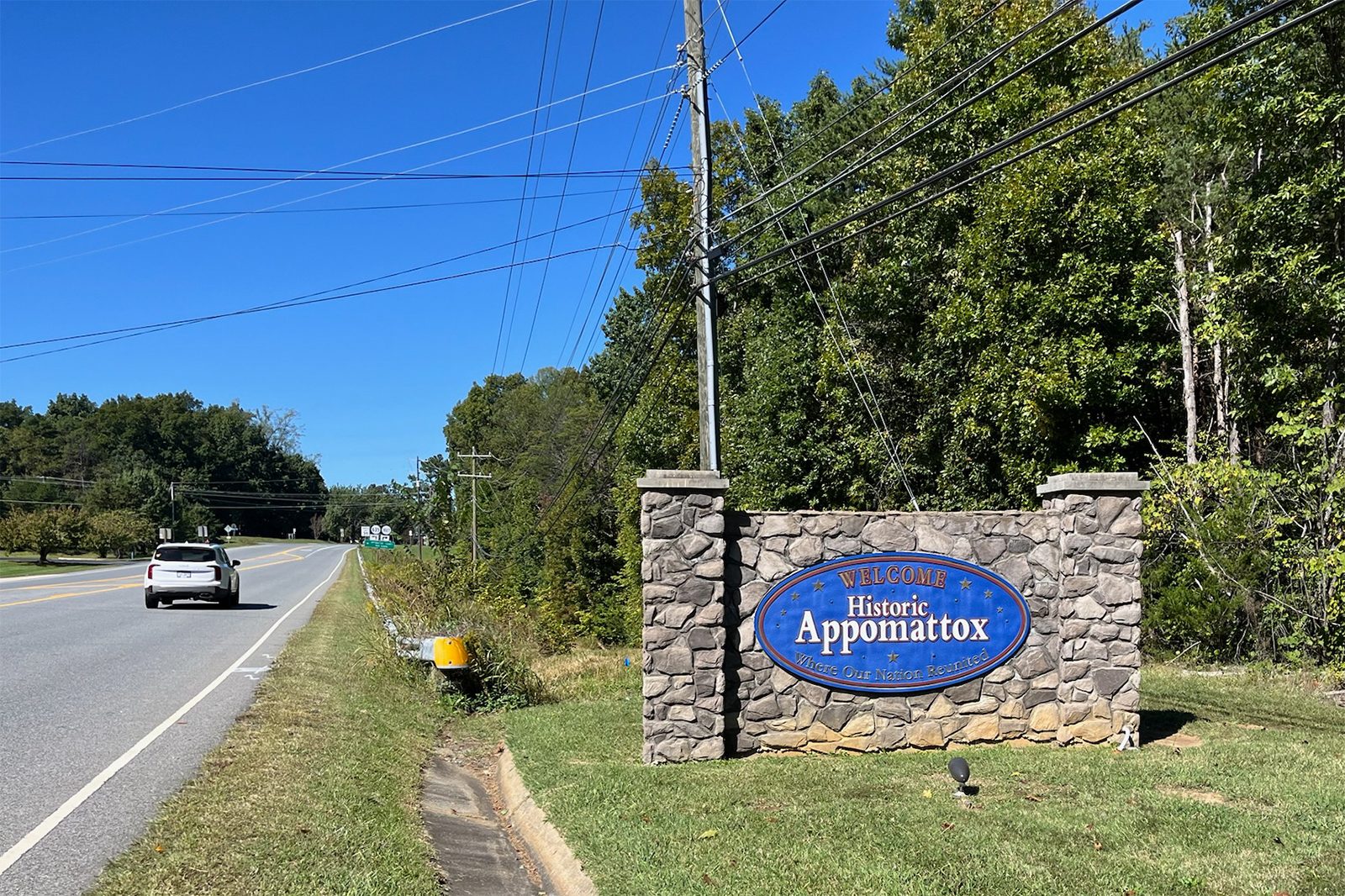
A car enters Appomattox, Virginia, on Oct. 6, 2026. (RNS photo/Aleja Hertzler-McCain)
“We ought to strive for a society system that is theocratic,” he said in a 2006 Chalcedon Foundation magazine article. The Chalcedon Foundation was founded by R.J. Rushdoony, a leader in the Christian Reconstructionism branch of Christian nationalist thought. In 2022, a militia that met in Raymond’s church hosted a presentation about Tactical Civics, a national antigovernment group that teaches that the U.S. is a Christian nation and instructs local groups to create militias and citizen grand juries to discipline corrupt government officials.
Raymond told RNS that he wasn’t interested in “forcing Christ” on anybody and that the library board would not jeopardize state funding without an alternate plan to pay for the library’s operations.
Samantha Johnson, an Appomattox mother of three children who is lesbian and identifies as pagan, said it was meaningful to see Christians opposing anti-LGBTQ+ efforts. “Just the fact that even pastors are like ‘what’s going on is wrong’ is actually greatly helpful to my family,” she told RNS. “We’re not seen as evil or gross.”
Chance McCaig told RNS that they don’t “really” have problems in day-to-day interactions. Still, McCaig, who uses they and he pronouns, worries about his safety.
In a letter written earlier this summer to support the library, reviewed by RNS, McCaig said that inclusive people and spaces can help prevent LGBTQ+ suicides. “I am 32 now and will tell you it is a miracle I made it this far. I failed at every suicide attempt,” he wrote.
Of the library, McCaig said, “I have found somewhere I can take a deep exhale and actually feel safe being myself.”