

Sign up to receive full essays in your inbox!

Featured
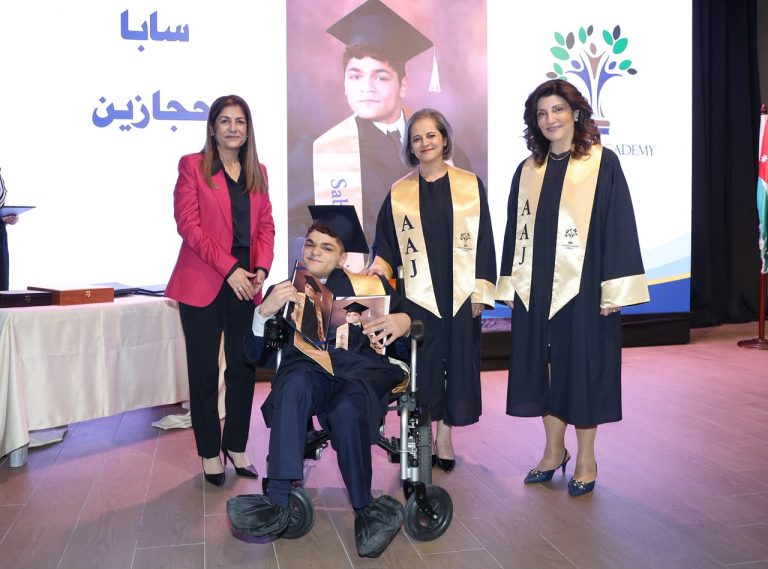
The Challenges of Graduating From a Christian School in the Age of AI
We live in an era saturated with more means of communication than ever before, and yet we also face unprecedented threats to our genuine human connections.
Defense Department to Drop Atheists, Pagans, 175 Others From List of Military Faiths
Unitarian Universalists and Deists, who were reportedly excluded from the latest list, are among two categories represented among signers of the Declaration of Independence.
Catholic and Baptist Scholars Critique Christian Nationalism at Villanova Conference
This issue of A Public Witness takes you inside a recent gathering to hear from leading scholars as they offer constructive ways to push back against a dangerous and heretical ideology.
Church

Chicago Churches Urge Calm Resistance Ahead of Expected Federal Intervention
Churches across Chicago braced for Trump’s threat of a National Guard deployment and apocalyptic force, even as Chicago’s rates of violent crime have dropped substantially in recent years as part of a national trend.

Women Ministers Resist Misogyny With Mentors, Training, Resilience, Study Finds
A report from the Louisville Institute found that the kinds of discrimination faced include gender bias, limited opportunities for leadership, and adverse expectations related to work/family balance.

Attendance Drops, Fear Rises in Immigrant Churches as Trump Takes Over DC
‘I never thought I had one day to cancel Sunday worship because it is not safe for our Latino siblings to come to church. But here we are … ,’ wrote one pastor on Facebook.
Nation
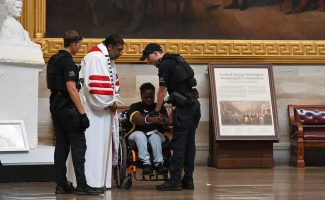
Progressive Faith Leaders Found New Power in Protesting ICE. Can Their Movement Survive Success?
Not since the Civil Rights Era has the religious left so publicly and collaboratively protested in the name of a social question they regard as a spiritual one.
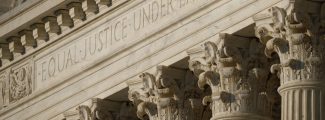
Supreme Court Revives Suit From Evangelical Christian Challenging Restrictions on Demonstrations
The high court unanimously ruled in the case of Gabriel Olivier, who says his religious and free speech rights were violated when he was arrested for refusing to move his derisive preaching away from a suburban amphitheater.
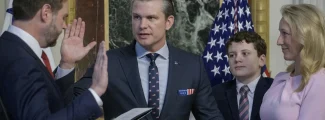
Pete Hegseth’s Crusader Bible
The defense secretary’s tattoos of the Jerusalem Cross and “Deus Vult” are frequently invoked as literal signs of his Christian Nationalism — and rightly so. But the same symbols on his Bible were overlooked until now.
World
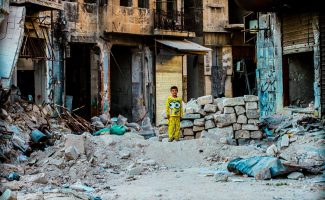
Christians in Syria Mark Country’s Transformation With Tears As UN Envoy Urges an End to Sanctions
Many Syrian Christians, who made up 10% of the population before Syria’s civil war, either fled the country or supported Assad out of fear of Islamist insurgents.
American Pilgrim Imprisoned in Assad’s Syria Calls His Release From Prison a ‘Blessing’
Travis Timmerman of Urbana, Missouri, said he had gone to Syria on a Christian pilgrimage and was not ill-treated while in Palestine Branch, a notorious detention facility operated by Syrian intelligence.
Pope Francis Makes Jubilee Year Appeal To End Hunger, Debt Woes and Death Penalty
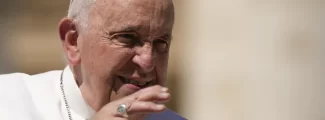
The pope’s appeal was made for the World Day of Peace, coinciding with the launch of the 2025 Jubilee year.
Editorials

Treating Costco Like My Church
Some people wanting to reopen their church amid coronavirus restrictions say churches should be treated like Costco. So, I decided to test this theory out. What if my church service could operate like a Costco?
The Masked Samaritan
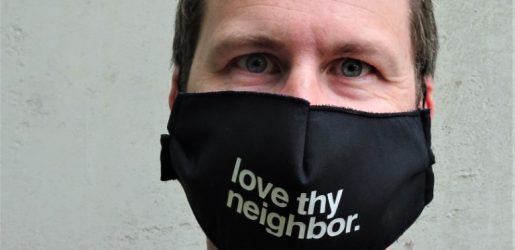
As a child, I imagined the bandits who beat and robbed the man in Jesus’s parable about being a good neighbor wore masks. Now, I’m pretty sure the Samaritan who helped the man was the one really covering his face.
Gambling with Our Lives
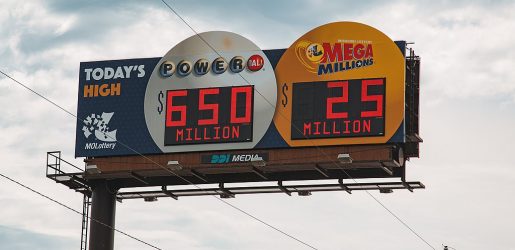
As states across the country shut down non-essential businesses in March and April, debates started about what should count as essential. But one unessential business apparently remained open as “essential” across the country: state lotteries.
Word&Way Voices
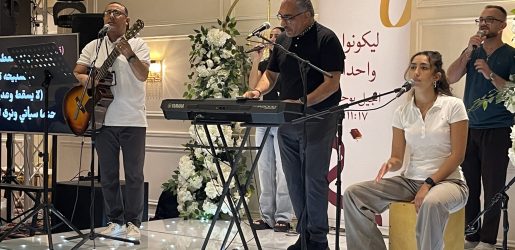
Palestinian and Jordanian Evangelicals Hold Rare Meeting in Amman
Daoud Kuttab reflects on a gathering that took place as the war in Gaza — where at least 23 Christians have been killed — has alienated many Palestinian Christians, who feel their co-religionists around the globe have abandoned them.
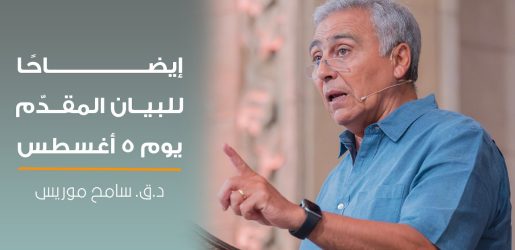
Egyptian Evangelical Pastor Issues Prophetic Call for Freedom, Equality, and Justice
Palestinian journalist Daoud Kuttab documents a recent sermon from an influential pastor of the leading Protestant church in Cairo.

Why I Wrote a New Book About Preaching
Contributing writer Rodney Kennedy discusses what led him to write “Dancing with Metaphors in the Pulpit” covering lessons preachers can learn from novelists, poets, philosophers, and rhetoricians.
E-Newsletter
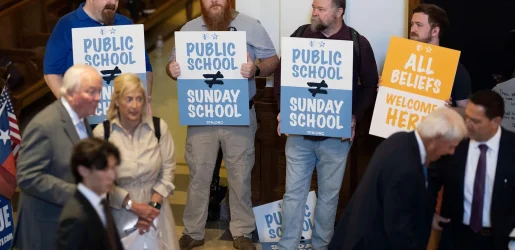
Alarm Bells to Start the School Year
This issue of A Public Witness looks at the need for those who oppose Christian Nationalism to fight not just with lawsuits but also in the court of public opinion, so we can effectively protect religious liberty.
Three New Documentary Projects Warn About Abusive, Nationalistic Faith
This issue of A Public Witness recommends two films and one miniseries exploring important issues of Christian Nationalism and religious abuse.
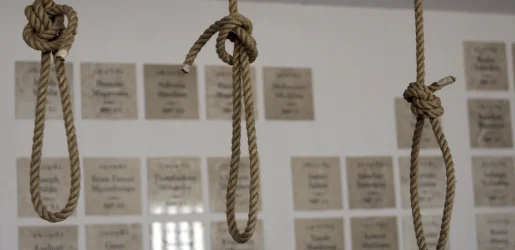
Literally Misreading the Bible
This issue of A Public Witness looks at how one Calvinist voice with connections to Secretary of Defense Pete Hegseth is publicly doing violence to Scripture to justify some disturbingly unChristlike behavior.
-
Claiming God's Name in Politics, War, & Sports
 This episode of Dangerous Dogma features a conversation between Word&Way Editor Brian Kaylor, Lutheran minister and journalist Angela Denker, and Disciples pastor and author Beau Underwood. The conversation includes discussion about a botched execution in Tennessee, religious issues in political campaigns, and Pete Hegseth's misuse of the Bible. And Beau shows off his White Sox…
 -
Backslide with Robert P. Jones
This episode of Dangerous Dogma features a conversation between Word&Way Editor Brian Kaylor and Robert P. Jones, author of the forthcoming book Backslide: Reclaiming a Faith and a Nation After the Christian Turn Against Democracy. Jones is also the founder and president of PRRI. He previously appeared on Dangerous Dogma in 2023. You can watch a… -
DHS Spies on Churches & White Sox Honor Pope Leo
This episode of Dangerous Dogma features a conversation between Word&Way Editor Brian Kaylor, Lutheran minister and journalist Angela Denker, and Disciples pastor and author Beau Underwood. The conversation includes discussion about revelations that the Department of Homeland Security has been spying in churches, a controversial golf ad, and a White Sox night celebrating Pope Leo.… -
The State of the Senate, from SC to ME to TX to KS
This episode of Dangerous Dogma features a conversation between Word&Way Editor Brian Kaylor, Lutheran minister and journalist Angela Denker, and Disciples pastor and author Beau Underwood. The conversation includes discussion about the death of Sen. Lindsey Graham as well as issues of faith and morality in Senate races in Maine, Texas, and Kansas. You can… -
Southern Baptists, the Pentagon, & UFC
This episode of Dangerous Dogma features a conversation between Word&Way Editor Brian Kaylor, Lutheran minister and journalist Angela Denker, and Disciples pastor and author Beau Underwood. The conversation includes discussion about the Southern Baptist Convention's push against women in ministry, the Pentagon changing how it codes the faith of military members, and the latest in… -
Southern Baptists, Women in Ministry, & a Billboard
In this episode, Word&Way President Brian Kaylor talks with Meredith Stone, executive director of Baptist Women in Ministry. The conversation includes discussion of efforts in the Southern Baptist Convention to further target women serving in churches and how BWIM is advocating for women (including with a billboard to greet SBC messengers next week in Orlando,… -
Divergent Visions for Rededicating the Nation
This episode of Dangerous Dogma features a conversation between Word&Way Editor Brian Kaylor, Lutheran minister and journalist Angela Denker, and Disciples pastor and author Beau Underwood. The conversation includes discussion about Rededicate 250, gerrymandering, Adam Hamilton's Senate campaign in Kansas, and the MAHA movement. You can watch a video version of the conversation here. Here are a few pieces… -
The Christian Past That Wasn't
In this episode, Word&Way President Brian Kaylor talks with Warren Throckmorton, a retired professor who has spent years debunking false claims by Christian Nationalist pseudo-historian David Barton. Throckmorton is the author of the new book, The Christian Past that Wasn't: Debunking the Christian Nationalist Myths that Hijack History. You can watch a video version of… -
Trump vs. Leo
This episode of Dangerous Dogma features a conversation between Word&Way Editor Brian Kaylor, Lutheran minister and journalist Angela Denker, and Disciples pastor and author Beau Underwood. The conversation includes discussion about President Donald Trump's attacks on Pope Leo XIV, Leo's witness against the Iran war, Trump's AI image of himself as Jesus, and the electoral… -
Fight Like Jesus with Jason Porterfield (Reissue)
In this episode, Word&Way President Brian Kaylor talks with Jason Porterfield about his book Fight Like Jesus: How Jesus Waged Peace. This episode originally aired in 2023, except for a new introduction noting a violent prayer by Pete Hegseth during a recent Pentagon worship service and Palm Sunday comments by Pope Leo XIV. Note: Don't forget…


Books

Review: Gospel As Work of Art
In "Review: Gospel As Work of Art: Imaginative Truth and the Open Text," David Brown challenges us to expand our understanding of scripture past source criticism and historical Jesus studies to include works of imagination.

Review: A Faith of Many Rooms
In "A Faith of Many Rooms: Inhabiting a More Spacious Christianity," Debie Thomas takes readers on a deeply personal and profoundly theological odyssey.

Review & Giveaway: Ministers of Propaganda
This issue of A Public Witness explores what Scott Coley’s forthcoming book “Ministers of Propaganda: Truth, Power, and the Ideology of the Religious Right” reveals about the antidote to Christo-authoritarianism.
Review: A Quilted Life
In "A Quilted Life: Reflections of a Sharecropper’s Daughter," Catherine Meeks describes the adventures and adversity she encountered on her path to becoming an empowered voice for change.