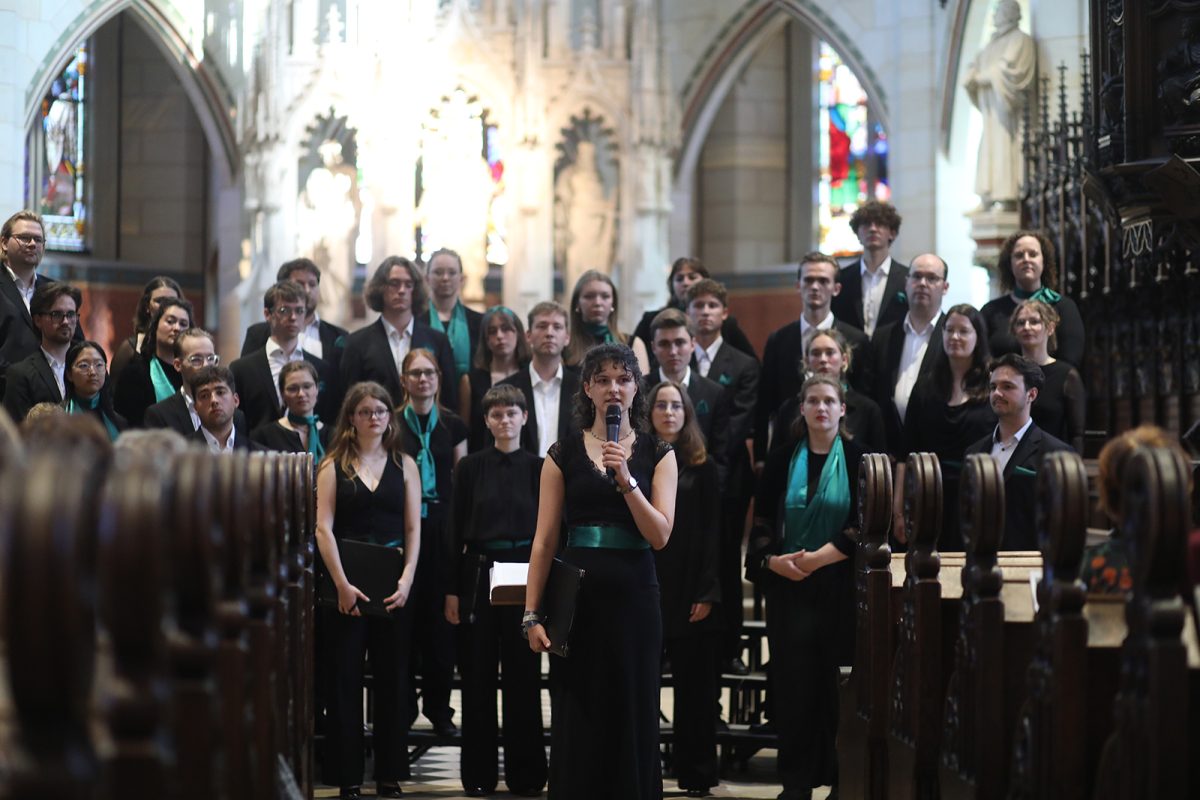
Charlotte Bentlie, a member of the Landesjugendchor Sachsen-Anhalt, addresses a crowd of hundreds during a special performance inside Schlosskirche in Wittenberg, Germany, on Sunday, September 6, 2026. Bentlie specifically called out the AfD party in her remarks, delivered hours before the polls closed for high-stakes elections in the state of Saxony-Anhalt. (RNS photo/Liam Adams)
WITTENBERG, Germany (RNS) — The sun was setting over the birthplace of the Protestant Reformation, and polls were set to close in an hour for a high-stakes election in Saxony-Anhalt, when the youth choir paused from singing to take a stand.
Standing in front of the tomb of Martin Luther, Charlotte Bentlie, a singer in the 35-member choir, called out the Alternative für Deutschland (AfD) Party, which was expected to achieve a historic victory in the elections that day.
Along with vowing to expel refugees and punish churches that assist them, leaders of the AfD have proposed making publicly funded art and music more patriotic.
“For us, we’re really fearful because music is not limited by borders or nations or cultural ideas. And we are hoping that our program is as free today as it is next year,” Bentlie said in an interview afterward.
Audience members in the hard wooden pews at the Schlosskirche, the house of worship that commemorates Luther posting his famed 95 Theses in 1517, sparking the Protestant Reformation, rose with applause to Bentlie’s remarks.
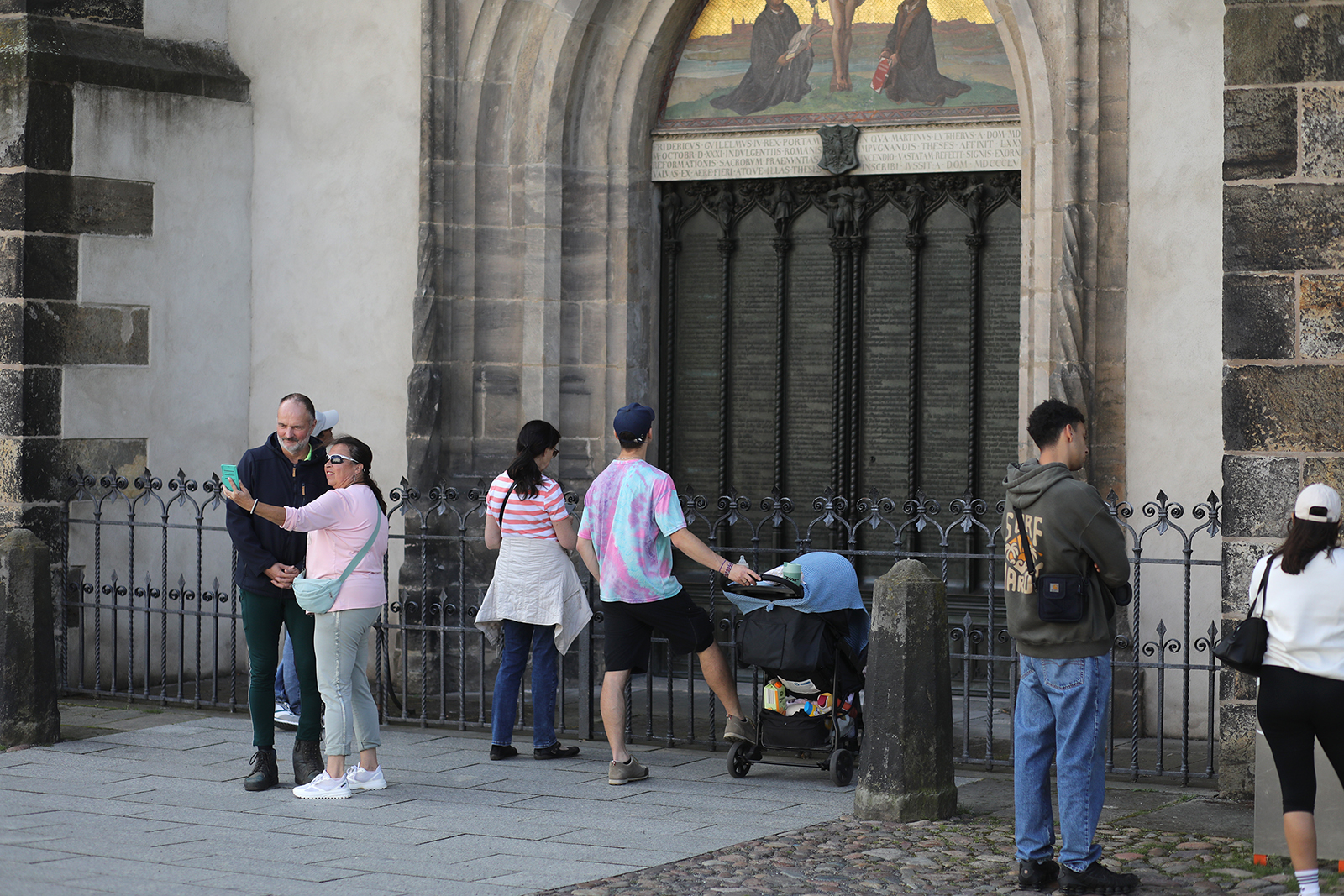
Visitors view “Theses Doors” outside Schlosskirche in Wittenberg, Germany, that honors the genesis of the Protestant Reformation, when Martin Luther nailed his 95 Theses to a church door. The actual doors on which he nailed the theses burned down, said Schlosskirche pastor the Rev. Anne Brisgen. Sunday, September 6, 2026. (RNS photo/Liam Adams)
“It was empowering,” Bentlie said.
In Saxony-Anhalt, where there are more churches per capita than any other state in Germany, the precipitous decline in churchgoing has left a void in communities that the AfD has benefited from. The far-right party, earning 44% of the vote and dominating across age groups, with women and in rural and urban areas, achieved what no right-wing party in Germany has since World War II.
But before that was clear and as Saxony-Anhalt voters were still casting votes, Schlosskirche held a series of events that day, which the youth choir performance concluded. Another event was a time of reflection on the writings of German theologian Dietrich Boehnhoffer, who famously resisted the Nazis.
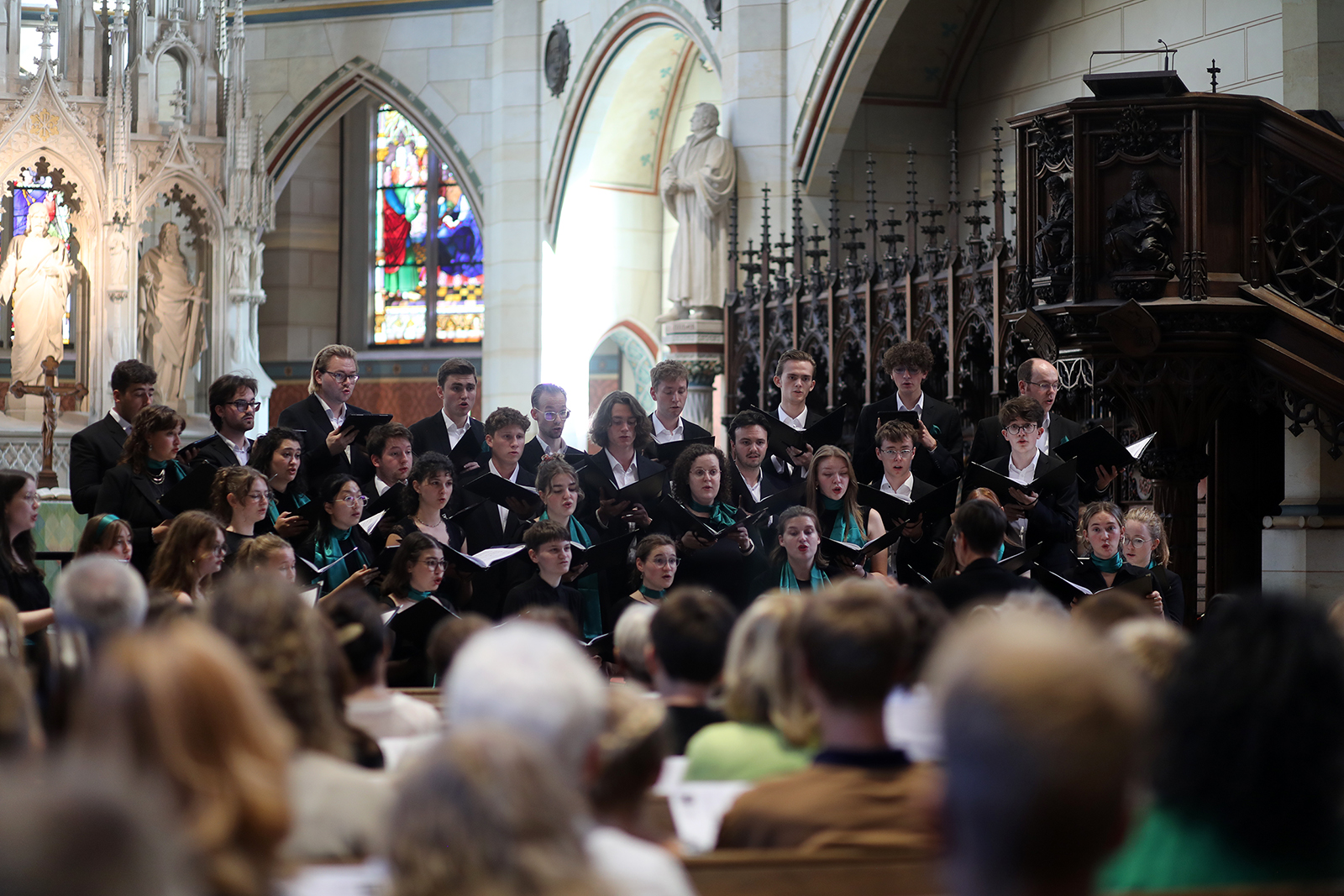
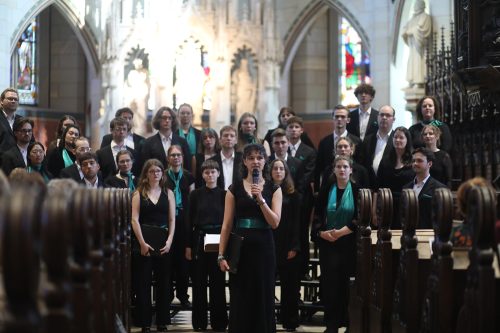
Landesjugendchor Sachsen-Anhalt, or the Youth Choir of Saxony-Anhalt, performs inside Schlosskirche in Wittenberg, Germany, Sunday, Sept. 6, 2026. (RNS photo/Liam Adams)
“It’s really important that our churches are safe spaces for prayers and spiritual care,” said the Rev. Anne Brisgen, pastor of Schlosskirche.
Like Brisgen, clergy throughout Saxony-Anhalt found creative ways to oppose the AfD in advance of the Sept. 6 elections. The legacy of reformation, resistance and renewal that sprang from churches in this very region motivated church officials and clergy to do everything they can to prevent an AfD victory in the German state of Saxony-Anhalt on Sunday.
But their hopes to resist the AfD collided Sunday (Sept. 6) with harsh reality.
“This state election has profoundly changed the political landscape in Saxony-Anhalt,” the region’s top Catholic and Protestant officials said in a joint statement Monday. “We have a long history of resilience; we have survived dictatorships and oppression, wars and crises, and we will continue to open our doors to all people who seek protection.”
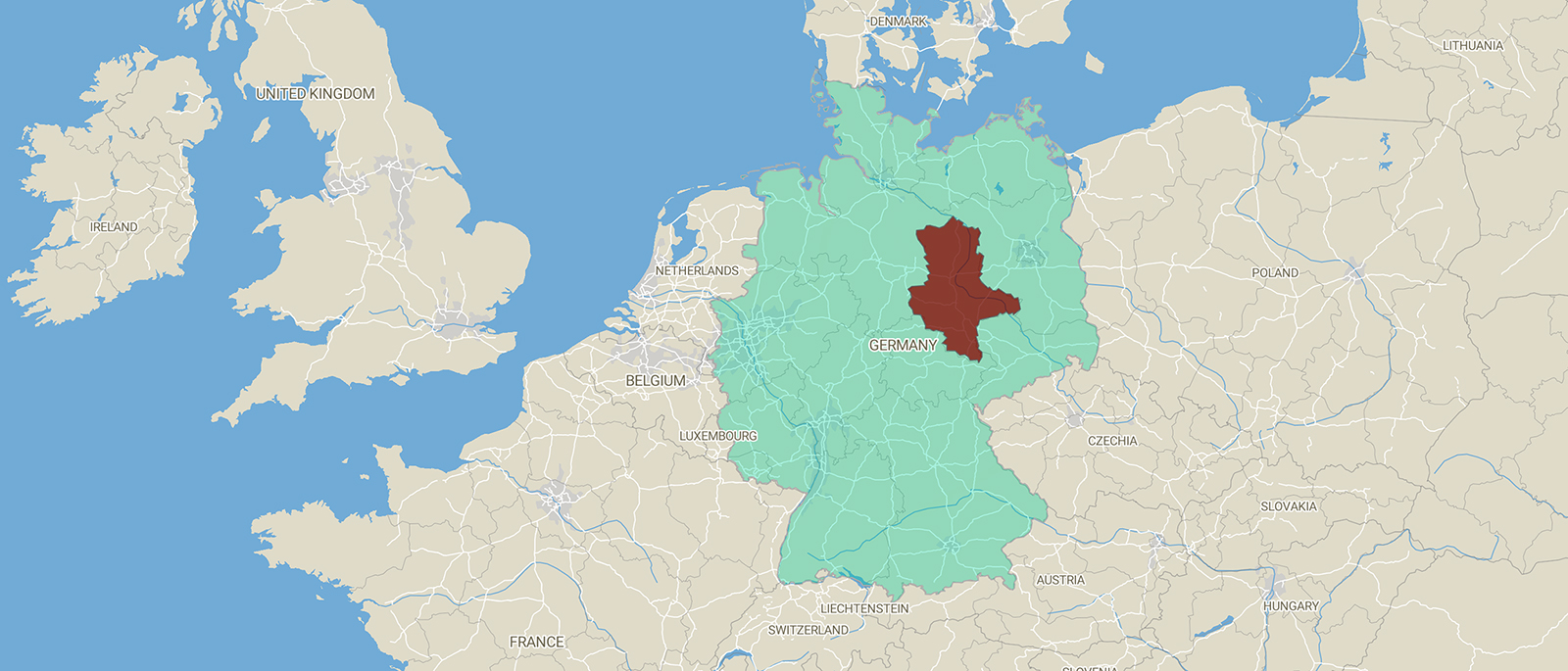
The state of Saxony-Anhalt, red, in Germany. (RNS graphic/Kit Doyle/Datawrapper)
The regional governance bodies these officials oversee had coordinated campaigns months before Sunday’s regional election, reminding parishioners that the AfD’s platform contradicts their Christian values. Many faith leaders cited as inspiration their forebears’ role in 1989 protests against the former German Democratic Republic, or the communist regime that Saxony-Anhalt was part of and in which religion was repressed for decades. That era instilled in the churches a sense of duty to defend democracy, though it also left their membership severely diminished.
One post-election analysis found that among voters who identify as religious, support for the AfD was significantly lower than among nonreligious voters, according to a report from Konrad Adenauer Stiftung.
But there were not enough religious voters in this mostly secular region of Germany to make a difference. About 10% of the total population in the state identify as Protestant and just 3% as Catholic. Still, Tobias Cremer, author of the 2023 book, “The Godless Crusade: Religion, Populism and Right-Wing Identity Politics in the West,” said this is a sign that churches remain a source of inoculation against right-wing populism.
Cremer, now a member of the European Parliament, said that rapid secularization benefits right-wing populism. Simply put, he said: In communities where faith is fragmented, right-wing extremism thrives.
“The AfD campaign events sometimes felt more like a church festival or family festival,” Cremer said. “I think this focus on community, this focus on belonging is trying to provide a replacement for the church.”
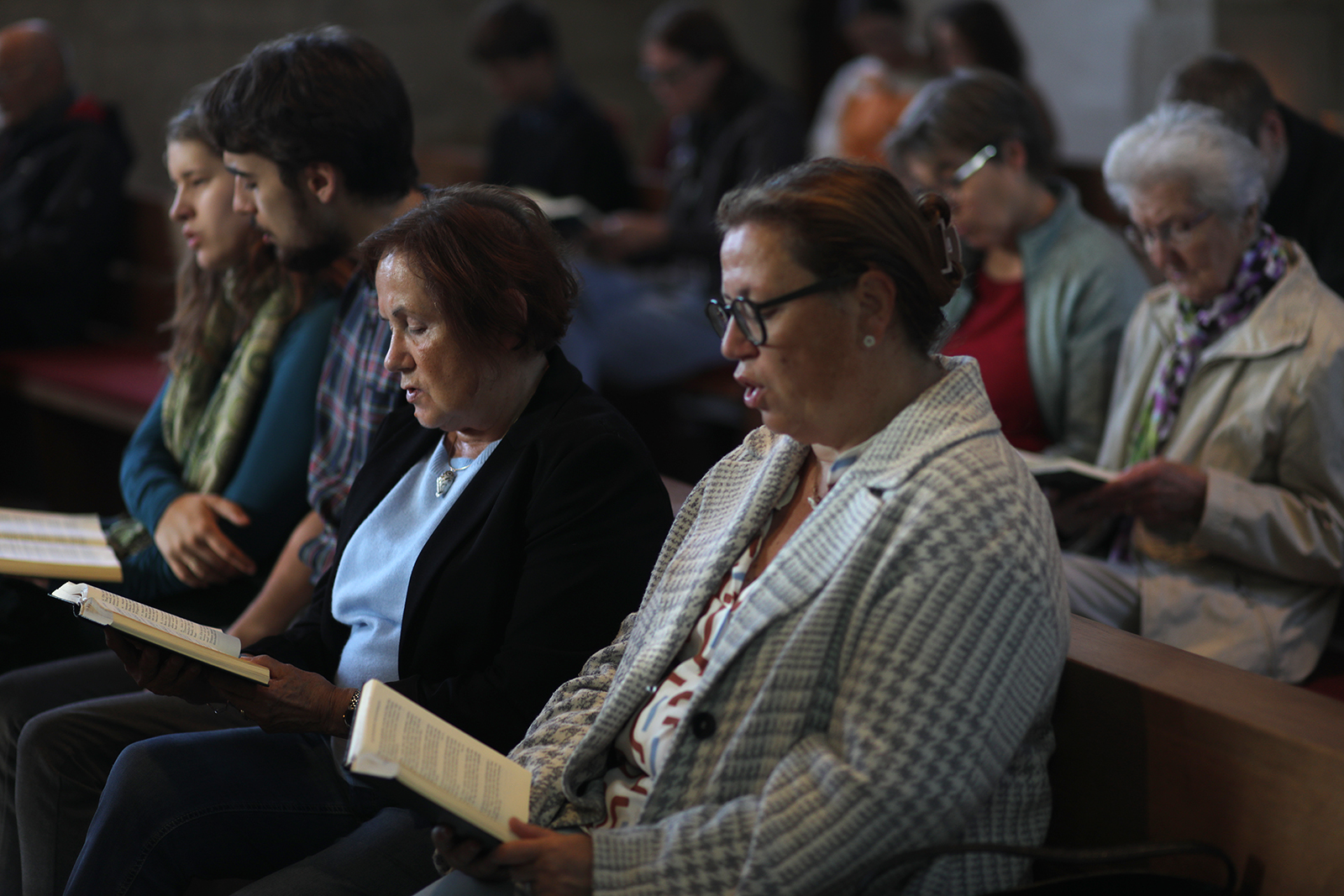
Parishioners attend a 9:00 a.m. service for a Protestant congregation in the village of Roßbach, located outside Naumburg, Germany, on Sunday, Sept. 6, 2026. (RNS photo/Liam Adams)
While driving through the outskirts of Naumburg in southern Saxony-Anhalt on election day, David Schilling-Schön told RNS he has witnessed this phenomenon up close as a young adult who grew up in a family of preachers.
“The AfD would say they provide connection … But I think that connectedness is tied to so many things that it’s not as reliable as what the church can provide,” Schilling-Schön said.
In the horizon of his windshield, church steeples protruded out of vineyard-laden ridgetops in this winemaking region known as the “Tuscany of Germany.”
Schilling-Schön had just been to back-to-back church services, where his father, the Rev. Daniel Schilling-Schön, preached about unity. There were few parishioners at the services and even fewer young people.
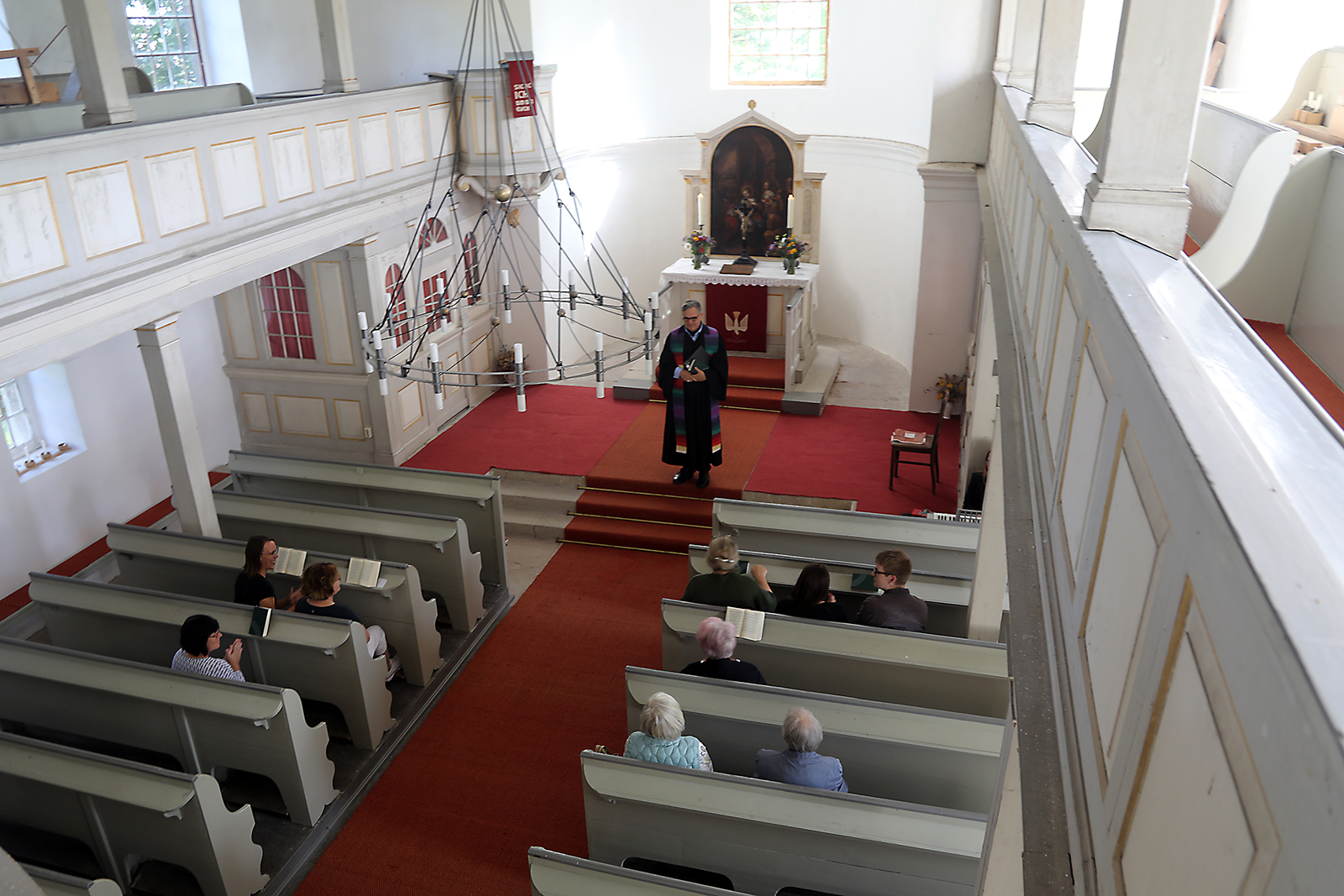
The Rev. Daniel Schilling-Schön, a Protestant pastor who oversees several churches in southern Saxony-Anhalt, leads a 10:30 a.m. service in the village of Kleinjena, located outside Naumburg, Germany, on Sunday, Sept. 6, 2026. (RNS photo/Liam Adams)
One of the few was 18-year-old Noa Clerc, who works part time for the Protestant church to assist the Rev. Daniel Schilling-Schön with his administrative duties over 12 congregations in the region.
“The best thing the church has done is not talking specifically about the parties but rather about the values behind them,” Clerc said. “For the people who are already in the church, they find solace in coming together.”
But Clerc and David Schilling-Schön, both of whom are religious, are an anomaly among their peers, for whom church attendance is abysmally low and social media use is exceptionally high.
“I like social media because I’m staying in touch with a lot of friends who are far, far away. But it’s not the same as being really connected,” he said. “And I think only the church can provide that.”
This is especially pronounced in Saxony-Anhalt, where the AfD’s lead candidate, Ulrich Siegmund, rose to prominence as a TikTok star before his pivot to politics. Siegmund’s videos on TikTok have garnered more than 18.7 million views since June, which outperforms most other German politicians at the federal or state levels, according to DIE ZEIT.
Siegmund’s playful personality on social media complemented the fun, nostalgic vibes of AfD rallies. Often, supporters rode around Soviet-era mopeds, called a Simson, and enjoyed bratwurst and beer. It all offered a certain identity, one that’s distinctly German and that also romanticizes a better pastime in the former Communist East, with which supporters can find comfort. Critically, that identity is areligious.
The AfD in Saxony-Anhalt also gave special attention to religion in its campaign. It attacked the establishment Catholic and Protestant churches, known as “state churches.” Meanwhile, AfD leaders heralded alternative expressions of Christianity that are more sympathetic to their far-right ideology.
The AfD’s proposed crackdown on immigration and its edgy persona in contrast to mainstream parties, including the Christian Democratic Union, were top reasons why voters supported the far-right party. The Office for the Protection of the Constitution classifies this AfD state branch as a confirmed “right-wing extremist” organization.
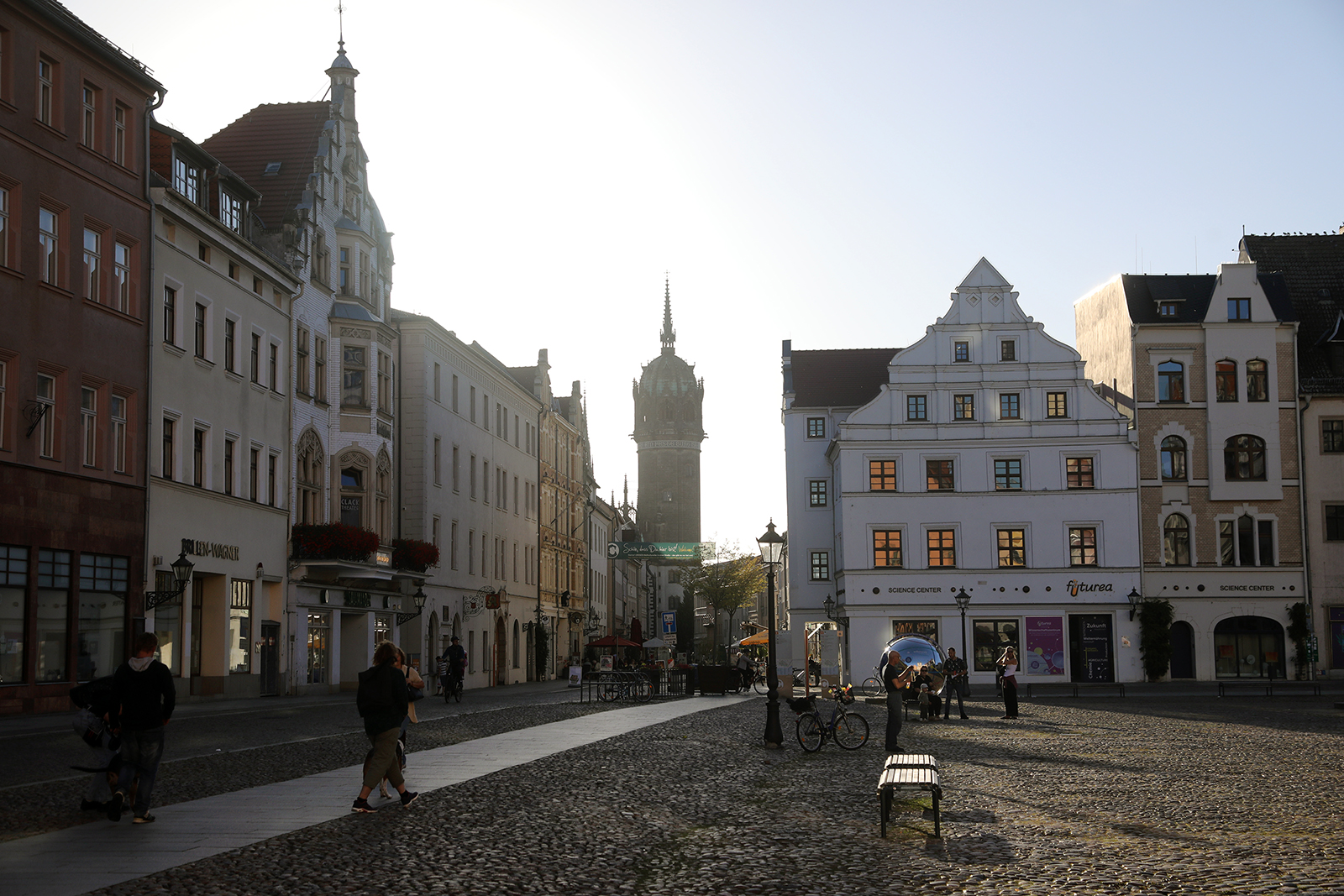
Wittenberg, considered the birthplace of the Protestant Reformation and a major city in the state of Saxony-Anhalt, Germany, where the far-right AfD won a historic election on Sunday, Sept. 6, 2026. (RNS photo/Liam Adams)
This conflict in Saxony-Anhalt encroached on a custom known as “benevolent neutrality.” That tradition of church-state relations in Germany was formed after World War II as an antidote to a dark history in which some churches were complicit or active supporters of the Nazi Party’s rise.
That benevolent neutrality gave the Catholic and Protestant churches a quasi-public status and the mandate to uphold democratic norms.
“The reason why Germany for many, many decades didn’t have the same level of polarization and culture wars is that churches … were always part of this German corporate consensus machine,” Cremer said. But he said that balance is at a tipping point, and the conflict in Saxony-Anhalt is a tell-tale sign.
The erosion of churches’ moral legitimacy in German society is not solely due to the AfD’s attacks, however. There’s also a general disinterest in churchgoing and a strong distaste for paying the so-called church tax. It collects a percentage of citizens’ monthly income if they register with the government as Protestant or Catholic. The state then passes those funds to the churches.
“Some people are leaving the church because they don’t want to pay church tax, not because they are thinking about benevolent neutrality or how the constitution was set up,” Cremer said. “They’ll just think, ‘yeah, why should I pay a church tax and why should the church have a strong space in society?’”
Still, the churches are steadfast.
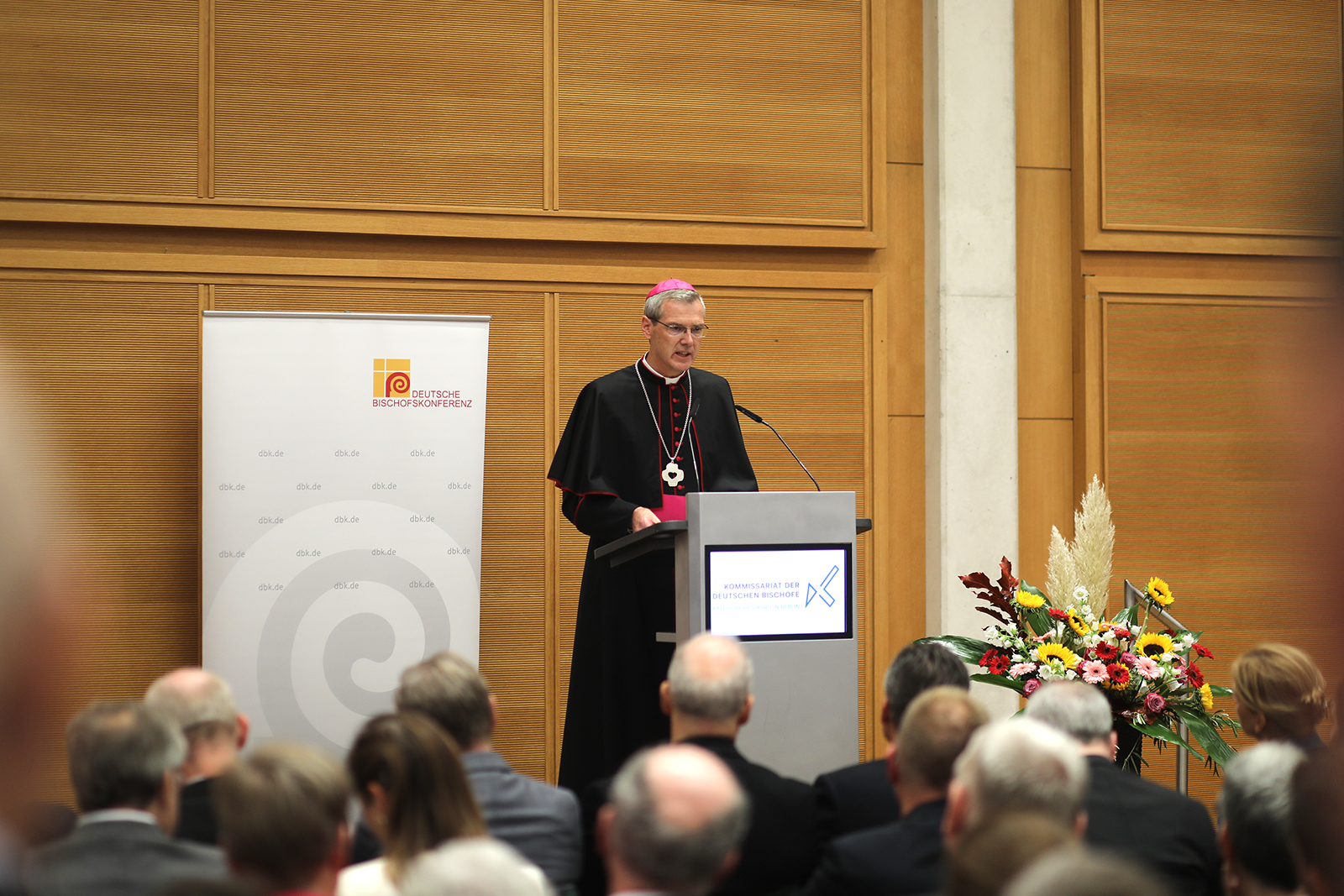
Bishop Heiner Wilmer, the top Catholic official in Germany, rebukes the AfD while addressing religious leaders and elected officials at the annual reception of the Catholic Church in Germany, Sept. 9, 2026, in Berlin. (RNS photo/Liam Adams)
During the Catholic Church’s annual reception in Berlin on Sept. 9, religious leaders and elected officials gathered at the German Catholic Bishops Conference’s headquarters, where Bishop Heiner Wilmer defiantly rebuked the AfD.
“The AfD has been proven to be nationalistic and “folkist” (völkisch),” Wilmer, head of the bishops conference, said, according to a translated text. “There is no room for such ethnonationalist ideas, either inside or outside houses of God, not in Christianity, not in Judaism, not in Islam.”
The audience, just like the response to the youth choir in Schlosskirche a few days prior, thunderously applauded.
“Die AfD ist nachweislich nationalistisch und völkisch eingestellt. Für dieses völkische Gedankengut ist weder in noch außerhalb von Gotteshäusern…”
Bishop Heiner Wilmer, Germany’s top Catholic official, rebukes the AfD in a major speech tonight after Sunday’s election.
— Liam Adams (@liamsadams.bsky.social) September 9, 2026 at 1:12 PM
Liam Adams is a journalist from Nashville, Tennessee, and is currently based in Berlin, Germany, as part of the Arthur F. Burns Fellowship 2026 class.