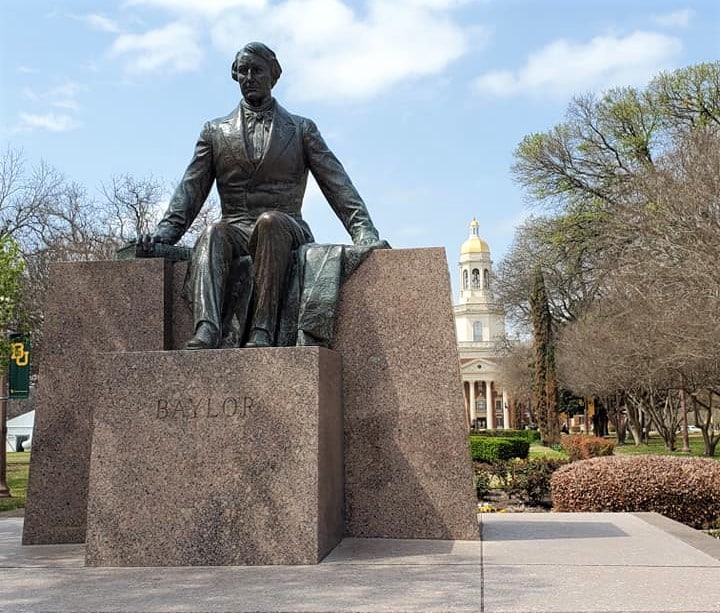
Patrick Wilson reflects on visiting the campus of his alma mater, Baylor University, hours after the school’s Commission on Historic Campus Representations publicly released its report documenting Baylor’s ties to slavery and the Confederacy.
Baylor University released a report Tuesday documenting its slavery legacy and offering recommendations for more fully telling its history. The 94-page report focuses on monuments and markers on its campus honoring various founders who enslaved Black people and supported the Confederacy.
Members of a Baylor University commission charged with recommending ways to address the institution’s historic ties to slavery and the Confederacy often were distressed as they studied the racist beliefs and actions of the university’s founders.
Read full piece
As a commission created to examine Baylor University’s history examined some of its early leaders’ views on race, participants wrestled with “painful information” about the school’s founders.
Read full piece
Editor Brian Kaylor responds to a “reparations” plan unveiled by the Society of Jesuits on Monday due to their legacy of owning and selling enslaved persons. While Kaylor applauds reparations efforts, he argues this plan falls short.
In the decades surrounding Baylor University’s founding, Texas Baptists reflected the prevailing culture — including support for slavery, three historians agreed during an online forum sponsored by the university.
Read full piece
A resolution heard Tuesday (Feb. 9) in the Missouri Senate Rules, Joint Rules, Resolutions, and Ethics Committee states “that the times have once again changed and we declare the March 22, 1852, Missouri Supreme Court Dred Scott decision is fully and entirely renounced.”
Several Southern Baptist churches are planning to recognize the inaugural “George Liele Church Planting, Evangelism, and Missions Sunday” on Feb. 7, which honors the enslaved man who founded churches in the U.S. and then became the first Baptist missionary abroad.