With the arrival of August, people in several states are heading to the voting booths for important midterm primary elections, including Kansas, Michigan, Missouri, and Virginia today. And while the races for Congress, governor’s mansions, and statehouses generally consume most of the attention, a politically active rightwing church in St. Louis wants its members to vote the Bible by making it virtually impossible for citizens to amend the Missouri Constitution. If you’re not sure where that shows up in the Bible, don’t waste your time looking!
Unlike many church services at Grace Church in St. Louis, their support for a ballot initiative doesn’t violate IRS tax rules that prohibit tax-exempt nonprofits (like most houses of worship) from engaging in partisan politics. The IRS’s political campaign activity ban (often called “the Johnson amendment”) bars tax-exempt resources from being used in partisan campaigns but not issue advocacy like ballot initiatives. However, the church’s anti-democratic stand helps highlight how it is really just a weekly tax-exempt MAGA rally preaching a rightwing gospel of power. And it should be a warning for those far beyond the borders of the Show-Me State.
In recent years, there’s been an effort by some Republican lawmakers in several states to make it harder for citizens to pass constitutional amendments. Apparently, they don’t like it when “we the people” override them. Florida raised its standard for constitutional amendments from a simple majority to 60% — in a vote that ironically didn’t receive 60% support since it played by the old rules it was replacing and not the harder standard it was creating. Voters rejected similar attempts in Arkansas, Ohio, and South Dakota over the last four years, but lawmakers have placed proposals on the ballots for later this year in North Dakota, again in South Dakota, and on some measures in Utah.
“The theme of 2026 is the battle over direct democracy availability itself,” Kelly Hall, executive director of the Fairness Project, told NPR. “This is a really powerful tool … and one of the most frequent topics that we will see voted on this November is, can voters continue to exercise that right meaningfully?”
But the most draconian measure against direct democracy this year is on today’s ballot in Missouri. Constitutional Amendment 4 wouldn’t raise the threshold to 60% but instead require all future constitutional amendments (but not itself) to receive majority support in every single congressional district in the state. Using those gerrymandered maps as the standard, it would virtually block any citizen initiative from passing. Because if something is so popular that it could pass this standard, the state legislators would probably just pass it themselves. But if Amendment 4 passes, a future amendment could hypothetically pass with 100% support in seven districts and receive 49.9% in the eighth but not pass despite having north of 90% approval!
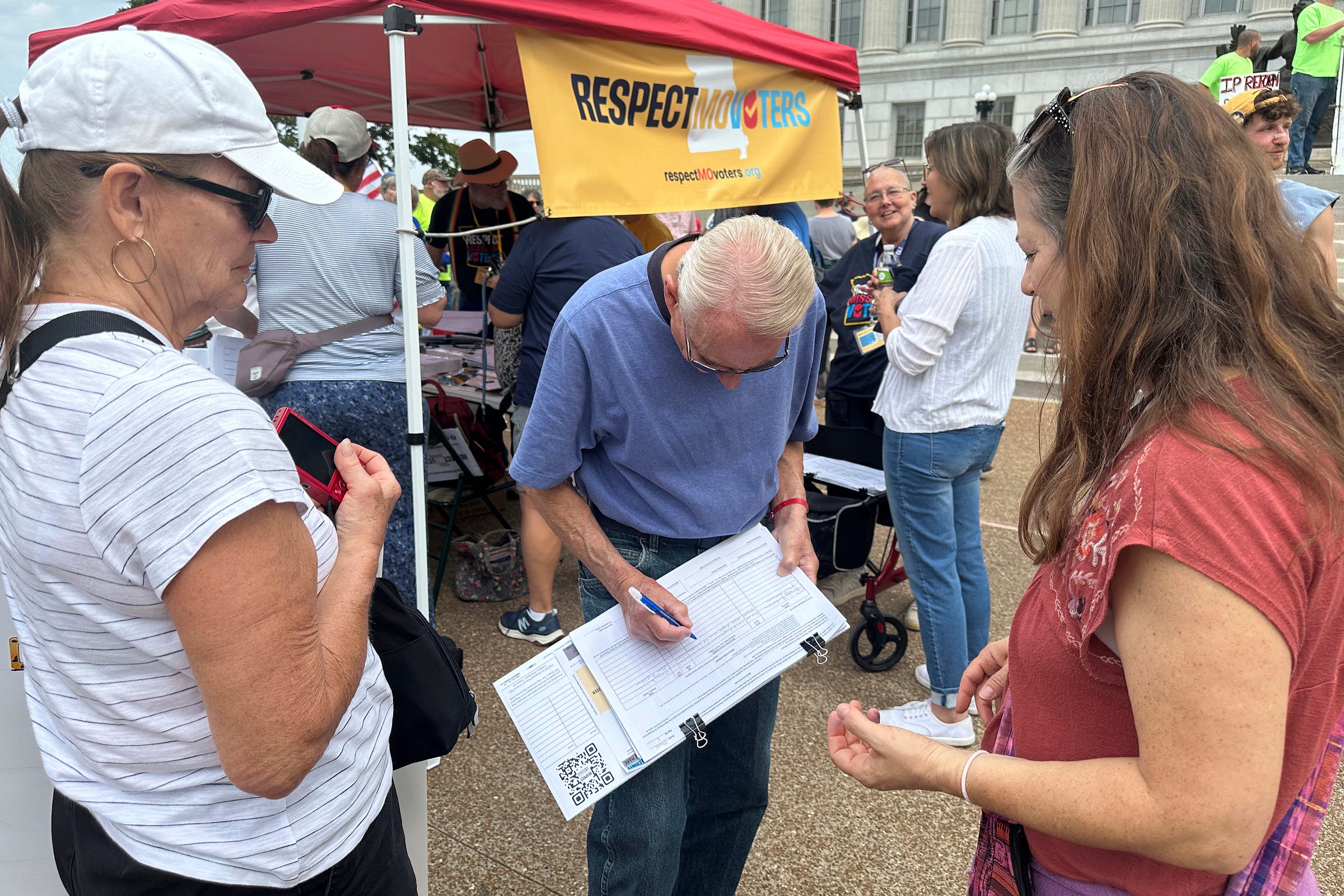
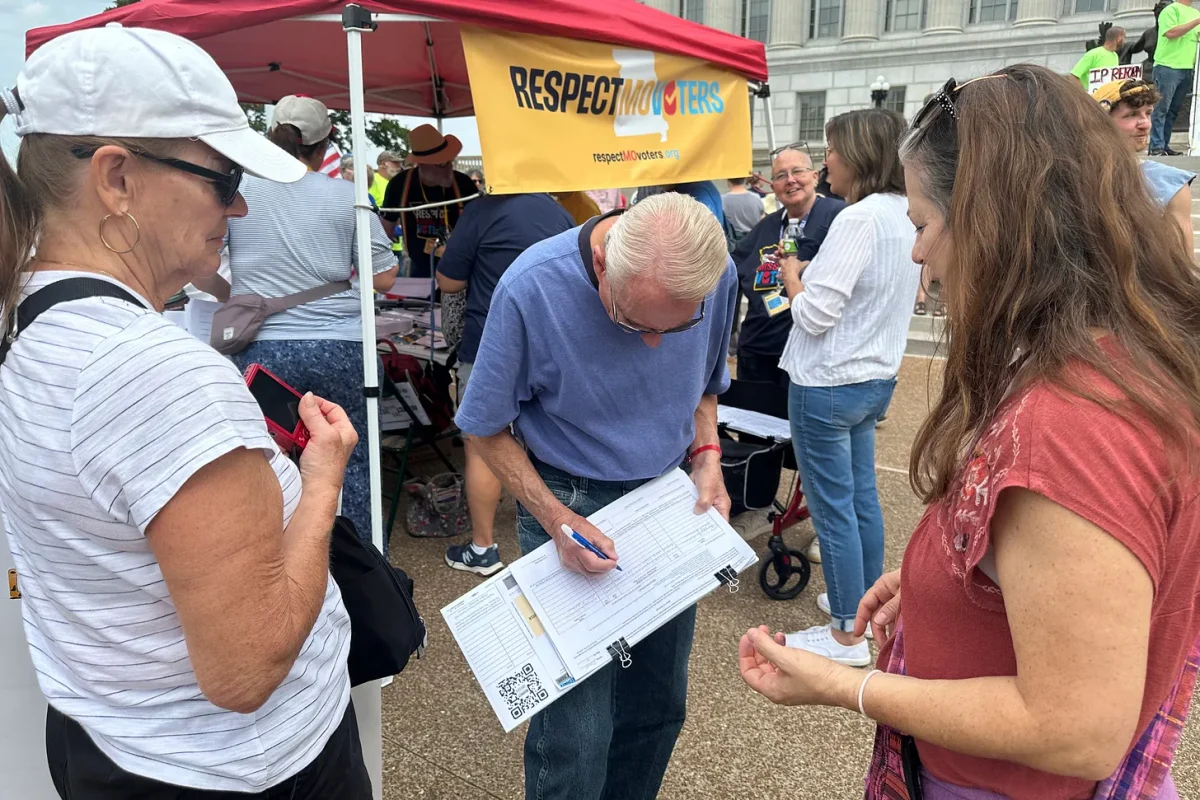
A man signs a petition for a proposed constitutional amendment limiting the Legislature’s ability to revise voter-approved, citizen-initiated ballot measures on Sept. 10, 2025, at the state Capitol in Jefferson City, Missouri. (David A. Lieb/Associated Press)
So why are Republican state lawmakers pushing this proposal? Because they’re tired of the voters overriding them. In recent years, Missourians have voted to expand Medicaid and increase the minimum wage after lawmakers refused to and voters also blocked anti-union and anti-abortion measures passed by lawmakers. Recognizing they cannot win a popular vote on these issues, lawmakers now want to replace “one person, one vote” with “let’s make sure all the large chunks of land agree.” Backers complain that some ballot measures only passed in a dozen or so out of more than 100 counties, as if that matters more than the simple math of more people statewide voting for them.
Simply put, Amendment 4 is a move by state lawmakers to block the power of the people. That’s why I’m voting against it. But you won’t find a clip of me in a church claiming that’s how Christians should vote. Isaiah, Paul, Jesus, and other biblical voices are pretty silent on the whole democracy thing since they didn’t live in one!
Yet, Grace Church is confident that Christians need to support Amendment 4 in order to be faithful. And their rhetoric during their church service on Sunday (Aug. 2) fits with their political discourse over the past few weeks in praising Charlie Kirk, attacking Democratic candidates like James Talarico, and supporting President Donald Trump’s lies about the 2020 election results. So this issue of A Public Witness takes you inside a hyperpartisan church for a taste of how the gospel of Jesus is being supplanted by an imperial lust for political power.
‘A Biblical Perspective’
After opening the Aug. 2 service with praise songs like “Holy Spirit Come” and “I Believe,” Grace Church Lead Pastor Wes Martin welcomed everyone and made announcements about upcoming ministries and this week’s election. He noted that people could find information about the various primary races in the atrium after the service and introduced a video about Amendment 4 featuring a church staffer.
The main argument by Clarissa Richee, the church’s director of civic engagement, was that they needed this because it could’ve blocked a constitutional amendment approved by voters in 2024 that overturned a restrictive abortion ban passed by lawmakers. She falsely claimed the measure voters approved two years ago allows “unlimited abortion” and “transgender surgeries for minors.” The church, which was sued for defamation in 2024 after its attacks on a transgender local librarian, previously pushed these false claims as they unsuccessfully campaigned against that constitutional amendment in church services during that election.
The rest of this piece is only available to paid subscribers of the Word&Way newsletter A Public Witness. Subscribe today to read this essay and all previous issues and receive future ones in your inbox.